Tuesday, May 23, 2023

What Makes People Feel Insecure in Georgia?

 Note: This article first appeared on the Caucasus Data Blog, a joint effort of CRRC Georgia and OC Media. It was written by Dustin Gilbreath, a Senior Non-Resident Fellow at CRRC Georgia. The views presented in the article are of the author alone, and do not necessarily reflect the views of NDI, CRRC-Georgia, or any related entity.


A CRRC analysis found that Georgians who feel insecure in Georgia mostly attribute this to economic insecurity, but also express concern about a wider array of harder security issues.

Georgia has faced numerous crises in recent years; from the pandemic, to the results of the war in Ukraine, via political controversy and uncertainty.

It is consequently perhaps unsurprising that almost half the public is uncertain about how they will fare economically in five years’ time. This is reflected in recent data, which shows that economic insecurity is the main reason why Georgians feel insecure in Georgia. However, a wide array of harder security issues also contribute to people feeling insecure in the country.

In the December 2022 NDI and CRRC Survey, the public was asked whether they felt insecure or secure living in Georgia. A third reported that they felt either very insecure living in Georgia (8%) or more insecure than secure (26%). By comparison, about half of the public reported that they were more secure than insecure (47%). One in five (19%) felt that they were very secure living in Georgia.

Why do people feel insecure?
Amongst those who felt insecure living in Georgia, economic issues were the main reasons given for their sense of insecurity.

The top three issues named were poverty, inflation, and unemployment, with between 34% and 39% of respondents naming one of these options.

Crime was identified as the main reason for feeling insecure by a third of relevant respondents, and political instability by one in five. Healthcare and the high price of drugs were named by 7% and 10% of relevant respondents, respectively. Harder security issues such as the war in Ukraine, and instability in the Caucasus were named by relatively few; 5% and 1%, respectively. 


Note: Because respondents could name up to three responses to this question, the data does not sum to 100%.

The above issues were grouped into economic, hard security, and social policy related issues. Economic issues included poverty, inflation, and unemployment. Crime, violence, political instability, territorial integrity, the war in Ukraine, actions by Russia towards Georgia, and instability in the Caucasus were grouped into hard security issues. All other options were grouped together into social policy issues.

While the most commonly cited issues are mainly economic, people’s concerns were multifaceted. The data found that 66% of those who felt insecure named at least one economic issue, 62% named at least one hard security issue, and 32% named one social policy issue, suggesting that similar shares of people are concerned about at least one economic issue and at least one hard security issue. 

WHO FEELS INSECURE?

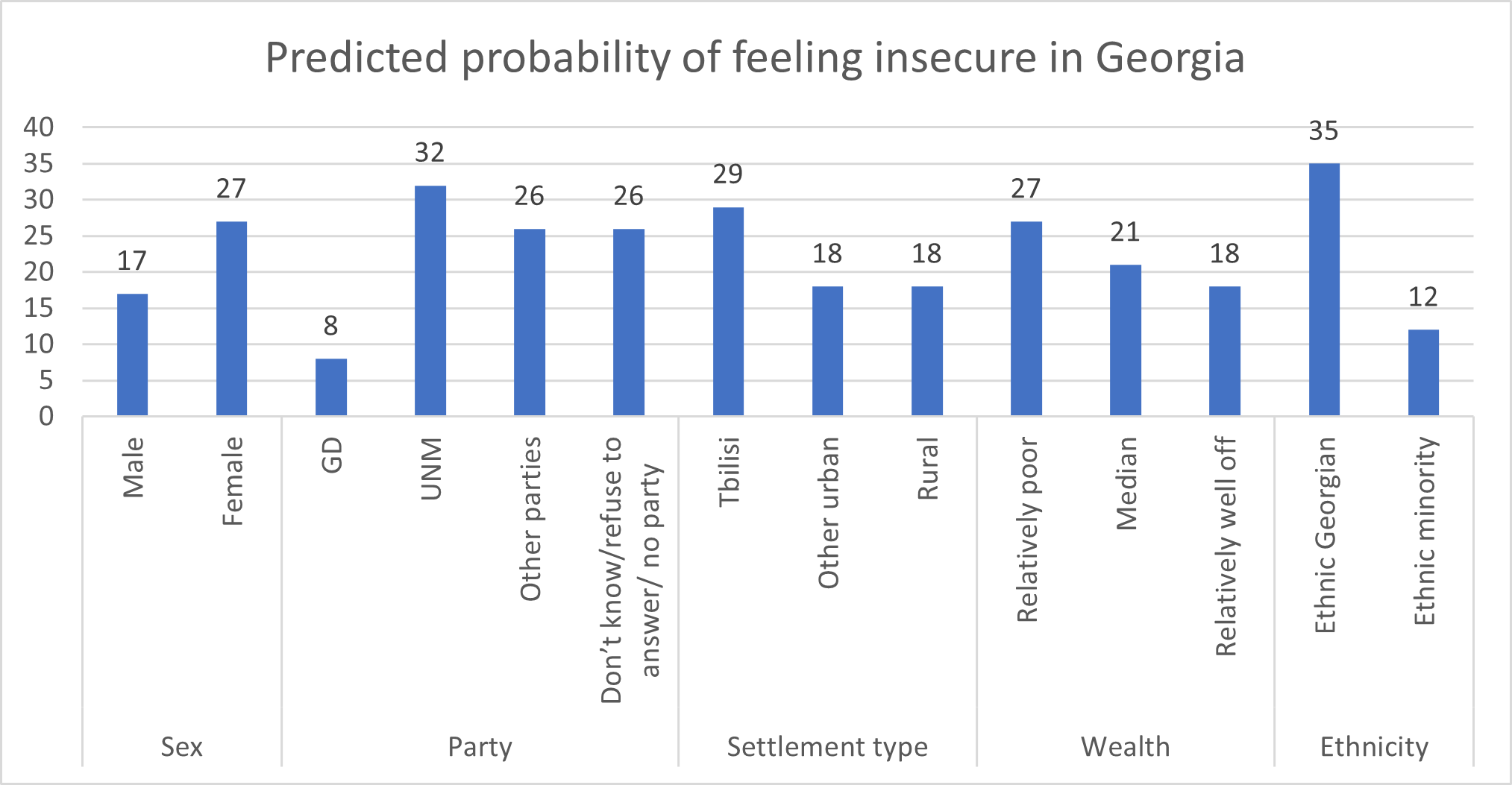
Given the dominance of economic issues as a reason for feeling insecure, it is perhaps unsurprising that people living in poorer households are more likely to feel insecure, and cite economic issues more than people living in relatively well-off households.

A number of other patterns are also present.

Women are ten points more likely to feel insecure in Georgia, controlling for other factors, than men. 

People in Tbilisi are 11 points more likely to feel insecure than people outside Tbilisi. 

Ethnic Georgians are 23 points more likely to feel insecure in Georgia than ethnic minorities.

Supporters of the United National Movement, Georgia’s main opposition party, are 24 points more likely to feel insecure in Georgia than supporters of the ruling Georgian Dream party. People who support other parties or report not supporting any party are 18 points more likely to feel insecure in Georgia than supporters of Georgian Dream.
 

The above data shows that a third of Georgians feel insecure in the country. While recent large-scale instability in Georgia has related more to hard security issues, such as the war in Ukraine, the data shows that economic insecurity remains the greatest concern for people who feel insecure in the country.

Note: The social and demographic breakdowns shown in the article above were generated from a regression analysis. The analysis had whether or not someone felt insecure as the dependent variable. The independent variables included age group (18-34, 35-54, 55+), sex (male or female), settlement type (Tbilisi, other urban, or rural), education level (secondary, vocational, tertiary), wealth (an index of durable goods owned by the respondents’ household), ethnicity (ethnic minority or ethnic Georgian), employment (working, unemployed, or outside the labor force), and party support (Georgian Dream, United National Movement, other opposition, refuse to answer/don’t know/no party). This article only reports on statistically significant differences between groups.

The data used in this article is available here.

Tuesday, May 16, 2023

What Do The 'Tragic Consequences' Of Colour Revolutions Actually Look like?

Note: This article first appeared on the Caucasus Data Blog, a joint effort of CRRC Georgia and OC Media. It was written by Givi Silagadze, a Researcher at CRRC Georgia.The views presented in the article are of the author alone, and do not necessarily reflect the views of NDI, CRRC-Georgia, or any related entity.

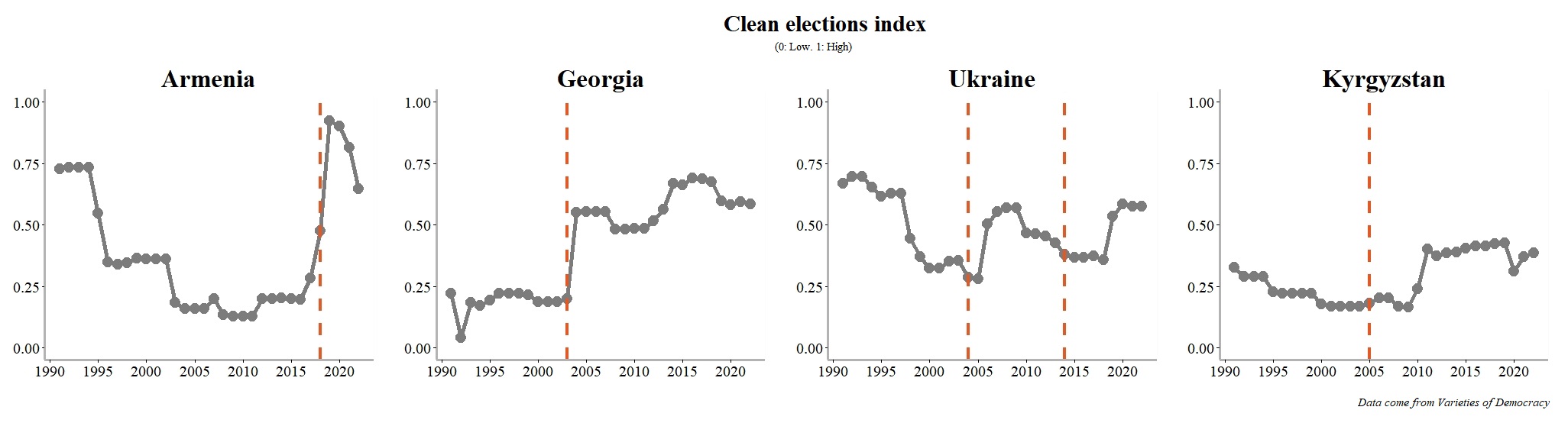
While Russia regularly warns against the supposed negative consequences of ‘colour revolutions’, data from the Varieties of Democracy project suggests that anti-regime protests leading to changes of government in former Soviet countries have led to lower corruption, cleaner elections, and more vibrant civil society.

Fearing unrest in their region, Russia’s President Vladimir Putin and the Russian government often refer to the threat of ‘colour revolutions’ dislodging the existing government in neighbouring countries, maintaining that the West is working hard to engineer such a turn of events.

Most recently, Russia’s Foreign Minister Sergey Lavrov, claimed that the 7-9 March protests in Tbilisi were ‘of course being orchestrated from abroad’, and noted that they looked ‘very much like the Kyiv Maidan’.

The outcomes of such protests are clearly implied to be damaging, an idea occasionally explicitly stated: in 2014, Putin, commenting on a popular uprising in Russia, claimed that colour revolutions led to ‘tragic consequences’.

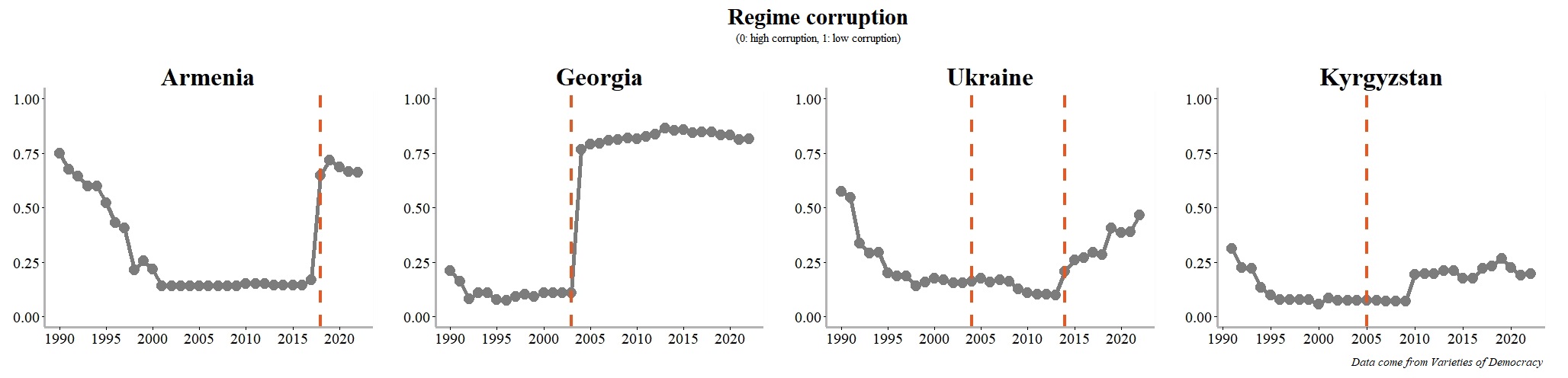
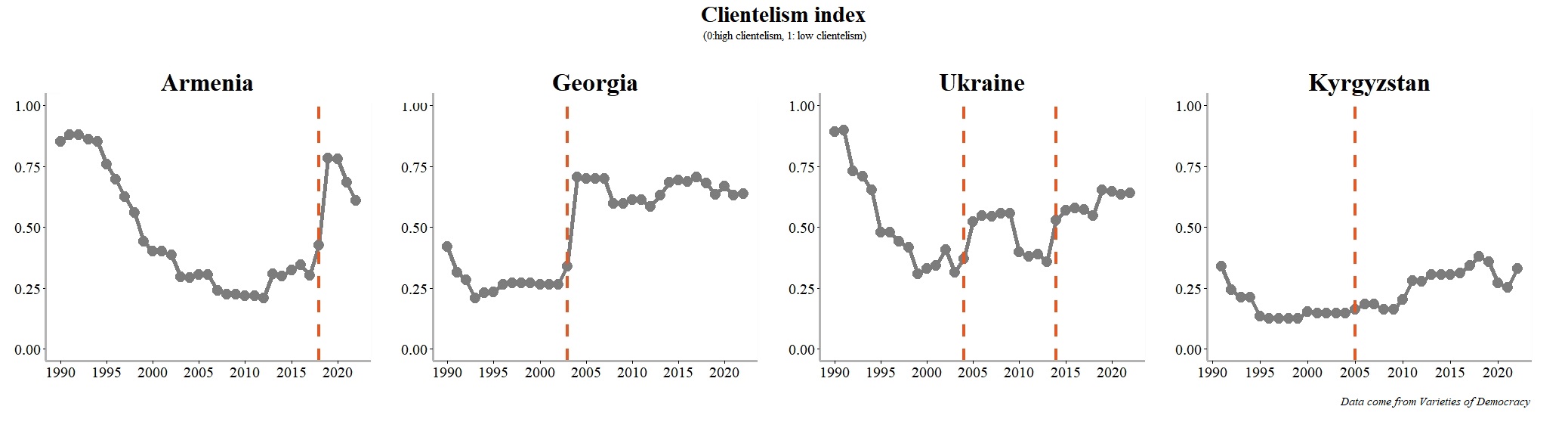
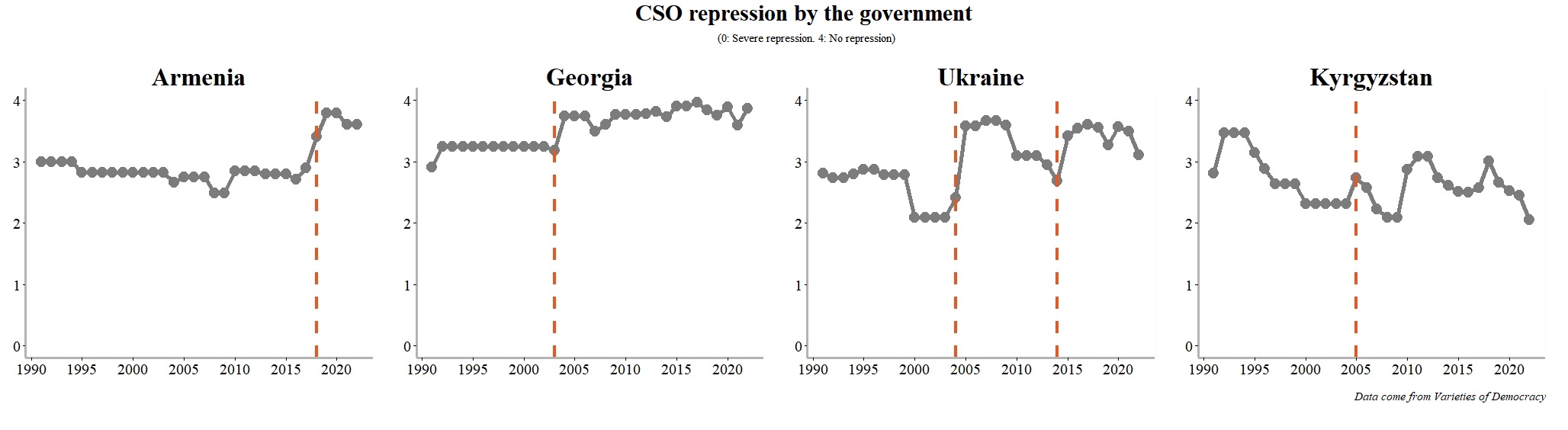
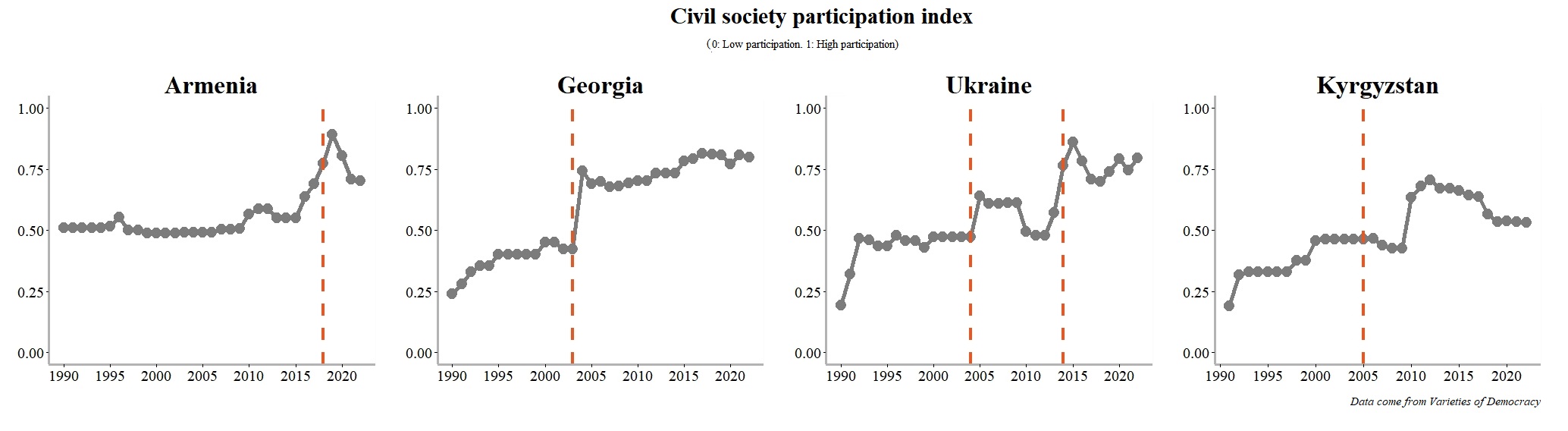
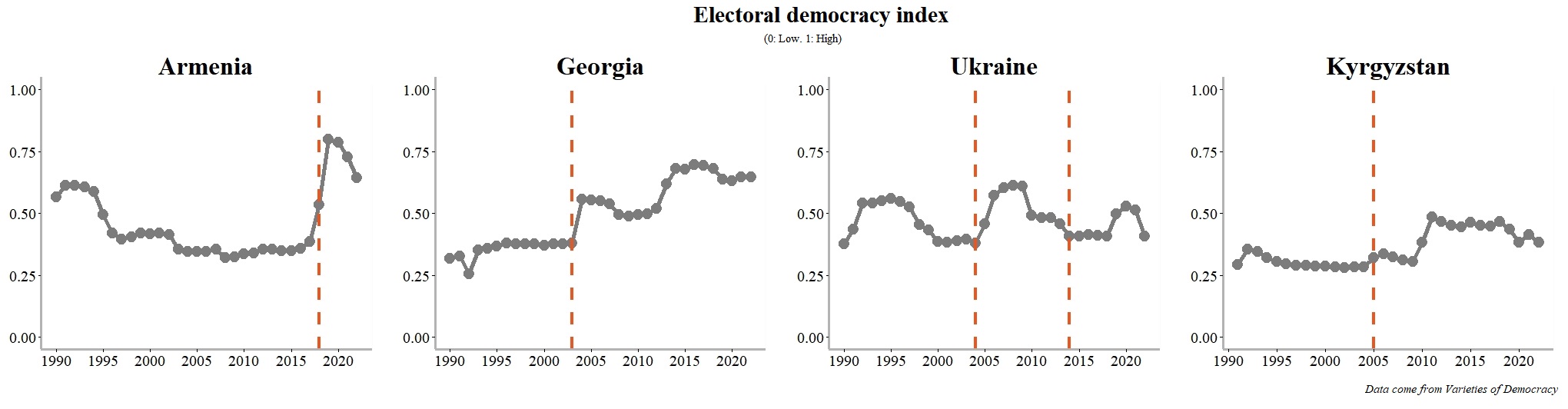
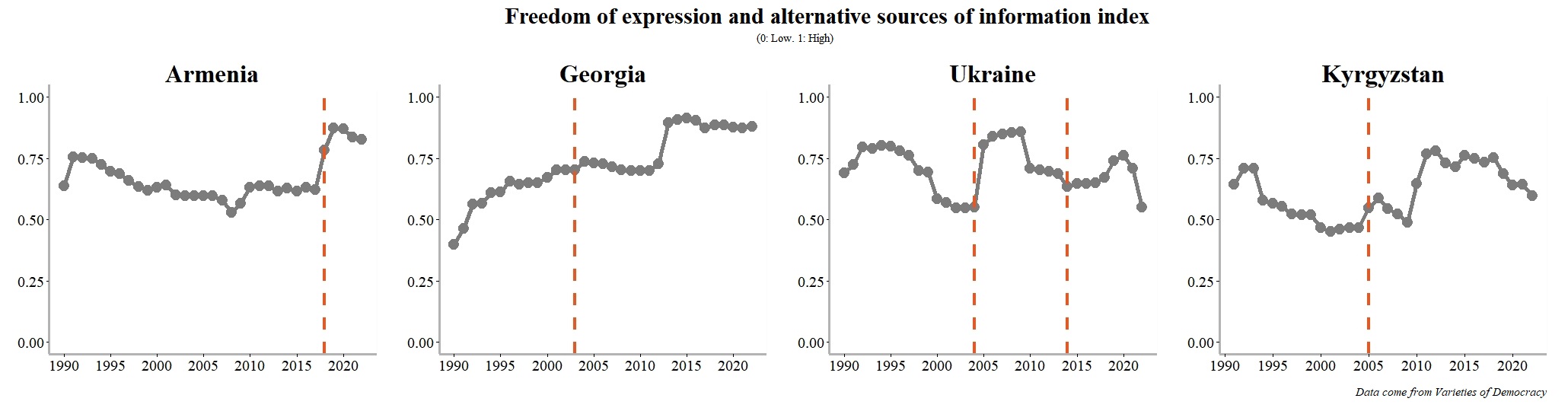
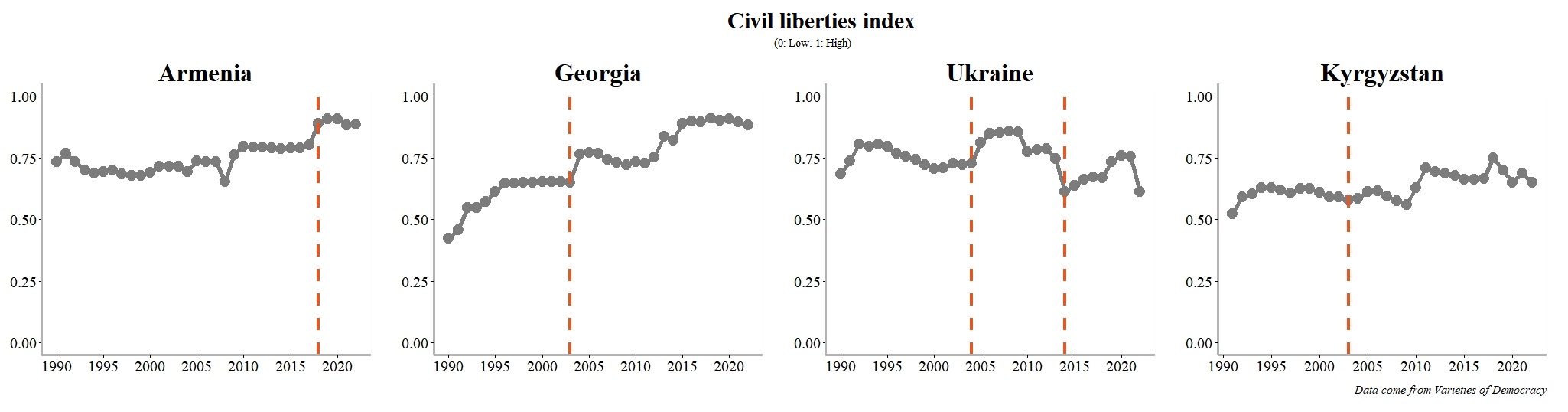
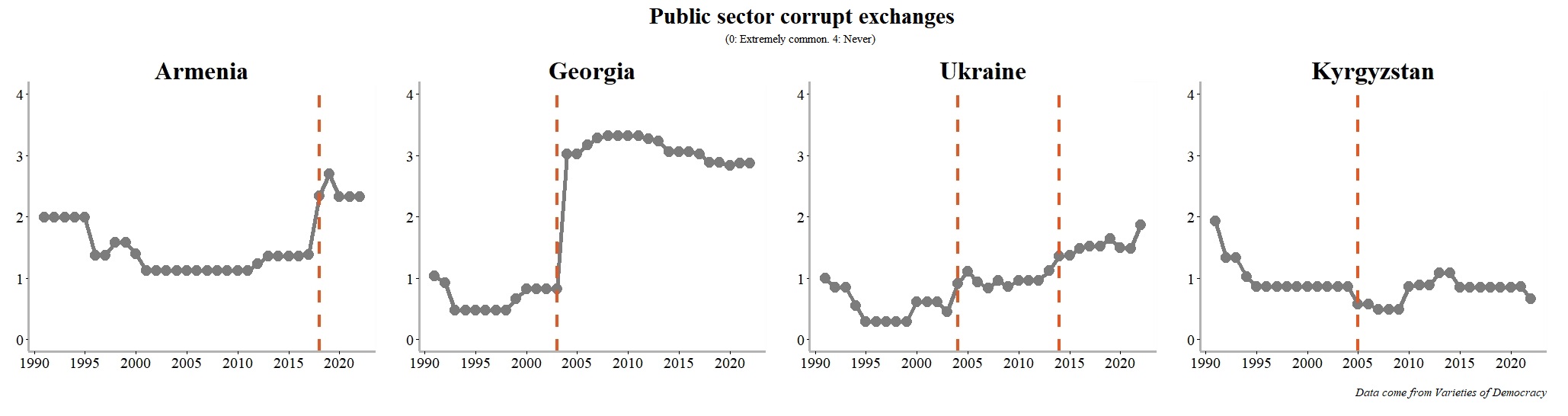
But what do these tragic consequences look like? Data shows that colour revolutions in Armenia (2018), Georgia (2003), and Ukraine (2004, 2014) were associated with reduced corruption, decreased clientelistic relationships between politicians and voters, freer and more vibrant civil society, cleaner elections, and greater freedom.

However, Kyrgyzstan’s Tulip revolution does not appear to have prompted such a clear post-revolutionary improvement on any of these measures.

The Varieties of Democracy (V-Dem) project relies on expert surveys to annually assess 450+ measures of democracy in almost all countries of the world.

One indicator measures how routinely public sector employees grant favours in exchange for bribes, kickbacks, or other material rewards. In all the selected countries except Kyrgyzstan, the post-revolutionary periods showed decreases in corruption in the public sector. The improvement was the most visible and substantial for Georgia.

Another


Another measure is of regime corruption, which aims at addressing the question: to what extent do political actors use a political office for private or political gain? On this measure, the picture is similar — revolutions in Armenia, Georgia, and Ukraine were associated with a decline in the magnitude of regime corruption. Exceptions to the pattern were the 2004 Orange Revolution in Ukraine and the 2005 Tulip Revolution in Kyrgyzstan, which did not appear to lead to any changes in regime corruption in the countries.

Another indicator of healthy political life is the absence of clientelism. Clientelism refers to a relationship between political actors and voters in which voters’ political support is contingent on targeted rather than public distribution of resources such as jobs, money, and services. The chart below suggests that revolutions in Armenia, Georgia, Ukraine, and Kyrgyzstan were associated with a decline in the extent to which politics was based on clientelistic relationships. 


A free and vibrant civil society is a necessary and important component of a well-functioning democracy. The data suggests revolutions led to improved scores, with a decrease in government repression of civil society organisations.


Moreover, the revolutions in Armenia, Georgia, and Ukraine were clearly associated with greater civil society participation, which implies a larger involvement of people in CSOs. As for Kyrgyzstan, it took several years before the country registered improved scores for greater civil society participation.


Revolutions also often promise cleaner elections: that is, elections with less registration fraud, systematic irregularities, government intimidation of the opposition, vote buying, and election-related violence. While Ukraine after 2014 and Kyrgyzstan after 2005 did not see such improvements, Georgia and Armenia did gain cleaner elections.


However, the electoral democracy index (a composite index aiming at assessing to what extent a political system satisfies the core value of making rulers responsive to citizens) measured substantial improvements in the post-revolution periods of all four selected four countries, suggesting that political leaders were more responsive to the needs of their population following a revolution.


As for freedom of expression and alternative sources of information, post-revolution improvements were seen in all four countries. However, it must be noted that in Georgia, the Rose Revolution did not result in immediate improvements. Georgia’s scores for freedom of expression and alternative sources of information significantly improved only after 2012, when the first peaceful transition of government took place in the country.


Finally, when it comes to civil liberties, the revolutions in the four countries led to better scores. Civil liberties are understood as the absence of physical violence committed by government agents and the absence of government constraints on private liberties and political liberties.


So what Putin describes as the ‘tragic consequences of colour revolutions’ appear, on closer examination, to be less corrupt state institutions, healthier and more democratic political processes, greater participation of civil society, and better-respected freedoms and liberties; perhaps not so tragic after all.

Tuesday, May 02, 2023

Who Wants To Leave Georgia?

Note: This article first appeared on the Caucasus Data Blog, a joint effort of CRRC Georgia and OC Media. This article was written by Elene Ergeshidze, a Researcher at CRRC-Georgia. The views expressed in the article are the author’s alone and do not reflect the views of CRRC Georgia or any related entity.

CRRC data suggests that every fifth person was considering leaving Georgia for work in 2023, with men, younger people, people with poorer economic standings, and supporters of the opposition reporting that emigration is a better option than staying in Georgia.

Emigration has become a hot topic in everyday discourse in Georgia; the media is rife with stories about people who have decided to leave their jobs and families in search of better opportunities in the West, with many migrants taking significant risks through illegal emigration to Mexico in search of the American Dream.

Data published by Mexico indicates that 9,468 Georgians crossed the border between 2021 and 2023. A recent report from Georgia’s National Statistics Office shows that 125,269 people emigrated from Georgia in 2022, the vast majority of whom were Georgians. This is a 25.3% increase compared to statistics from 2021.

Data from CRRC and NDI’s regular surveys suggests that a significant share of the public was considering migrating for work in 2023.

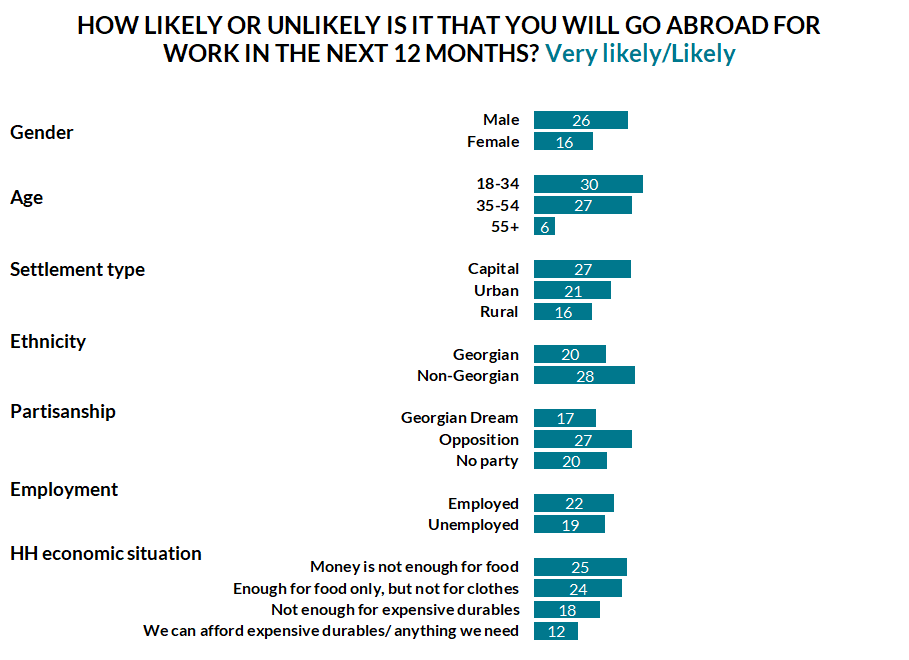
The survey, conducted in December 2022, showed that every fifth person in Georgia reported that it was very likely (3%) or likely (16%) that they will go abroad for work in the next 12 months.

The data show that a number of groups are more likely to be considering migrating for work than others.

Men are ten percentage points more likely to report they are willing to go abroad for work than women, controlling for other factors. 

People under 55 are substantially more likely to be interested in going abroad for work. While 18–34-year-olds are 24 percentage points more likely to report they are interested in going abroad in the next 12 months, 35–54-year-olds are 21 percentage points more likely to say they want to leave than people 55 and older.

After controlling for other factors, a quarter of the people in Tbilisi (27%) are considering emigrating abroad, compared with one in six residents of other urban (21%) and rural areas (16%).

Ethnic minorities were eight points more likely than ethnic Georgians to be interested in emigration.

Opposition supporters are ten percentage points more likely to be interested in migrating abroad for work than Georgian Dream supporters, controlling for other factors.

When it comes to economic factors, those who reported that their household either doesn’t have enough money for food or is only able to buy food but not clothes were more likely to report wanting to emigrate than those who are better off.

There was no statistically significant difference between employed and unemployed people in terms of migration interest.

Note: The chart above was generated from a regression model. The model includes gender (male, female), age group (18–34, 35–54, 55+), settlement type (capital, urban, rural), education (secondary or lower, secondary technical, tertiary), ethnicity (Georgian, ethnic minority), party respondent names as closest to his/her views (Georgian Dream, opposition party, did not name a party (Don’t know, Refuse to answer, No party)), employment status (Employed, unemployed), and a household’s economic situation.

Despite the difficulties associated with emigration, many people see going abroad for work in 2023 as a better option than staying in Georgia. This applies especially to men, younger people, residents of Tbilisi, ethnic minorities and those who report having poorer economic standing. Time will tell how this attitude will be reflected in actual migration statistics.


This article was written by Elene Ergeshidze, a researcher at CRRC-Georgia. The views expressed in this article are the author’s alone and do not necessarily reflect the views of CRRC-Georgia, NDI, or any related entity.

The data used in this post are available here.

Wednesday, April 26, 2023

Life Satisfaction And What People Teach Their Children

Note: This article first appeared on the Caucasus Data Blog, a joint effort of CRRC-Georgia and OC Media. It was written by Dr. Tamar Khoshtaria, a Senior Researcher at CRRC-Georgia. The views presented in the article are of the author alone, and do not necessarily reflect the views of NDI, CRRC-Georgia, or any related entity.


Data from the European Values Study (EVS) of 2017 suggests that values commonly taught to children in different countries appear to be linked to how satisfied communities are with their lives. CRRC Georgia has compared the results between Russia, Georgia, Armenia, Azerbaijan, and a handful of European countries.

Most people in the world seek satisfaction with their lives; however, whether one experiences it is a matter of numerous potential factors.

One plausible contributor to life satisfaction could be the values parents or society instil in young people.

Data from the European Values Survey suggest that countries where larger shares of the public are satisfied with their life are more likely to teach their children about tolerance, respect, and independence.

Hard work tends to be associated with lower levels of life satisfaction, a trait commonly reported in the South Caucasus and Russia.

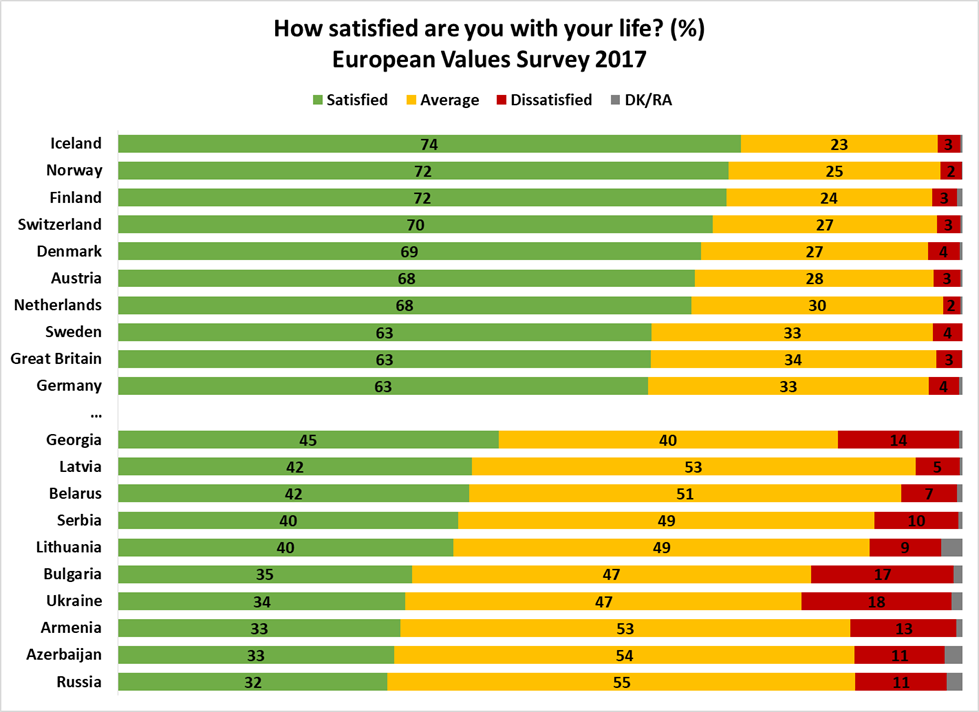
The European Values Survey suggests that Northern European countries reported the highest level of happiness and life satisfaction: data from 2017 suggested that over 90% of respondents living in Iceland (95%), Norway (94%), and Sweden (94%) say they are ‘very’ or ‘quite happy’. In addition, of the 36 countries covered in the survey, Iceland (74%), Norway (72%), and Finland (72%) reported the highest levels of satisfaction with life.

In contrast, only about one-third of people in Armenia (33%), Azerbaijan (33%), and Russia (32%) reported they were satisfied with life. Georgia stands somewhere in between, with 45% of its respondents claiming to be satisfied.

After Ukraine (18%) and Bulgaria (17%), Georgia has the highest share of people who say they are dissatisfied with their lives (14%).

Note: Respondents assessed life satisfaction on a 10-point scale, where 1 meant dissatisfied and 10 meant satisfied. Responses 1, 2 and 3 are labelled as dissatisfied on the chart above. Responses 4, 5, 6, and 7 are labelled as average, and 8, 9 and 10 are labelled as satisfied. The above chart does not include all countries in the survey due to space limitations. The graph above presents the 10 most and least satisfied countries in the study.


When looking at countries that are most and least satisfied with their lives and comparing them to Georgia, we see that these countries tend to have different ideas on what qualities are the most desirable for their children to learn.

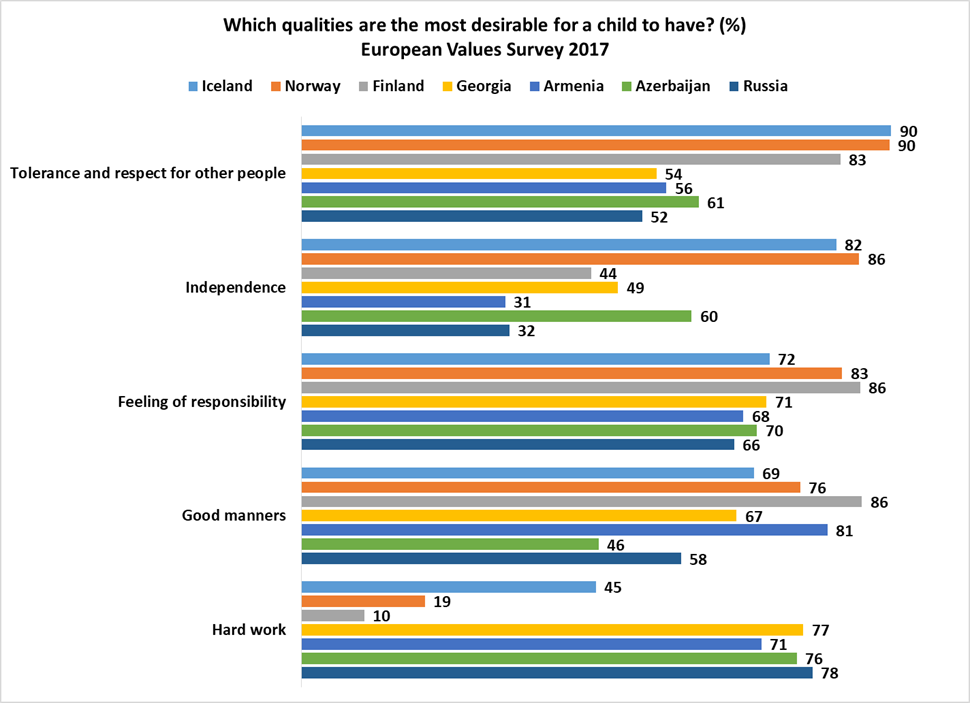
In the countries most satisfied with their lives — Iceland, Norway, and Finland — tolerance and respect for other people were named by over 80% of respondents. This share is significantly lower in Georgia (54%) as well as in the countries where people are least satisfied with their lives — Armenia (56%), Azerbaijan (61%), and Russia (52%).

In Iceland and Norway, though not in Finland, independence is named by over 80% of the public as a highly desirable quality for a child. The share of people naming this quality as most desirable is significantly lower in Azerbaijan (60%) and Georgia (49%) and even lower in Armenia (31%) and Russia (32%).

While over 70% of respondents name hard work as the most desirable quality which a child should have in the South Caucasus and Russia, the percentage is significantly lower in Iceland (45%), Norway (19%), and Finland (10%).

Some qualities were deemed desirable in all seven countries, such as having a sense of responsibility and being well-mannered.


Several patterns also stand out for specific countries. For example, 62% of people in Finland think determination and/or perseverance are desirable qualities, while religious belief is more desirable in Georgia (50%) than in all other countries.

Being able to save money and thrift was valued the most in Russia at 49%.  A number of other characteristics show relatively little in terms of distinctive patterns. 


The above data show that the most satisfied people in Europe live in Iceland, Norway, and Finland, while the least satisfied live in Armenia, Azerbaijan, and Russia. Georgia stands somewhere in between.

People who are most satisfied with their lives are more likely to teach their children qualities such as tolerance and independence, while the least satisfied communities are more likely to emphasise the importance of hard work.

Responsibility and good manners are generally valued in all of these countries, while religious faith is more important in Georgia than in the other seven countries explored in this article.

The data used in this article is available here.
Tuesday, April 11, 2023

Who Do Georgians Blame For Russia's War in Ukraine?

Note: This article first appeared on the Caucasus Data Blog, a joint effort of CRRC Georgia and OC Media. It was written by Dustin Gilbreath, a non-resident Senior Fellow at CRRC-Georgia.The views presented in the article are of the author alone, and do not necessarily reflect the views of NDI, CRRC-Georgia, or any related entity.

In the face of conflicting narratives about the causes of the war in Ukraine, most Georgians see Russia and Putin as responsible for the conflict, but a substantial minority lay the blame with the West. Since Russia invaded Ukraine slightly over a year ago, a war of words has erupted over who is to blame for the war, with the general consensus being that Russia needlessly invaded Ukraine.

In contrast to this consensus, the Russian government has spread propaganda blaming Ukraine for the war, accusing the country’s Jewish president of being a Nazi and stating that the country needed to be ‘de-Nazified’.

Against this backdrop, and in light of Georgia’s history with Russia, what does the Georgian public think?

Data from CRRC-Georgia and the National Democratic Institute’s regular polling in Georgia suggests that most blame Russia as a whole, but an increasing proportion of the public blames Vladimir Putin specifically for the war. And while the majority of the public report that the war is Russia or Putin’s fault, one in six Georgians report that some Western actor is at fault for the war, while one in twelve blame Ukraine.

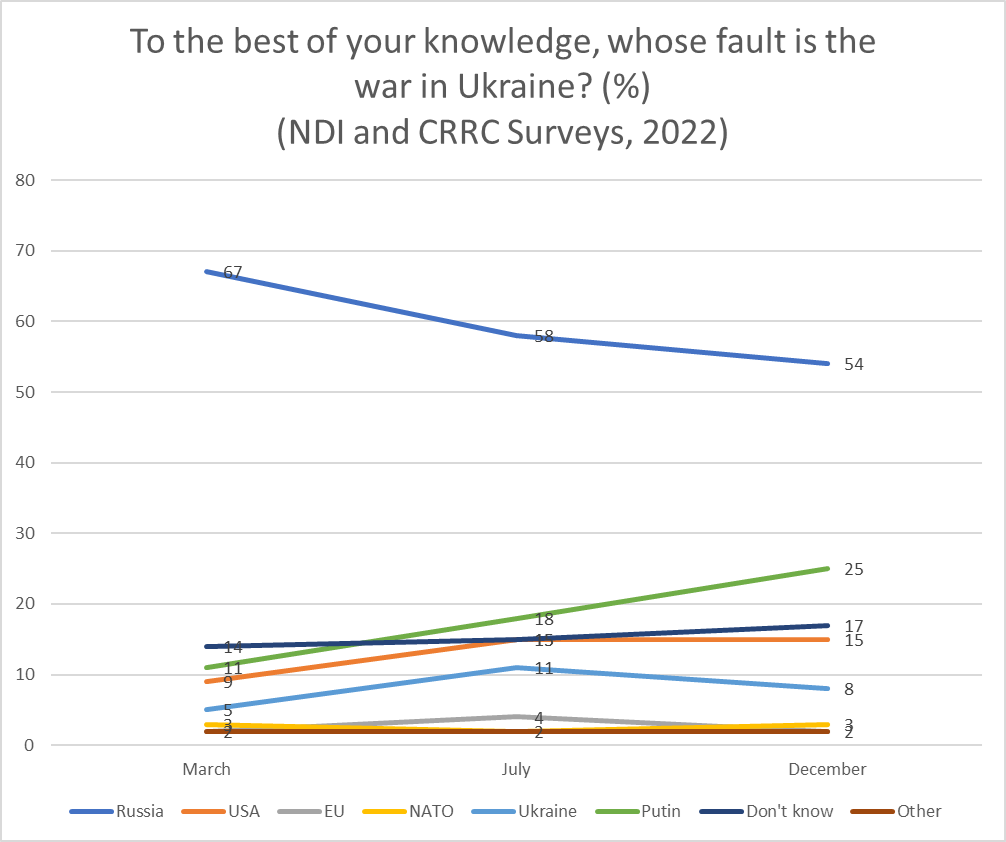
The share of Georgians blaming Russia and Putin for the war shifted in the year following the war, with the share blaming Russia declining from 67% in March of 2022, to 54% in December of 2022. There was a simultaneous rise in the share blaming Putin specifically, from 11% in March 2022 to 25% in December of that year.

A smaller but substantial proportion of the public considers the West to be responsible for the war in Ukraine. While relatively small shares blame NATO (2-3%) and the European Union (2-4%), a relatively high percentage blame the US. One in eleven (9%) blamed the United States in March, which rose to and stayed at 15% in July and December respectively.

Similarly, relatively few Georgians blame Ukraine for the war. This share stood at 5% in March 2022, rose to 11% in July 2022, and then moved to between these shares at 8% as of December 2022.

The remainder of the public is either uncertain about who to blame for the war (14-17%) or names some other factor (2%).


It is important to note that respondents could name up to three responses. Therefore, the shares do not necessarily sum to 100% on the chart above. In the first wave of the survey, Vladimir Putin was not specifically asked about, but respondents still named him. In subsequent waves of the survey, Vladimir Putin was added as a response option.

In the most recent wave of the survey, 59% of the public named only Russia or Vladimir Putin as responsible for the war. One in nine (11%) suggested that only Western actors were at fault for the war. A further 7% named at least one Western actor and one Russian actor. The remainder were mostly either uncertain on how to respond (15%) or refused to answer (1%). Other respondents blamed Ukraine as well as some combination of Russian and Western actors.

Who blames who?

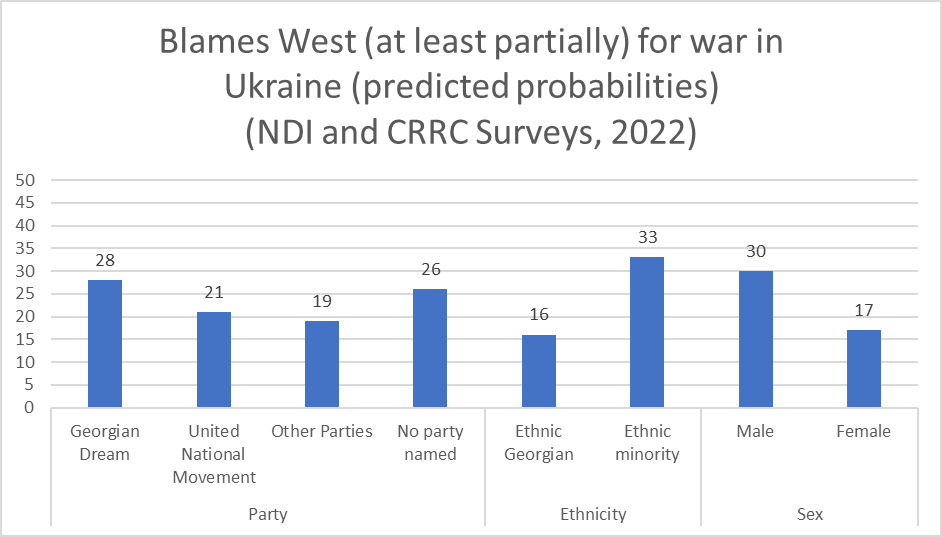
The data suggest that men, people belonging to ethnic minorities, and Georgian Dream supporters are more likely to consider the West (including the US, EU, and NATO) at least somewhat responsible for the war, than are women, ethnic Georgians, and those that do not support Georgian Dream.Ethnic Georgians, opposition supporters, those that claim they support no particular party, and people living in urban areas are more likely to blame Russia and/or Putin, compared to ethnic minorities, Georgian Dream supporters, and people in rural areas.

Ethnic Georgians, opposition supporters, those that claim they support no particular party, and people living in urban areas are more likely to blame Russia and/or Putin, compared to ethnic minorities, Georgian Dream supporters, and people in rural areas.

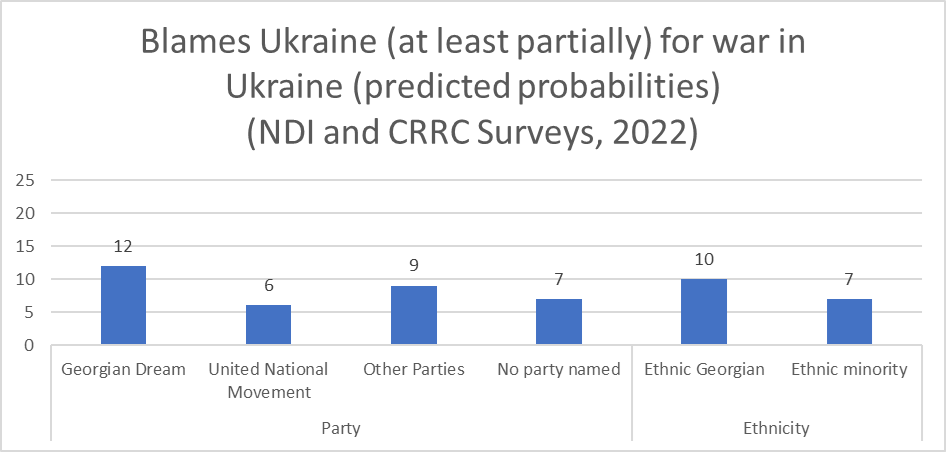
Men and Georgian Dream supporters are more likely to believe that Ukraine is at fault for the war than women and opposition supporters. 


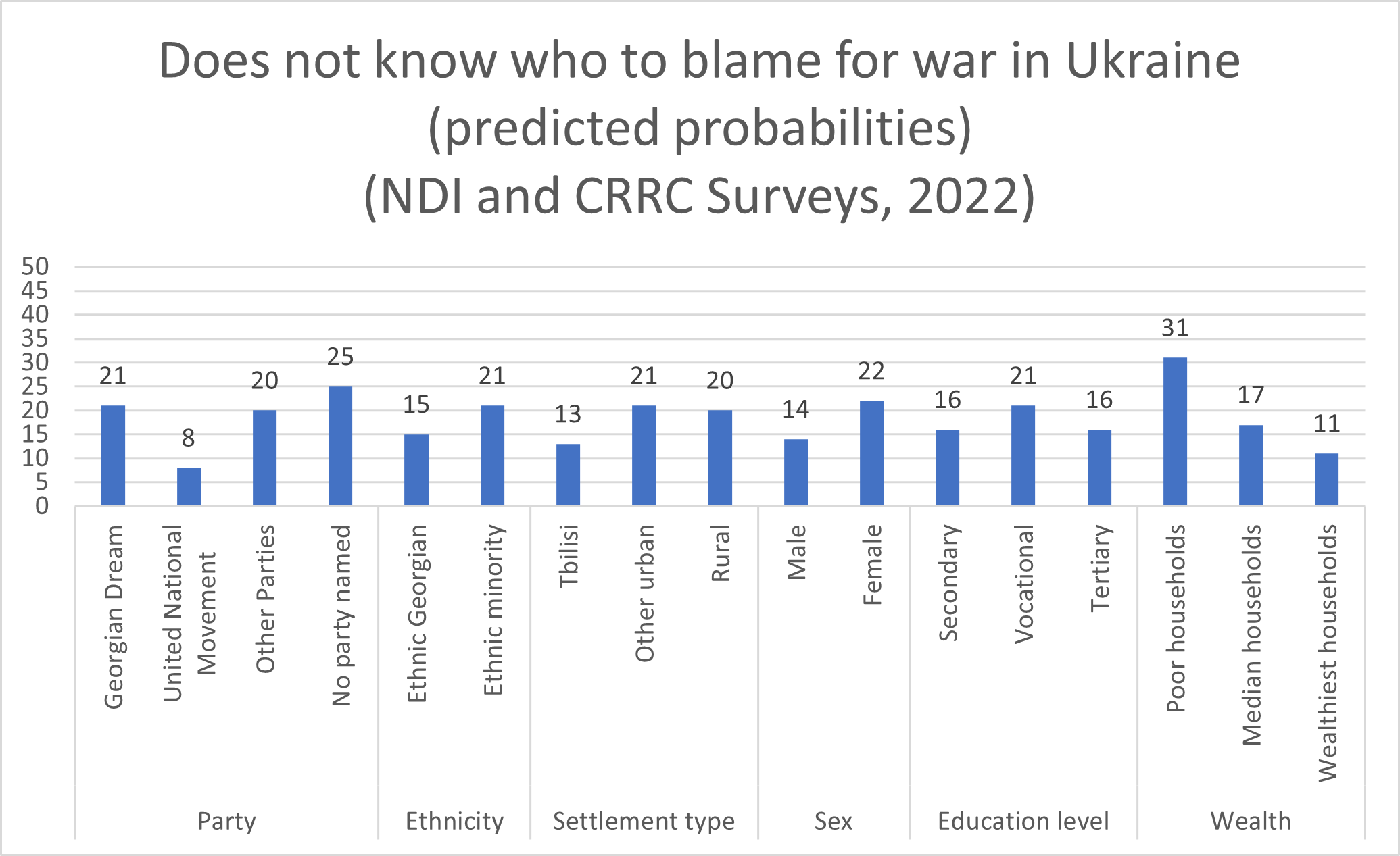
Women, people with vocational education, those outside Tbilisi, poorer people, and people who support Georgian Dream are more likely than men, people with secondary education, those in Tbilisi, wealthier people, and those who support the opposition to be uncertain about the causes of the war.


The data do not suggest that any particular group is more or less likely to name at least one Russian actor and one Western actor for the war.

While Russia’s fault in the war is questioned by relatively few in Georgia, the data do show that some groups are more likely than others to believe that Western actors or Ukraine itself is partially or fully at fault. A substantial share also remains uncertain.


Note: The social and demographic breakdowns shown in the article above were generated from a regression analysis. The analysis had someone’s belief about who was at fault for the war as the dependent variable, including naming Russia/Putin or not, naming any Western institution or not, naming both a Western and a Russian actor or not, and naming Ukraine or not. The independent variables included age group (18-34, 35-54, 55+), sex (male or female), settlement type (Tbilisi, other urban, or rural), education level (secondary, vocational, tertiary), wealth (an index of durable goods owned by the respondents’ household), ethnicity (ethnic minority or ethnic Georgian), employment (working, unemployed, or outside the labor force), and party support (Georgian Dream, United National Movement, other opposition, refuse to answer/don’t know/no party). This article only reports on statistically significant differences between groups.

Tuesday, April 04, 2023

Shifting Tides: Changing Dynamics of Social Capital in Georgia and Armenia

Note: This article first appeared on the Caucasus Data Blog, a joint effort of CRRC Georgia and OC Media. This article was written by By Milord Shengelia, a Junior Researcher at CRRC Georgia. The views expressed in the article are the author’s alone and do not reflect the views of CRRC Georgia or any related entity. 

Both Georgia and Armenia are known for being close-knit, but levels of social ties and trust vary both between the countries and between demographics. And while levels of trust have increased in Armenia in the last decade, in Georgia, the opposite is true.

Past research has suggested that both Georgia and Armenia have high levels of bonding social capital — levels of trust within a family and community — but low levels of bridging social capital — the ability to make bonds with people outside one’s immediate circle.

However, recent data from the Caucasus Barometer shows that while in Armenia some measures of bonding social capital have risen significantly in the decade between 2011 and 2021, the same characteristics have remained largely stagnant in Georgia.

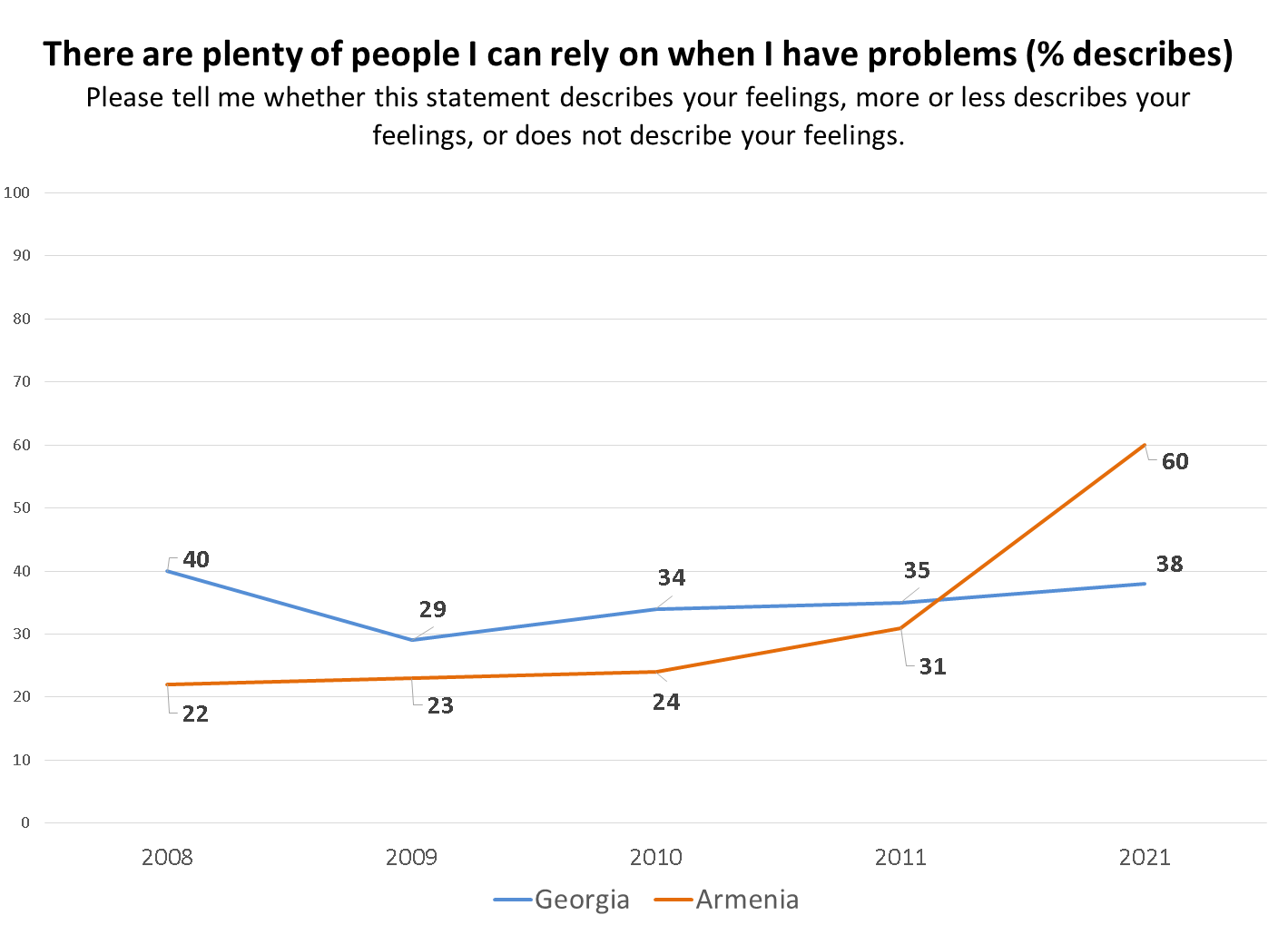
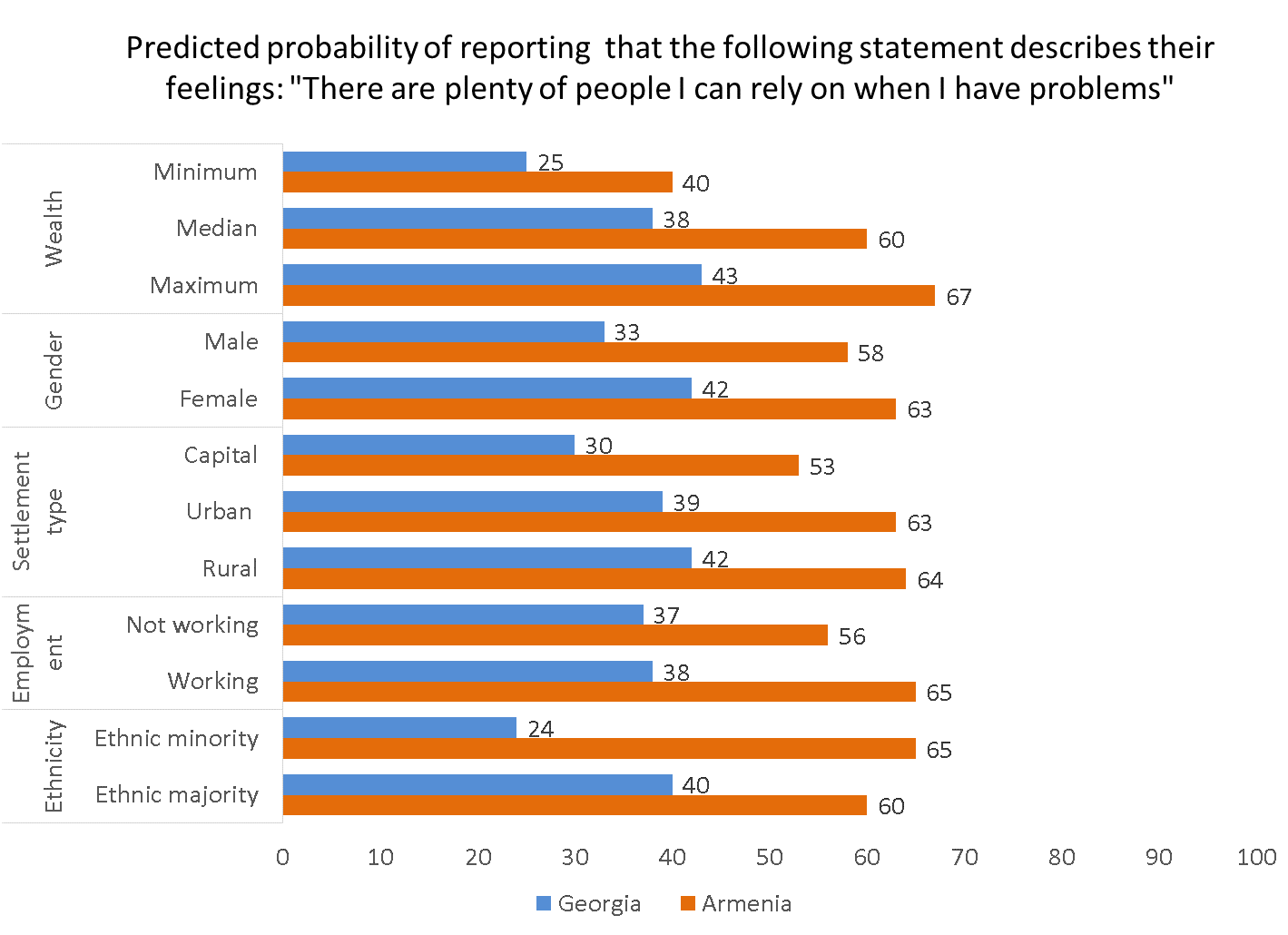
One measure of social capital is whether people feel that they have people that they can rely on when they have problems.

The share of the Georgian population who say that they have people they can rely on has varied slightly over the years, but remained between 34% and 40% between 2008 and 2021. The exception was a low of 29% in 2009, a year which is a relative outlier for Georgia.

In Armenia, however, respondents have increasingly felt that there are people that they can rely on, with this share doubling from 31% in 2011 to 60% in 2021.


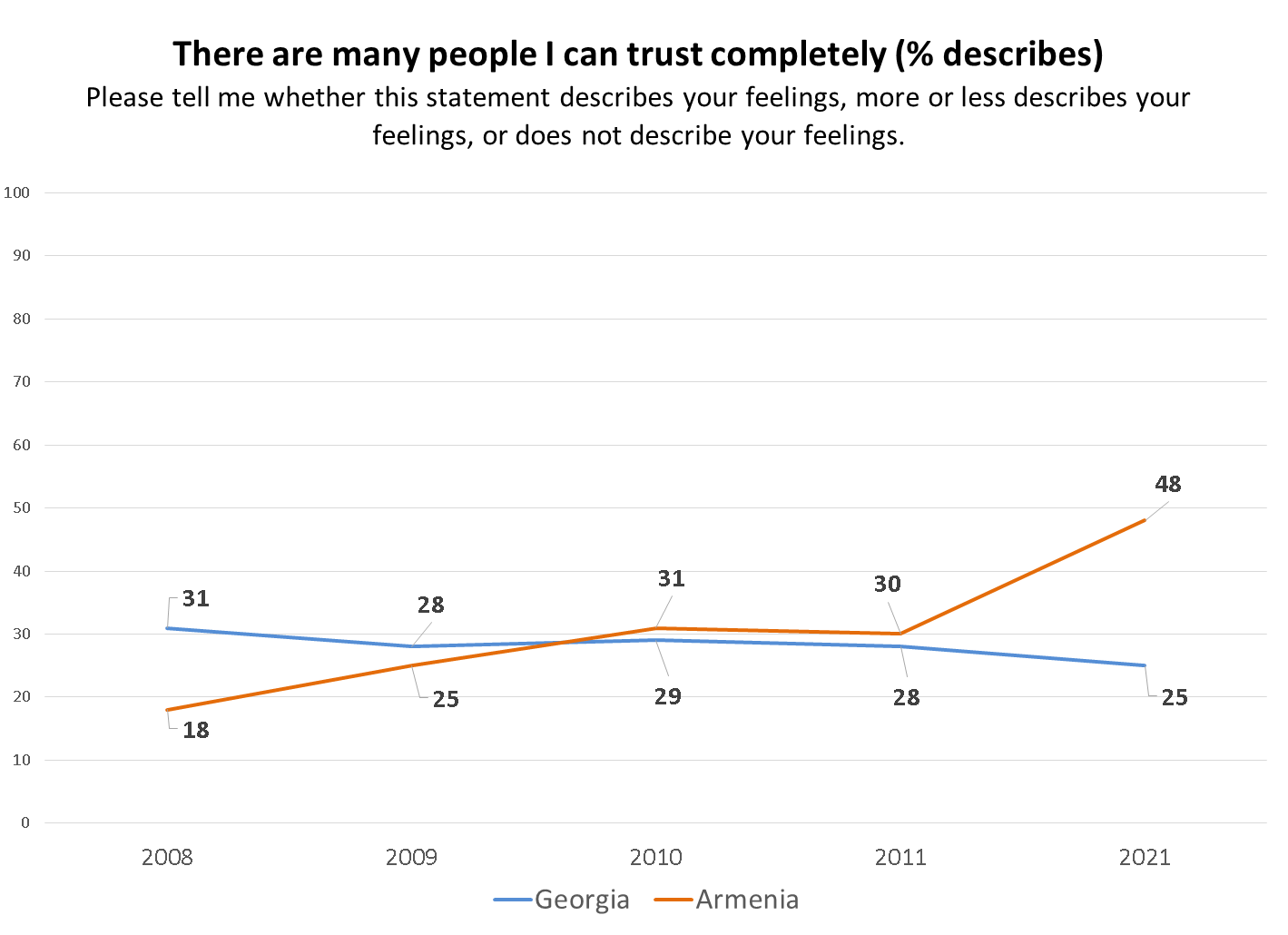
The data show a similar pattern with regard to the statement, ‘There are many people I can trust completely’.

In 2008, 31% of the Georgian public reported that this described them, compared to 18% in Armenia. Since then, however, the situation has reversed, with 25% of the public in Georgia reporting this in 2021, compared with 48% in Armenia.


The relative levels of social capital which people report is associated with a number of demographic characteristics in Georgia and Armenia.

A regression model shows that in both Georgia and Armenia, people outside of the capital cities are more likely to say that in times of trouble, they have many individuals they can turn to than those living in Tbilisi and Yerevan. Similarly, wealthier people are more likely to believe they have people to rely on in both countries.

In Georgia, women are more likely to report they have plenty of people to turn to when faced with problems. In Armenia, gender is not associated with responses to this question.

In Georgia, ethnic Georgians were more likely to agree compared to ethnic minorities. Due to the small number of people of ethnic minority descent in Armenia, only a small number were present in the sample. Consequently, the same association was not tested in Armenia.

Employed people in Armenia, but not Georgia, are more likely to feel there are people they can rely on. Age and education are not associated with responses to this question in either country, controlling for other factors.

Regarding how much people feel they can trust others, in Georgia, this is associated with both where someone lives and their sex.

Men are more likely to say that there are many people they can trust completely compared to women, while people who live in Tbilisi are less likely to report people can be trusted, compared with people in other urban and rural areas. There were no differences associated with age, education, employment, or ethnicity on this question.

In Armenia, wealth is a significant predictor of trusting others. Wealthier respondents were more likely to indicate that there were many people they could trust completely. In Armenia, no other variable was associated with this statement.


Over the last decade, the dynamics of social capital in Armenia have undergone a transformation, while in Georgia they have remained stagnant. While Georgian people had more social capital in the past, today Armenians are more likely to have stronger bonding social capital.

Note: The results presented in the above chart came from regression model of the CB 2021 wave. The regressions included the following variables: sex (male or female), age group (18–34, 35–54, 55+), settlement type (capital, urban, rural), ethnic group (ethnic majority or ethnic minority), educational attainment (secondary or lower, secondary technical, higher than secondary), employment (working, not working), wealth (ownership of 14 different durable goods, a common proxy for wealth).

The views expressed in this article reflect the views of the author alone, and do not necessarily reflect the views of CRRC Georgia, or any related entity.