Showing posts with label Corruption. Show all posts

Tuesday, December 06, 2022

How has Georgia changed in the last decade?

Note: This article first appeared on the Caucasus Data Blog, a joint effort of CRRC Georgia and OC Media. It was written by Givi Silagadze, a Researcher at CRRC-Georgia, The views presented in the article are of the author alone, and do not necessarily reflect the views of CRRC-Georgia, or any related entity.

A recent survey suggests that Georgians tend to believe that poverty, crime, and corruption have increased in the last decade, while affordable healthcare has become more accessible. However, available public data does not always match these assessments. 

Recent public opinion surveys suggest that Georgians feel increasingly worried about where the country is headed. As of August 2022, less than a quarter of the electorate believed that Georgia was going in ‘the right direction’. 

While the overarching assessment is quite negative, the public’s views on specific issues is more variable, adding nuance to the picture. 

The August 2022 CRRC/NDI survey asked respondents how they thought things had changed over the last decade in Georgia, in nine key policy areas. According to the data, at least half of the public think poverty, crime, and territorial integrity have worsened over the last decade.  In contrast, the public was most positive about progress in terms of affordable health care and freedom of speech, with roughly a third of the public believing the situation had improved for both issues.
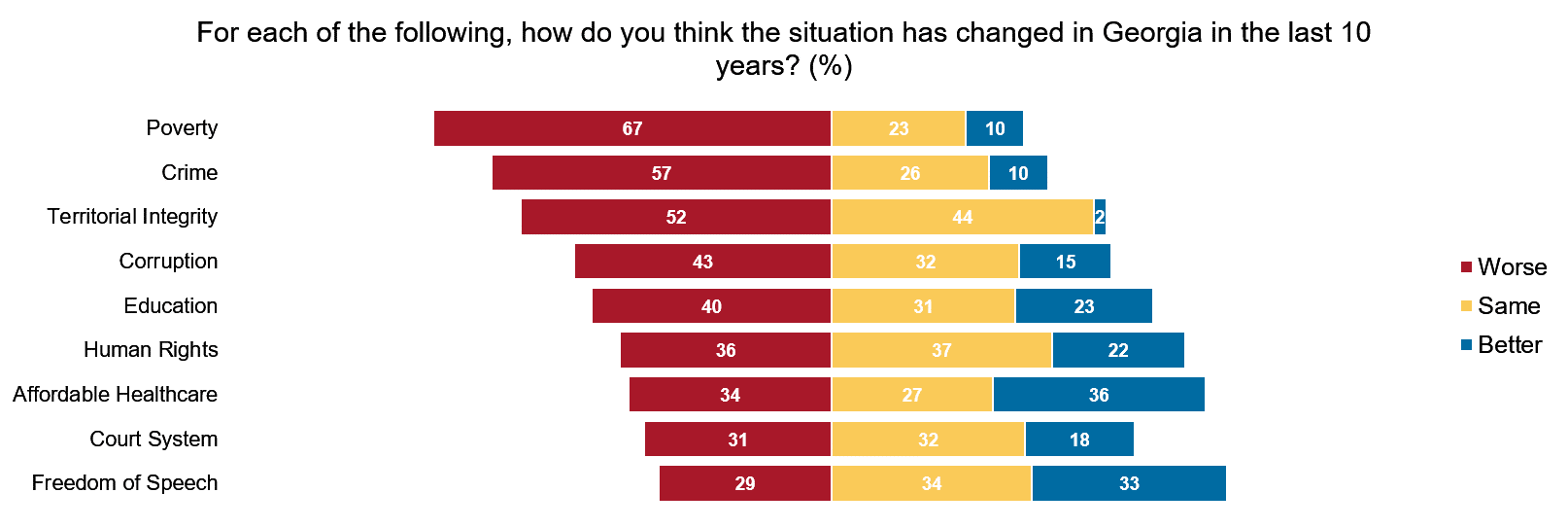
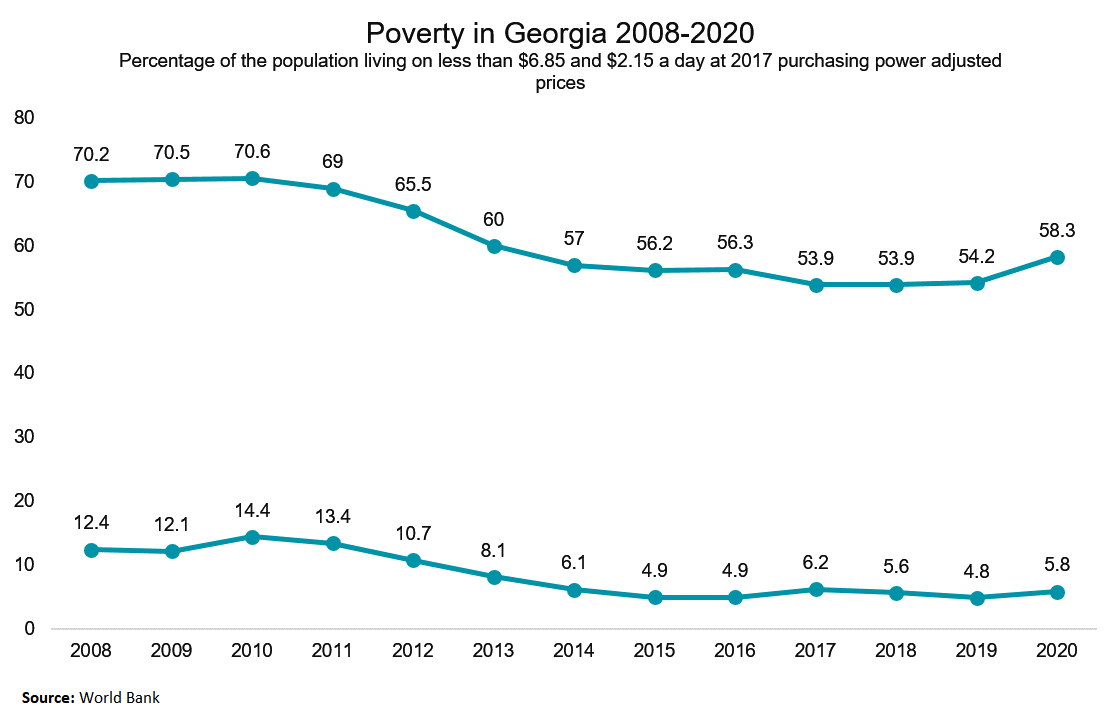
While two thirds of the public think that poverty has worsened, World Bank data suggests that poverty in Georgia has declined over the past decades. Although there are ups and downs in the data over the years, there has been a decline in the share of Georgians living on under $6.85 (converted into purchasing power parity) a day, from 66% in 2012 to 58% in 2020. The percentage of Georgians living in poverty did, however, increase in 2020, likely in response to the pandemic. A similar trend is present for the $2.15 poverty line (converted into purchasing power parity), with declines from 11% to 6%.
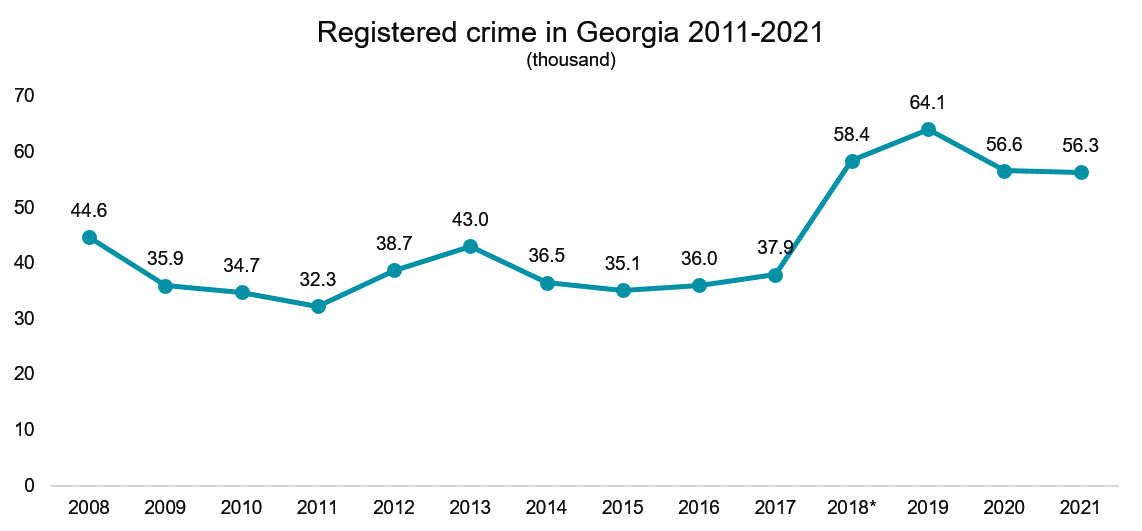
Roughly three in five Georgians (57%) believe that crime has worsened over the last decade. Official statistics seem to confirm people’s negative views, with Georgia registering 56,300 crimes in 2021, compared to less than 40,000 ten years prior. However, in 2018 the Ministry of Internal Affairs changed its crime recording methodology in a way that meant that a greater range of crimes were recorded. As a result, it is not possible to unequivocally claim that crime has substantially increased over the last 10 years.
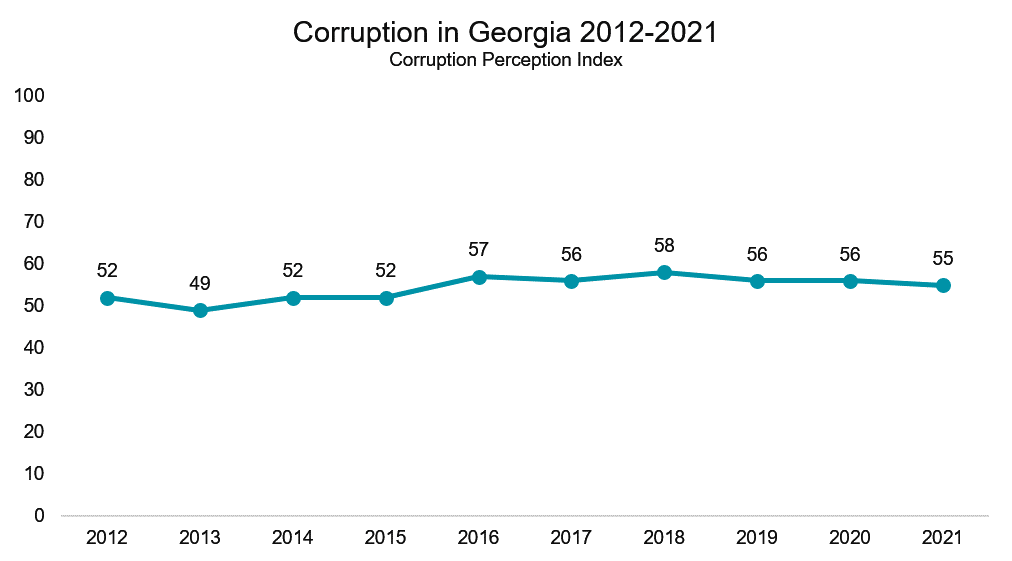
Two in five Georgians think that corruption (43%) has worsened in the last decade. However, the Corruption Perception Index (CPI) suggests that corruption has not varied much over the last decade, with a slight improvement from 2013-2018 and slight decline since.
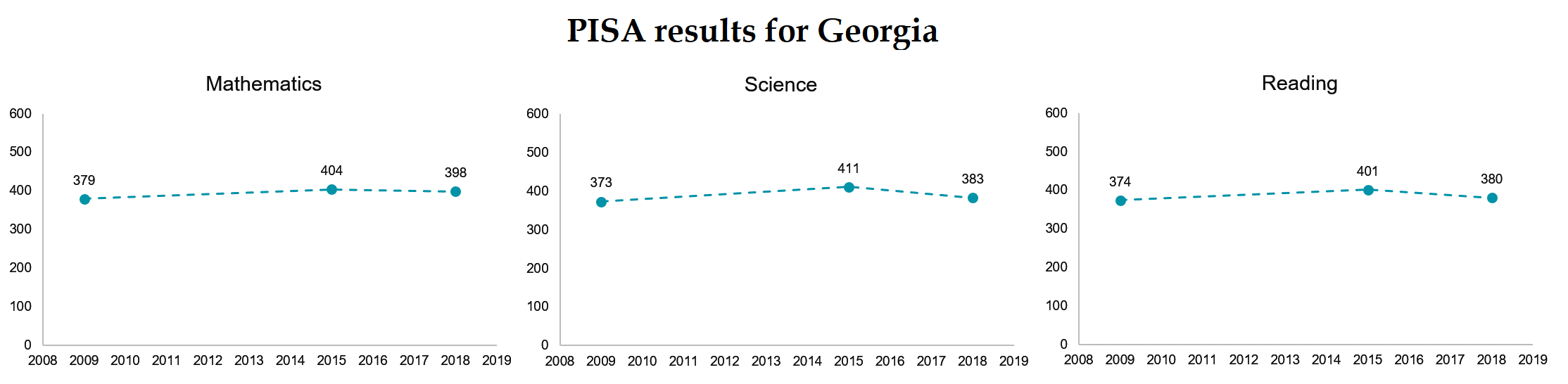
With regards to education, 40% of the public feel it has worsened. But data from the Programme for International Student Assessment (PISA), a study intended to evaluate national education systems, suggests that Georgia has slightly improved its scores in the last decade, albeit with a slight decline since 2015. 
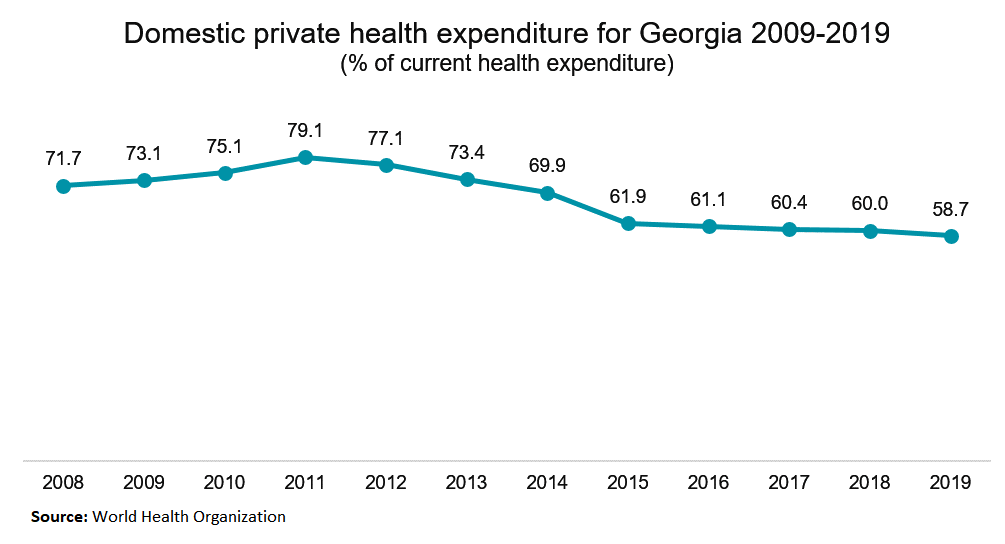
Some of the most positive public assessments were for affordable healthcare. About a third of the public (36%) believe that the situation around affordable healthcare has improved in the last decade. Data from the World Health Organisation appears to corroborate this, as it suggests that domestic private health expenditure in Georgia has declined as a share of total health expenditure from 77% to 59% of spending. However, it must also be noted that lesser private and greater public expenditure is no guarantee of better quality health care services. 
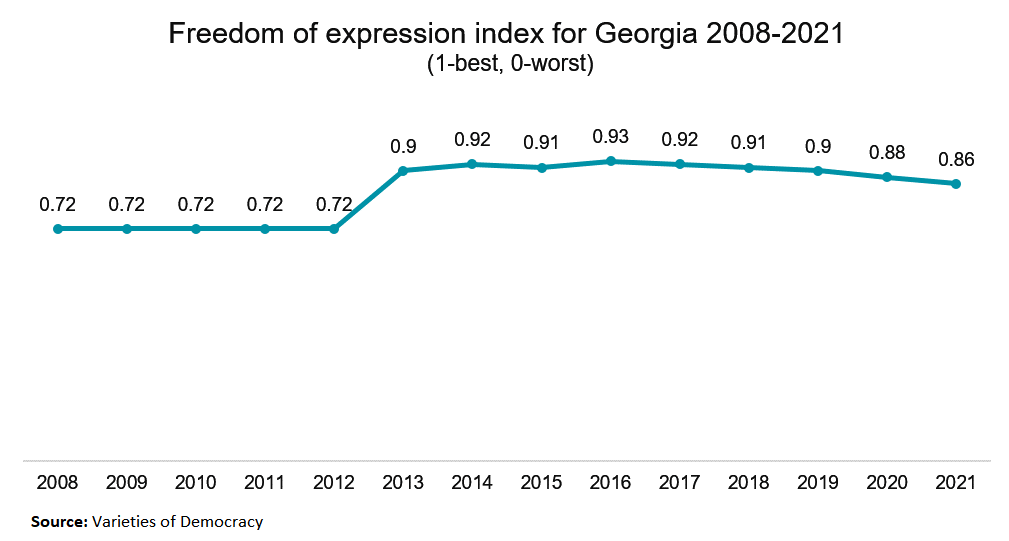
In terms of freedom of speech, a third of Georgians believe that it has improved over the last ten years. Data from the Varieties of Democracy project suggest that Georgia’s scores did improve in 2012-2013, but have declined since 2016. 
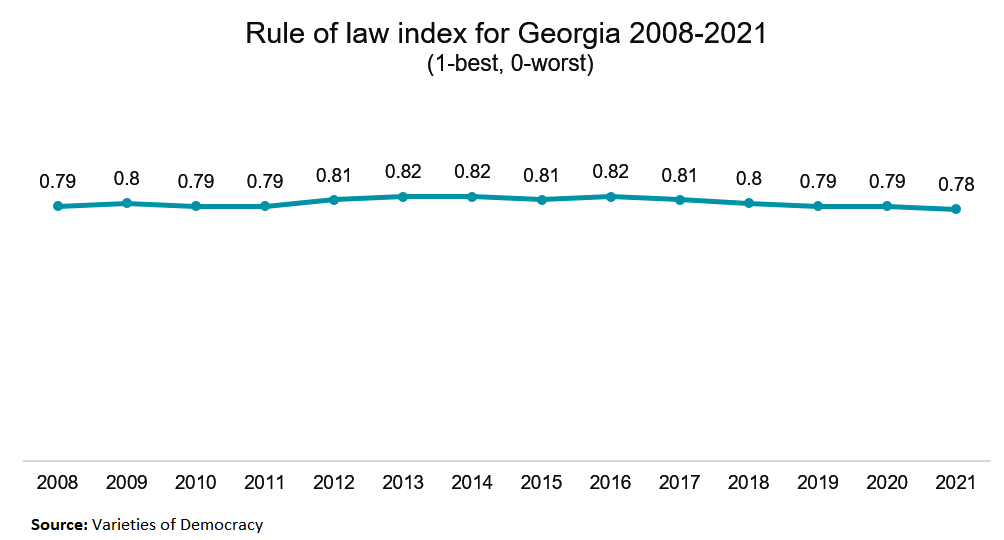
As for the court system, roughly one in three people (31%) think it has worsened over the last decade, but the Varieties of Democracy project suggests that Georgia’s score on the rule of law index has not changed since 2008. 
The public tends to think that the situation in Georgia in terms of poverty, crime, and territorial integrity has worsened over the last decade, while feeling most positive about freedom of speech and access to affordable healthcare. However, these sentiments are not reliably supported by publicly available data on the issues.

Monday, November 27, 2017

Perceptions of professionalism, corruption, and nepotism in local government

Professionalism, honesty, and fair competition are important in any institution. Yet, incidents involving corruption, nepotism and/or a lack of professionalism are sometimes reported in the Georgian media when the work of local government bodies is covered. How does the public perceive local government? This blog post describes data from the June 2017 CRRC/NDI survey, which show that a majority of people in Georgia thought that there were problems with nepotism and a lack of professionalism in local government. Moreover, roughly half of the population thought that their local government also faces a problem with corruption.

These assessments vary across different settlement types. The population of Tbilisi and other urban settlements was most likely to think that their local government faces all three problems. A majority of people from rural and ethnic minority settlements agreed that there was a lack of professionalism in their local government, but fewer agreed that there were problems with nepotism and corruption. Notably, as with many other survey questions, a high share of the population of ethnic minority settlements answered “Don’t know”.


People’s perceptions also vary by their level of education. People with higher levels of education agreed more often that their local government has issues with nepotism, professionalism, and corruption.


Note: Answer options to the question “What is the highest level of education you have achieved to date?” were recoded. Answer options “Did not obtain a nine-year certificate”, “Nine-year certificate”, and “Secondary school certificate” were combined into “Secondary or lower”. Answer options “Bachelor’s degree/5-year diploma” and “Any degree above Bachelor’s” were combined into “Higher than secondary”. 

In June 2017, a majority of the population of Georgia agreed that their local government had issues with professionalism and nepotism. Corruption was less often reported to be a problem, though 1/3 of the public (and almost half of the population of Tbilisi) agreed with the statement that there was corruption in their local government.

To explore the data in this blog post more extensively, visit CRRC’s Online Data Analysis tool.


Wednesday, February 11, 2015

Trust and Distrust in Political institutions in Azerbaijan

[This is a guest blog post by Anar Valiyev, Azer Babayev, Hajar Huseynova and Khalida Jafarova, prepared in the framework of the Research Beyond the Ivory Tower project of the Norwegian Institute of International Affairs (NUPI). The views expressed in this blog are those of the authors alone, and may not reflect the views of CRRC-Armenia, CRRC-Azerbaijan, or CRRC-Georgia.]

This blog post is based on research on (dis)trust in political institutions in Azerbaijan. Internationally, levels of trust in political institutions often reflect how well these institutions perform in relation to citizens’ expectations. This is not necessarily the case in Azerbaijan. Although survey results consistently show that trust in the President is high, crucial political institutions such as Parliament and local government are less trusted and, overall, the level of trust is not very high. This is important because of two implications: on the one hand, high levels of political trust can aid economic development and political stability. Distrust in political institutions, on the other hand, can lead to low voter turnout and the weakening of democratic reforms. Allegedly, it may also lead to corruption.

As in other post-Communist states, in Azerbaijan, political distrust is historically rooted. Even during the Communist regime, trust toward state institutions was not high due to high levels of corruption, nepotism and mismanagement of institutions. Since the collapse of the Soviet Union, declining trust levels and poor public management have led to political apathy and low membership in political organizations.

In Azerbaijan, which is a presidential republic, trust in the President and trust in other institutions of the executive government differ from each other. While, according to CRRC’s Caucasus Barometer survey, 56% of the population reports trust and 22% distrust in executive government, e.g. the Ministers, 84% of the population reports trusting the President of Azerbaijan. However, only 39% of the population reports trusting local government. Attitudes towards local government are also reflected in very low turnout during municipal elections – 32% in 2009, 23% in 2011, 39% in 2014. It is possible that people do not see much value in participating in these elections due to the ineffectiveness of municipalities.

In order to address the issue of distrust in political institutions, the government should take immediate action by making the work of state institutions transparent and public, educating the public on the importance of state institutions, and involving the public in the decision-making processes.

Friday, October 26, 2012

Corruption in the South Caucasus

Corruption and paying a bribe was not uncommon in the former Soviet Union. However, following the collapse of the USSR, rampant corruption began to permeate virtually every aspect of daily life in newly independent Armenia, Azerbaijan, and Georgia (Sandholtz and Taagepera 2005). Reports by international organizations, such as Transparency International and International Alert, have revealed perceptions about the high level of corruption that has affected political, social, and economic live throughout the South Caucasus. Since the late 1990s, Armenia, Azerbaijan, and Georgia have engaged in several anti-corruption campaigns (e.g., the Anti-Corruption Strategy and Implementation Action Plans in Georgia and Armenia, USAID Mobilizing Action Against Corruption (MAAC) in Armenia, and the 2012-2015 National Action Plan to Combat Corruption in Azerbaijan) that have yielded varying results. Bribing is one form of corruption that CRRC’s Caucasus Barometer has addressed. Since 2007, CRRC has been conducting the Caucasus Barometer (CB) survey on social, political, economic, and cultural processes in the South Caucasus region, and has asked several questions on bribing over the years. This blog explores data on these questions in Azerbaijan, Armenia, and Georgia based on the 2008, 2010 and 2011 surveys. The 2009 CB did not include any questions on bribes.

According to the 2008 CB survey data, 34% of the Azerbaijani population said that they, or members of their household, had been in a situation during the last 12 months when they had to pay a bribe in order to get a service or preferential treatment. In Armenia, 9% of the adult population said that they or their relatives had to pay a bribe during the last 12 months, and 4% of Georgians said the same.    

Figures may not sum to 100% due to “Don’t Know” and “Refuse to Answer” responses.

Data from the 2010 CB survey show some change in corruption rates for Azerbaijan and Georgia. In 2010, 30% of Azerbaijanis said they had paid a bribe during the last 12 months.  The rate for Armenia remained unchanged (9%), while only 1% in Georgia reported paying a bribe within the previous year.    


The 2011 CB reveals decreasing rates for all South Caucasian states. Based on the most recent CB survey, 27% of the Azerbaijani population said they paid a bribe during the last 12 months, followed by 6% of people in Armenia. Georgia seems to have been the most successful in fighting corruption with no person saying they had paid a bribe during the last 12 months.  


Even though corruption persists in many forms in the South Caucasus, the CB data show that between 2008 and 2011 the percentage of people who reported paying bribes decreased in the South Caucasus. With such a sensitive question, it is important to pay attention to the proportion of responses between the countries. What factors do you think have contributed to such differences in the region?

You can further explore the CB data sets by visiting CRRC’s interactive Online Data Analysis tool at http://www.crrc.ge/oda/.


Wednesday, March 14, 2012

Georgia Corruption Data | Now Available

Recently, a nuanced article in an Indian magazine discussed "How Georgia Did It" to get rid of corruption. This has, of course, been a topic of extensive debate in India. It's good to see that lessons are being drawn from the Georgian case, and that they travel beyond the immediate neighborhood.


The article cites a broad number of participants in the reforms, quotes Transparency International, and also refers to CRRC's research on Judicial Independence. Find the link to the article here.

On the theme of battling corruption, CRRC recently contributed some data analysis to a World Bank report that summarizes the Georgian lessons in the following way:
"From the case studies, 10 factors emerge that help explain Georgia's achievements to date: exercising strong political will; establishing credibility early; launching a frontal assault; attracting new staff; limiting the state's role; adopting unconventional methods; coordinating closely; tailoring international experience to local conditions; harnessing technology; and using communications strategically. While many of these factors may seem obvious, the comprehensiveness, boldness, pace, and sequencing of the reforms make Georgia's story unique."
Comparatively little data was cited in the report (link is here), but our Caucasus Barometer data certainly corroborates that there are huge regional differences.


To give good access to our data, we have now made a collection available on our website – more than 80 pages of tables, that offer a comprehensive overview over the years. This includes data from CRRC and other organizations, and thus should be a useful resource. To access this data collection, please click here. 

Comments? Let us know.

Tuesday, November 08, 2011

Armenian Corruption Survey Retrospective | still relevant

The Mobilizing Action Against Corruption (MAAC) effort in Armenia, led by Casals, has come to an end. We undertook four surveys for this USAID project, three household surveys and one business survey. Unfortunately it proved impossible to do a survey among civil servants. The surveys showed that Armenia made practically no progress against corruption, over the three years.


An overwhelming amount of Armenians believed that corruption is a serious problem, and there was only limited change on the fringes.


The data remains available for analysis, and we believe that it continues to be important. There is a final legacy report that Casals published, accessible here.

To find the data sets, and the corruption reports, click here.

Thursday, July 28, 2011

Upswing of Transition in Georgia

This past summer, Freedom House launched the 14th edition of its Nations in Transit (NIT) report. The publication comprehensively monitors democratic developments in 29 countries from Central Europe to Eurasia, amongst them Georgia, Armenia and Azerbaijan. CRRC is represented in the report with data from the 2010 Corruption Survey in Armenia.

Each chapter of NIT assesses a country with regard to media independence, judicial framework fairness of jurisdiction, freedom of elections and levels of corruption. The overall analysis finds that the ever-growing tenures of authoritarian leaders in the former Soviet Union have contributed to a number of looming governance problems (e.g., including the inability to develop law-based systems or tackle corruption).

As for the South Caucasus, Freedom House reports a deteriorating situation for Azerbaijan and Armenia in the fields of democracy and local governance. The assessment for Georgia is more positive. The country improved its ratings in democracy, national governance, electoral processes and corruption. Yet, Georgia’s judiciary was marked down due to persisting inconsistencies in interpretation, enforcement of legislation, and inhumane conditions in detention facilities for example.

Wednesday, April 06, 2011

CRRC-Azerbaijan Junior Research Fellows Compete for the Best PowerPoint Presentation

On March 11, 2011, the participants of CRRC-Azerbaijan’s Junior Research Fellowship Program (JRFP) competed for the best PowerPoint presentations based on data from the 2009 Caucasus Barometer (CB). The event was their first time demonstrating their skills in organizing and presenting data. The fellowship selection committee and organizers were anxious to see what the fellows would present after many months of training in quantitative data analysis.

All of the presentations were interesting, vibrant and thoughtful. Some of the fellows provided deep insight into challenging social issues. The fellowship selection committee, represented by Leyla Karimli, Sabina Rustamova, Tamerlan Rajabov and CRRC program staff had a difficult time selecting the contest winners. Topical clarity, use of CB data, coherent information and presentation skills were all considered by the committee. The winners of the best three presentations were Aynur Ramazanova, Shahla Mammadova and Nargiz Mammadova.

Aynur Ramazanova examined the experiences of divorced women in Azerbaijan and showed that they are more likely than married women to experience feelings such as loneliness, emptiness and rejection. Shahla Mammadova also dealt with psychological issues arguing that people with a stronger psychological state are more likely to rate their health as ‘good’, get up early in the morning, have a job and generate more income. Nargiz Mammadova compared levels of trust and corruption in Georgia, Armenia and Azerbaijan.

The winners of the competition received external hard drives. The other presenters received USB flash drives as recognition gifts. Please see some photos from the presentations below!


Friday, December 17, 2010

Why do so many Armenians leave Armenia?

Our 300th post is by Ani Navasardyan, from the Civilitas Foundation in Armenia, who was working with our Georgian and Regional office for a month. 

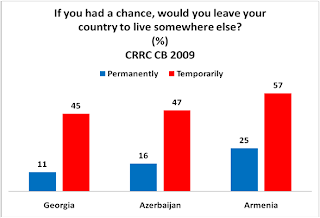
The volume of out-migration from the three countries of the South Caucasus greatly increased after the collapse of the Soviet Union in 1991. Data from the 2009 Caucasus Barometer (CB) shows that this trend continues. Fifty seven percent of Armenians want to temporarily leave Armenia, while this number is 45% in Georgia and 47% in Azerbaijan for their respective populations (See Figure 1). Twenty five percent of Armenians want to permanently leave Armenia, while this number is 11% and 16% for Georgia and Azerbaijan, respectively.

Figure 1
According to data provided by the National Statistical Agencies of Armenia, Azerbaijan and Georgia, the 2009 migration balances in these countries were -25, +1 and +34 people (in thousands), respectively. Thus, the number of people who left Armenia exceeded the number of those who entered by 25,000. In contrast, the number of people who entered neighboring Georgia and Azerbaijan was higher than the number of people who left these countries. Why do so many Armenians leave Armenia?

In all three countries, there is a general trend of younger people being more inclined to emigrate. Figure 2 shows that with respect to gender, there is a fairly even percentage of men and women who want to temporarily or permanently migrate abroad from Georgia. However, there is a higher percentage of men in both Armenia and Azerbaijan that want to temporarily or permanently migrate abroad when compared to women.

Figure 2
Yet, we find that the percentage of those who wish to leave Armenia is higher than in the other two countries. Perhaps this is due to structural factors such as regime type, level of socioeconomic inequality (unemployment, per capita GDP, Gini index), risk or presence of war, level of corruption, or social/cognitive factors including the existence of friends and family abroad, or feelings of rejection, trust or emptiness. Table 1 shows a few possible explanatory factors.

Armenia lies in between Georgia and Azerbaijan with regard to all of the structural factors: regime type, per capita GDP, unemployment rate and level of socioeconomic inequality. There is a discomfort regarding territorial disputes in all three countries (Nagorno Karabagh, Abkhazia and South Ossetia). However, the Armenian population stands out as having more friends and family abroad and as having more negative feelings. The CB shows that 56% of Armenians have a family member abroad, while this number is 40% and 37% in Azerbaijan and Georgia, respectively. These numbers are 36% in Armenia, 16% in Azerbaijan and 26% in Georgia with respect to having a close friend abroad. Moreover, more Armenian households rank money from relatives abroad as the first source of income (6%), than households in Georgia (4%) and in Azerbaijan (4%).

Why do you think the level of out migration is so much larger for Armenia in comparison to Georgia and Azerbaijan? Share your thoughts and ideas with us.

Friday, December 10, 2010

TI: Corruption Reigns Worldwide; Georgia Comes Out on Top

According to Transparency International’s recently released 2010 Barometer, rates of corruption in the world are rising. Six out of ten respondents say that corruption has gotten worse over the past three years, and most alarmingly, rates of bribe-paying to the police have nearly doubled since 2006. However, as the chart below illustrates, Georgia fares extremely well in this global assessment, as the only post Soviet country in this list where less than 6% of respondents reported paying bribes in the past year. Georgia thus is way ahead of several EU countries, including Austria, France, Greece and Poland.

Armenia is already in the top three league of corruption, and Azerbaijan in the top two. Note that this matches our own corruption data from Armenia, which we collected for MAAC. We are releasing this with a press conference today. More on that to follow.


Access the full report here, and provide us with your thoughts and comments.

Friday, October 29, 2010

Small changes in corruption rates in the Caucasus

On October 26 Transparency International released the results of the 2010 Corruption Perception Index (CPI). The CPI is a measure of domestic, public sector corruption in 178 countries, rating them on a scale from 10 (very clean) to 0 (highly corrupt). Nearly three quarters of the countries in the index score below five and the South Caucasus countries are no exceptions.


Georgia ranks best in the South Caucasus on place 68 with the score 3.8, an insignificant change from 2009 (place 66 with a score of 4.1). Georgia’s 2010 score is comparable to those of Italy, Brazil and Cuba. Out of all post-Soviet countries, only the Baltic States rank better. Still, it is far from the top-ranked countries with scores of more than 9.

Also Armenia maintains a stable ranking in the CPI, moving from place 120 in 2009 to 123 and a score of 2.6 in 2010, sharing place with Madagascar, Niger and Eritrea.

Looking at Azerbaijan’s ranking, it moved from place 143 in 2009 to place 134 in 2010. It does, however, not indicate a significant decrease in corruption as the scores only improved from 2.3 to 2.4. It rather shows that more countries in the index performed worse this year than in 2009. The Azerbaijani scores are comparable to those of Ukraine, Sierra Leone, Bangladesh and Honduras. Of the post-Soviet republics, Russia, Tajikistan, Kyrgyzstan, Turkmenistan and Uzbekistan did worse than Azerbaijan.

Denmark

9.3

New Zealand

9.3

Estonia

6.5

Italy

3.9

Georgia

3.8

Brazil

3.7

Cuba

3.7

Eritrea

2.6

Madagascar

2.6

Niger

2.6

Armenia

2.6

Uganda

2.5

Azerbaijan

2.4

Bangladesh

2.4

Sierra Leone

2.4

Russia

2.1

Uzbekistan

1.6

Somalia

1.1

Scores for selected countries according to the 2010 CPI.

You can access the full CPI report here. To learn more about perceptions and attitudes toward corruption in Armenia, visit the CRRC Armenia website to get free access to the USAID Mobilizing Action Against Corruption (MAAC) survey dataset and reports. You will also find several posts on corruption in the South Caucasus here on the blog.

Tuesday, October 05, 2010

Armenia’s ranking in the World Governance Indicators

The recently updated database of the World Governance Indicators (WGI) shows an improvement in Armenia’s ranking in political stability, fight against corruption, government effectiveness and regulatory quality. A project of World Bank and Brookings Institution, WGI provides governance ranking of over 200 countries since 1996 on six indicators: Voice of Accountability, Political Stability and Absence of Violence, Government Effectiveness, Regulatory Quality, Rule of Law and Control of Corruption. WGI uses a 0-100 percentile ranking indicating the rank of the country among all countries in the world where 0 is the lowest and 100 the highest rank. Despite the reported progress, however, Armenia is still at the lower 50 percentile of the countries included in the study.

Where does Armenia stand in the list of the post-Soviet countries? Armenia is scoring higher than most of the post-Soviet countries (excluding the Baltic states) on all the indicators except Political Stability and Voice of Accountability. Armenia’s score on Voice of Accountability, an indicator capturing citizens’ participation in selecting the government, freedom of expression, freedom of association and free media is not only low, but it has deteriorated over the last decade.

Armenia along with the rest of the post-Soviet countries is also ranked low on the Control of Corruption indicator, with the majority of the countries at the 0-25 percentile. Georgia is scoring significantly better than other post-Soviet countries.


Actually, Georgia is leading the list of the post-Soviet countries on all the indicators except the Political Stability and Absence of Violence indicator, where it is ranked at the same percentile with Russia, Uzbekistan and Tajikistan (0-25 percentile). In the light of the contested presidential elections of 2008 it is rather surprising that Armenia (ranked at the 25-50 percentile) has recorded improvement on the indicator since 2004.

The aggregate indicators combine the views of large samples of the citizens, experts, enterprises and other available indexes. Detailed methodology and documentation is available on the WGI website. The website also provides a user friendly analysis tool, which creates tables and maps by country, allowing also by year comparisons. Full dataset are publically available and can be downloaded here. And, as always, a reminder that CRRC has done a comprehensive corruption survey of households and business, with materials available here.

Friday, September 10, 2010

Winners of the First Stage of the Junior Research Fellowship Program-Azerbaijan Announced

In August 2010, the Fellowship Selection Committee of the Junior Research Fellowship Program (JRFP)-Azerbaijan had the difficult task of selecting the three best policy papers submitted by program participants. The voting, which was held by secret ballot was extremely difficult because these three papers had minimum differences between scores. Thus, the distribution of the top three winners was unknown until the very last moment. CRRC-Azerbaijan is proud to present the winners of the JRFP policy paper competition: Aynur Ramazanova (first place), Shabnam Agayeva (second place) and Gulnar Mammadova (third place).

The competition for best policy paper was open to students or recent graduates of Azerbaijani Universities between the ages of 18 and24. Before working on their papers, participants were invited to become members of the CRRC Moodle Platform and to take two courses: Introduction to Public Policy Analysis and Academic Writing for Policy Analysis. These courses provided participants with the basic knowledge and skills necessary to successfully complete their papers. All of the projects conducted by students were remarkable and touched upon various significant social issues ranging from control over genetically modified products to e-government, and from programs for juvenile offenders to respiratory diseases among children.

The winner of the contest, Aynur Ramazanova, discussed the challenging issue of corruption in Azerbaijani Universities using Azerbaijan Medical Universities as her case study. Her findings indicate that 89.3% of students surveyed in the project had paid cash bribes at least once. Among the indicated causes of corruption were low teaching wages, a weak system of control over corruption in the higher education system, and the incompetence of management staff at universities. Results also found that students were often reluctant to learn and invest their energy into education since chances for a decent occupation on the labor market usually depend on the ability to pay bribe, rather than on their level of professionalism. The research also discusses the relationship between corruption and the general climate in society. When corruption and nepotism are a norm, students become socialized to it from early childhood. The author concludes that this negative socialization should be challenged through “positive propaganda” in the mass media and educational programs that will promote alternative values and show that corruption can easily suspend a country’s development.

The second place winner, Shabnam Agayeva, discussed the problem of inadequate services for survivors of marital physical abuse. She interviewed workers at NGOs that provide services for battered women. She also examined secondary sources to conclude that the absence of cooperation between key institutions such as hospitals, legal advice centers, crisis centers, shelters and police significantly hinders adequate responses to domestic violence. Therefore, the development of policy mechanisms to address this must be considered.

The third winner, Gulnar Mammadova, discussed the issue of education in her paper “Challenges of General Secondary Education at Public Schools in Azerbaijan: How to Turn the ’Quality of Reality’ into the ‘Reality of Quality’?” In her paper, Gulnar recommends expanding the size of public financing in education and ensuring effective budget distribution in order to confront important issues such as poor quality schooling in Azerbaijan.

The winners of this competition will be awarded iPods and the other participants of the JRFP competition will be awarded book vouchers. These are only the results of the first stage of the JRFP program. We anticipate many more interesting and challenging projects from our participants in the next two stages. The program will conclude in June 2011 with a conference where participants will publicly present their research projects.

The Junior Research Fellowship Program is implemented by CRRC office in Azerbaijan and was made possible with the generous support of the Open Society Institute, Think Tank Fund.

Friday, July 02, 2010

Post-Soviet States’ Democratic Decline: Results from Freedom House Report

Freedom House has just released its Nations in Transit report for the year 2010. The report attempts to quantify democratic development in Central European and Eurasian states by observing 8 separate factors – for instance, Electoral Process and National Democratic Governance - which affect the level of democracy in a given country. Each category is graded on a score of 1 to 7, with 1 representing the highest level of democratic progress, and 7 representing the lowest. Much of the media attention has typically focused on Russia. The report concluded with a new low for Russia with regard to its democracy score (6.14) and an overall rapid decline in the last decade attributed mostly to the Putin’s extreme centralization policies. However, it is important to look too at the lack of progress being made in the South Caucasus countries and what this may mean for future democratic efforts in a region prevalent to Russia’s foreign policy goals. Of the South Caucasus countries, democratic development in Georgia and Armenia remained stagnant, while in Azerbaijan it deteriorated.


Armenia’s scores remained exactly the same as those in the previous year, having fluctuated up and down by half a point over the last decade. Of particular concern is the level of corruption in Armenia, which many Armenians claim as having a negative impact on their everyday lives. The corruption rating remained at 5.5 and down from a decade-long trend of 5.75. Similarly, ratings for the country’s electoral processes, national democratic governance, and judiciary remained the same as the year before. To view CRRC's reports on corruption in Armenia, please click here.


Georgia’s scores also remained the same as those in 2009. Of great concern is Georgia’s level of national democratic governance. Whilst the national democratic governance rating remains at an uncomfortable 6.0, the report notes that despite political unrest and demonstrations, both protestors and the government mostly refrained from violence, which had been a severe problem in previous years. As a result, it may be construed that Georgia is making certain attempts at progress in this realm.


In Azerbaijan democratic progress regressed somewhat from the previous year, particularly in the area of judicial independence. In the NIT report, the judiciary is characterized as dependent upon the executive branch, whose power it helped to expand by supporting the 2009 referendum on the constitution. It is also judged to be highly corrupt, inefficient, and that it provides no mechanism for human, property, or civil rights violations. Like Russia, overall democratic progress in Azerbaijan has steadily deteriorated over the last decade.


Each category measured by the report for Russia has experienced either a decrease in democratic scores or has remained the same. In other words, the report has found no signs of improvement in any of the 8 categories. The overall democracy score has slipped from 4.58 in 1999-2000 to an “abysmal” 6.14. Whilst Russia views the South Caucasus as within its sphere of influence it is clear that Russia can offer little in the way of guidance when democracy promotion is concerned.


To see other posts on this blog on previous Freedom House reports, please click here.

Wednesday, November 18, 2009

TI's 2009 Corruption Perceptions Index: Georgia's Score in Context

Transparency International (TI) released its 2009 Corruption Perceptions Index (CPI) on 17 November, and Georgia’s score rose slightly to 4.1, compared to 3.9 in 2008, which marks a minor improvement. The CPI uses a scale where "0" equals highly corrupt and "10" denotes not at all corrupt. New Zealand, for instance, came in first with a score of 9.4, whereas Somalia came in last with a score of 1.1.

The methodology behind the CPI reportedly includes a combination of surveys and assessments from over the last two years of both resident and non-resident experts and business leaders from ten different independent institutions. For a country to be included in the index, at least three different sources must be available, and, according to the index, seven surveys were used for Georgia.

According to TI, the CPI is meant to be a "snapshot," not an indicator of progress over time, to gauge perceptions of corruption in the public and political sectors. A degree of caution should therefore be used when interpreting the CPI results, as they do not necessarily reflect the views of the wider public but the expert opinions of a small group (a third party) of public sector analysts.

The scores, however, are inevitably used to compare countries, and individual scores from the prior year are always mentioned in the media, i.e whether they have risen or dropped.

On a regional level, Georgia's scores are rather positive. Armenia scored 2.7 and came in 120th place, which was a slightly negative decrease from last year (2.9). Azerbaijan received a score of 2.3 (143rd place), a fair improvement from its mark of 1.9 in 2008.

Overall, Georgia's ranking places it 66th out of 180 countries. Interestingly, that score puts Georgia above EU Member States Greece, Bulgaria, and Romania, all of which scored 3.8 (tied for 71st place). Moreover, Georgia's score ties that of EU candidate Croatia and is above FYR Macedonia (3.8, 71st place), another EU candidate. Georgia also scored better than Montenegro (3.9, 69th place), Serbia (3.5, 83rd), Moldova (3.3, 89th), and Bosnia and Herzegovina (3.0, 99th). (Note that though the confidence intervals overlap substantially in the index, Georgia’s point estimate was still higher than in these other countries.)

For the 2009 CPI results and the methodological brief, go here.

Monday, July 06, 2009

2008 Armenia Corruption Survey of Households Report

2008 Armenia Corruption Survey of Households report highlights the main findings of USAID MAAC Activity Corruption Survey of Households. The report includes survey & sample methodology, opinions on general situation in Armenia, perceptions of corruption, personal experience with corruption and awareness of anti-corruption initiatives.


The report is available for download in English and Armenian at CRRC-Armenia website.

This is a cross-post from CRRC-Armenia blog.

Thursday, January 29, 2009

Heritage Foundation | Index of Economic Freedom 2008

(We today noticed that we forgot to post this earlier -- apologies!)

The Heritage Foundation provides visitors with the 2008 Index of Economic Freedom, which covers 162 countries across 10 specific freedoms such as trade freedom, business freedom, investment freedom, and property rights. The 2008 Index provides an even clearer picture of economic freedom by using data-driven
equations which allows countries to be graded between scores of 0 and 100.

According to the 2008 assessment, Azerbaijan’s economy is 55.3% free, which makes it 107th in the world. If we look at the distribution, Azerbaijan falls into Mostly Unfree category.

Azerbaijan has considerable challenges in Investment Freedom, Financial Freedom, Property Rights and Freedom from Corruption. Its overall score is insignificantly different (0.5% points) than the last year. Azerbaijan is ranked 18th out of 30 countries in the Asia-Pacific region, and its overall score is below the world average.


For more info on Azerbaijan, click here.

Georgia is in a much better situation than Azerbaijan, having a 69.2% free economy, which makes it the world’s 32nd freest economy. Its overall score is 0.1% point lower than last year. Similar to Azerbaijan, two categories remain significantly below the world average: Property Rights and Freedom from Corruption. Property Rights may reflect the 2006 and 2007 situation, in which old (illegally, as the government alleged) privatizations were rescinded. As for corruption, is the data really plausible? According to the CRRC Data Initiative (DI) 2007, only 1% of the respondents in Georgia say they had to pay a bribe in the previous year.


Moreover, Georgia is ranked 18th out of 41 counties in the European Region, and its overall score is equal to the regional average. For more info on Georgia, click here.

From the South Caucasus countries Armenia has the best score. It ranks 28th with 70.3% freedom, just narrowly beating Georgia.

But Armenia, like Georgia, scores way below the world average in Property rights and Freedom from Corruption categories. In Georgia's case, we are not convinced by the accuracy of the score on Freedom from Corruption. Note a further post on this issue, for more detail.

To view scores and rankings for any country, or to find out which are the top ten countries, along with detailed data and background analysis, click here.

Thursday, January 22, 2009

Index of Economic Freedom: a critical time lag?

Yesterday the Heritage Foundation released the Index of Economic Freedom 2009. The Index is published annually by the Heritage Foundation together with the Wall Street Journal for over 150 countries of the world (183 in 2009).


But the Index may be misleading, as the analysis of one of the index components reveals that some data that goes into it seem to be outdated. The index is calculated as an average of 10 indicators that measure the level of the economic freedom of a country. The indicators include: business, trade, fiscal, monetary, investment, financial and labor freedoms, as well as government size, property rights, and freedom from corruption.

To measure the last indicator, the Heritage Foundation uses the Corruption Perception Index produced annually by Transparency International. Data sources for CPI are surveys of business people and expert assessments. The authors of the Index of Economic Freedom take CPI and multiply it by 10, since the other 9 indicators that make up the Index are measured on a scale from 0 to 100.

One would expect that the Index published early in the year is based on the data from the previous year. We can expect that the 2009 index reflects the 2008 situation, even though calling this “a 2009 index” is misleading. However, the data goes back even further than 2008.

Compare the Index of Economic Freedom’s Freedom from Corruption score and CPI, which is used as the basis for the former, for Azerbaijan:
The CPI 2007 methodology explains that CPI combines assessments from the last two years – 2007 and 2006. This means that the Freedom from Corruption indicator in the 2009 Index of Economic Freedom is based on the figures of 2007 and 2006.

The authors of the Index use June 30 as the cut-off date for the inclusion of any information in the next year’s report. This means that all information that became available after June 30, 2008 was not included in the 2009 Index. That’s why the most recent CPI data, released by Transparency International in September 2008, did not go into the 2009 Index.

The Index of Economic Freedom is widely accepted as an annual assessment of a country’s performance. As such, it stirs discussion within society, and usually country’s previous scores are used for comparison. The FAQ section of the homepage for the Index states that “some factors are based on historical information." But what is the chance that an Azeri journalist or an ordinary citizen, who learns about the country’s Index for a given year, read the FAQ?

Also, one may ask how consistent and representative a mix of historical and current information (some Index components are based on the recent figures) is?

The credibility of international assessments like this and their impact on the governments, media and civil society across the world would only increase if they are consistent and based on an updated analysis.