Most Georgians believe it is unlikely the country will become involved in a war, though a significant minority remain unsure. Perceptions of war risk differ across demographic groups and are strongly shaped by political views and media trust.
Peace is the core issue that Georgian Dream and its supporters frequently present as the government’s primary achievement. Since the outbreak of war in Ukraine the ruling party has increasingly emphasized the threat of potential conflict and portray the preservation of peace as a key element of their success and a pillar of political stability.
In this context, understanding how the public perceives the likelihood of war becomes especially relevant. Data from CRRC Georgia’s spring 2024 Caucasus Barometer survey suggests that a majority (62%) of the public considers it unlikely that Georgia will become involved in any war, while 16% consider it as likely. Nearly one in five people (21%) remain uncertain on the issue.

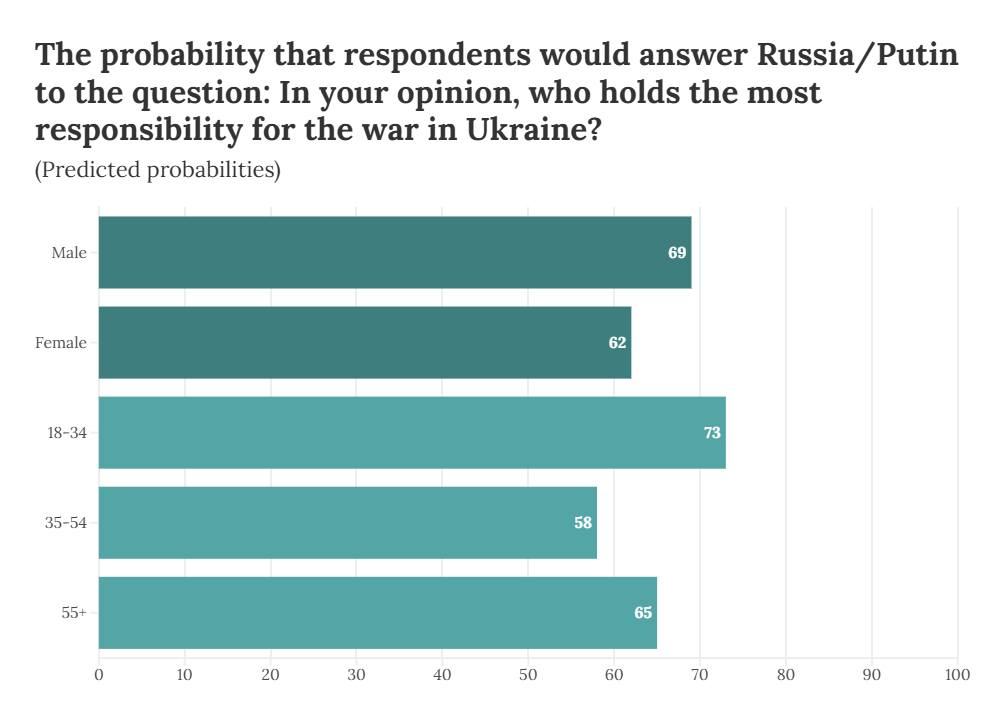
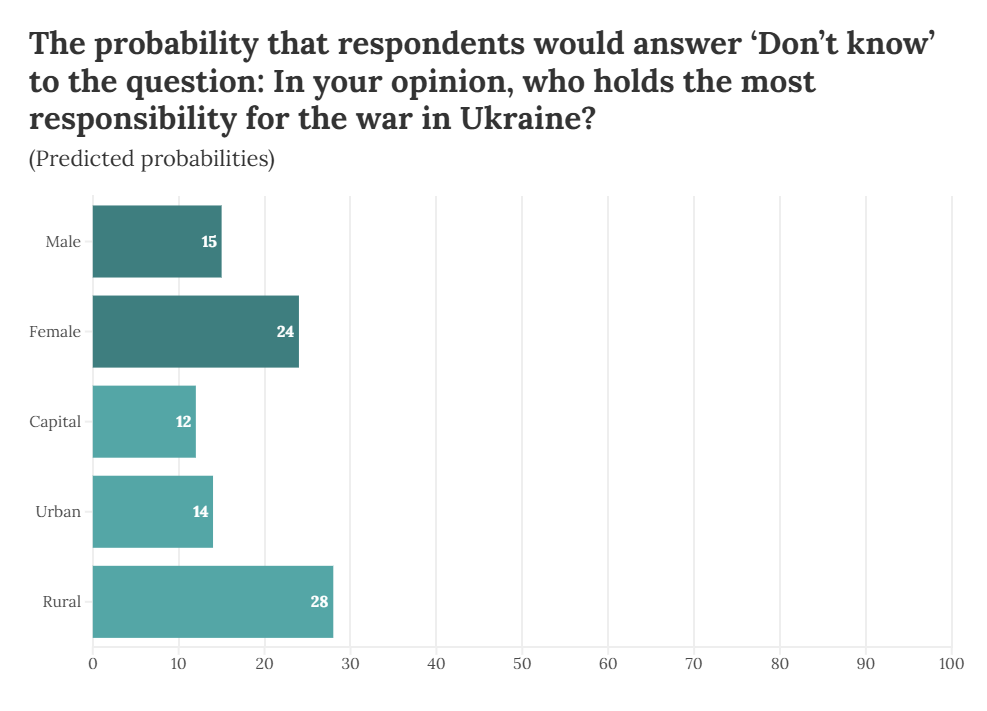
Further analysis shows that perceptions of the likelihood that Georgia may become involved in any war is associated with demographic factors such as age, education, and type of settlement. Older individuals (55+) are 15 percentage points while people between 35 and 54 years of age are 11 percentage points less likely to believe that Georgia will become involved in a war compared to younger people. Those with a technical secondary education perceive a higher risk of involvement than people with a lower level of education. Meanwhile, rural residents are more uncertain about the likelihood of war and are also less likely to think that war is likely.
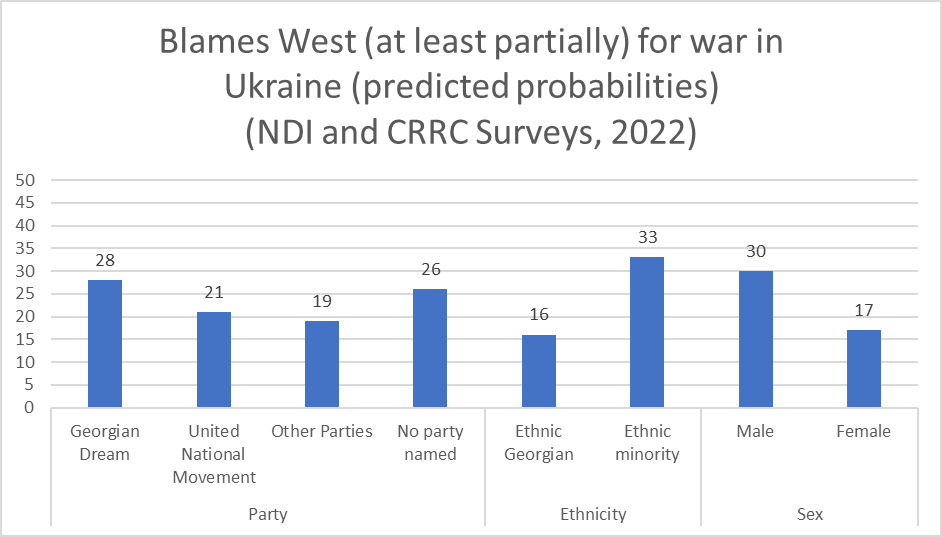
Notably respondent’s sex, employment status, ethnicity or household wealth does not significantly influence this perception.

Media trust is another important factor. Those who do not trust television are 12 percentage points more likely, and those who do not watch TV channels are 8 percentage points more likely, to perceive a higher risk of war compared to those who trust Imedi TV. Notably those who report that they trust Rustavi 2 for news on politics and events are 13 percentage point less likely to believe that Georgia will stay out of a war compared to those who trust Imedi TV.
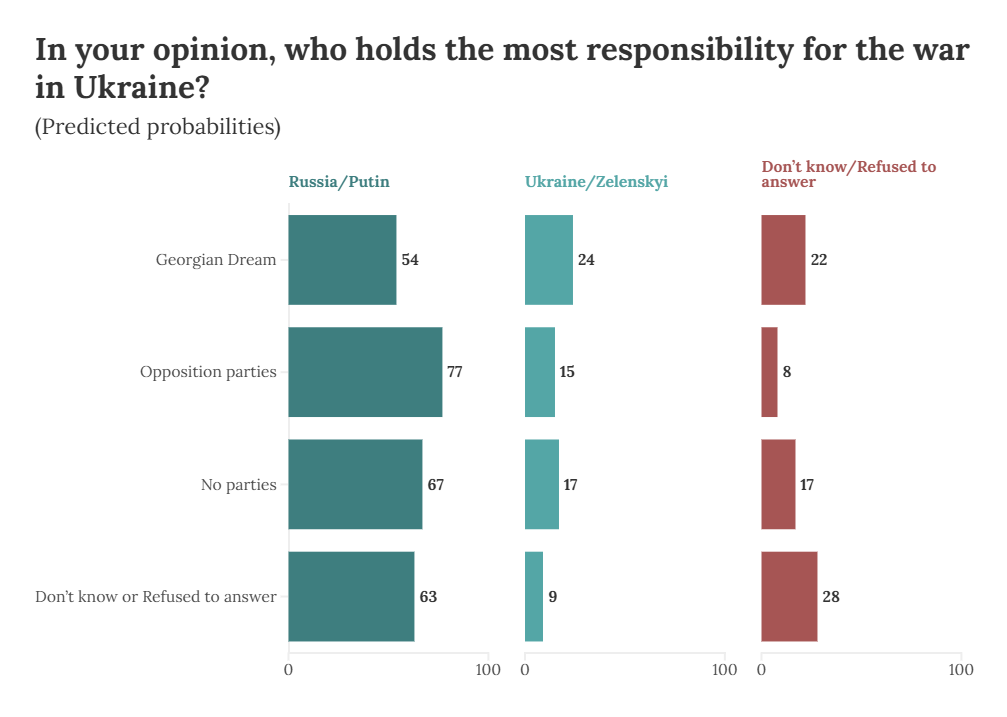
Political preferences also appear to influence perceptions around the likelihood of war. People who support opposition parties are 10 points more likely to say that Georgia is likely to become involved in any war. Respondents who did not provide a party preference about party support are 5 percentage points more likely to respond “Don’t know” to the war risk question and 11 percentage points less likely to say war is unlikely compared to Georgian dream supporters.

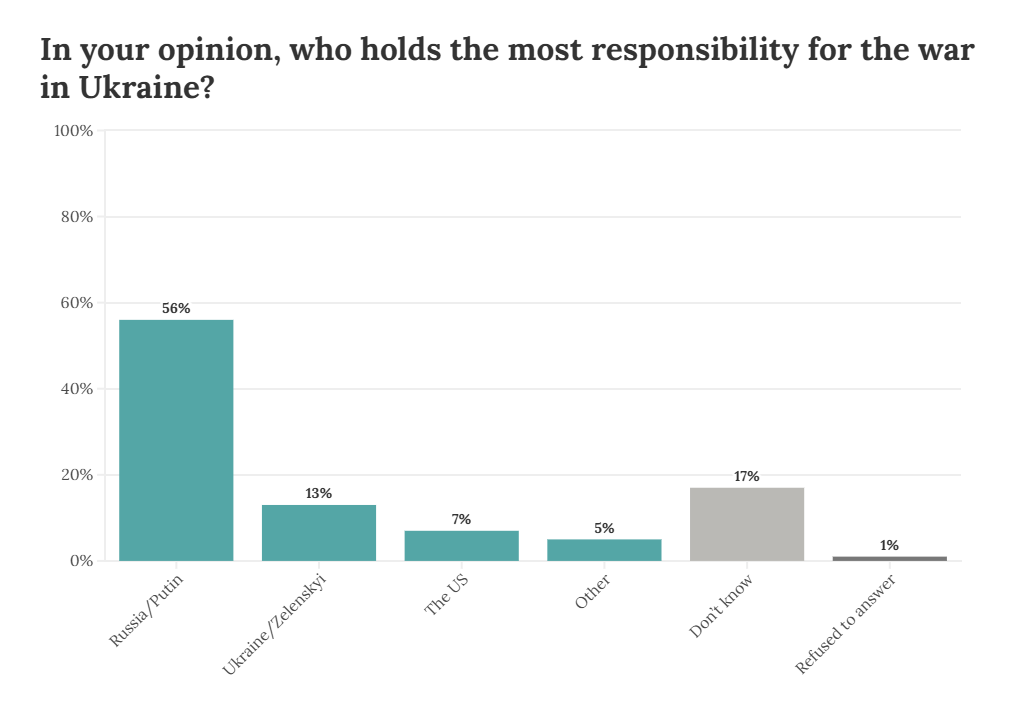
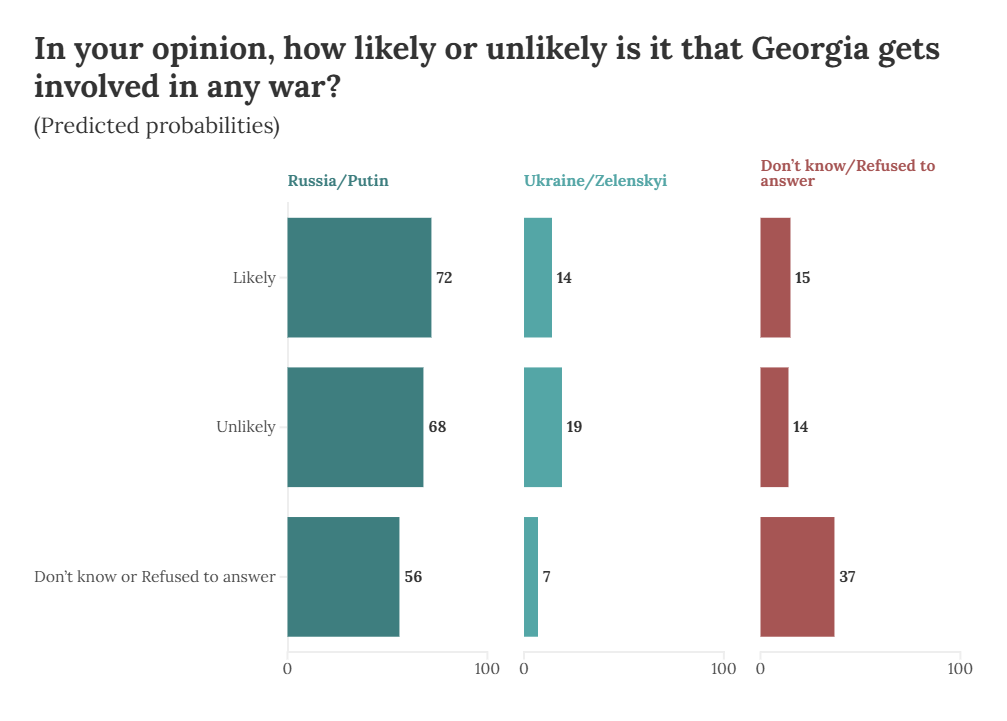
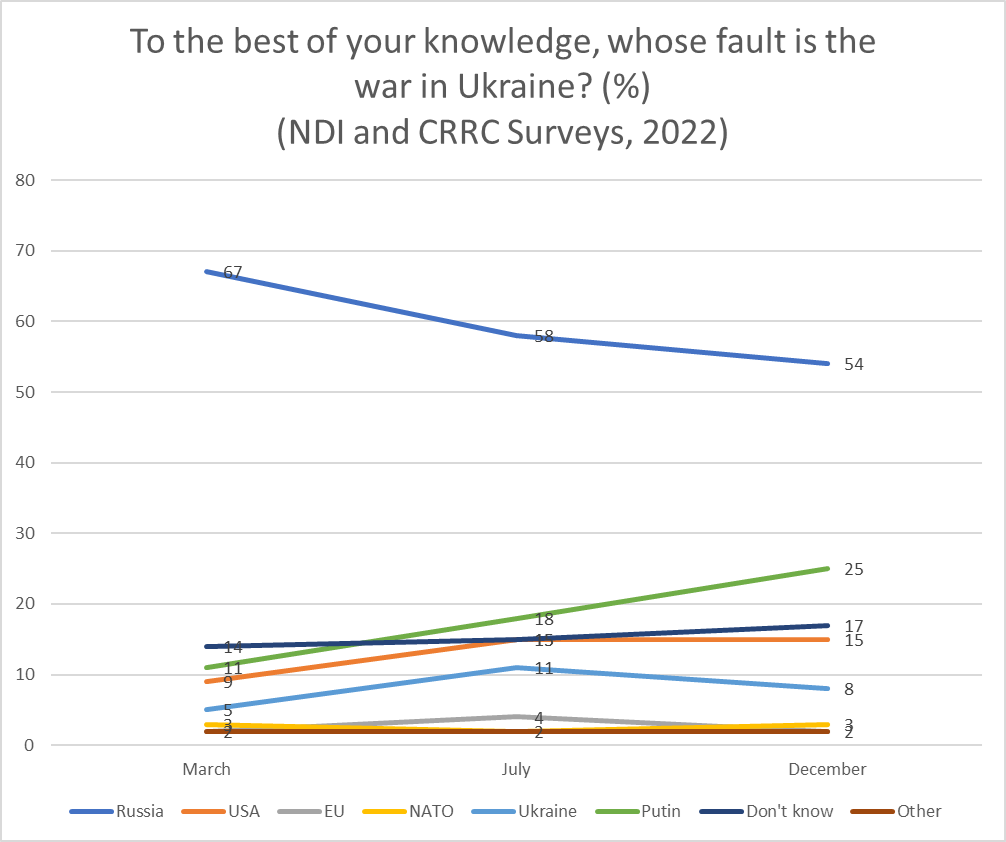
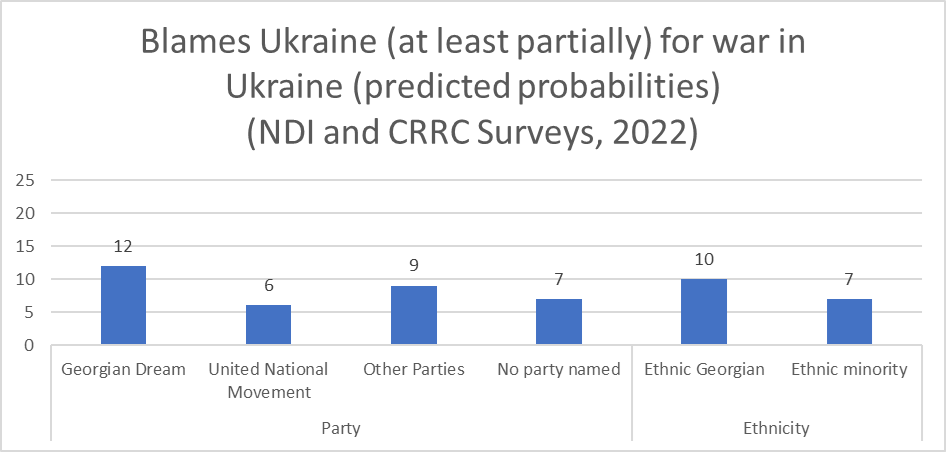
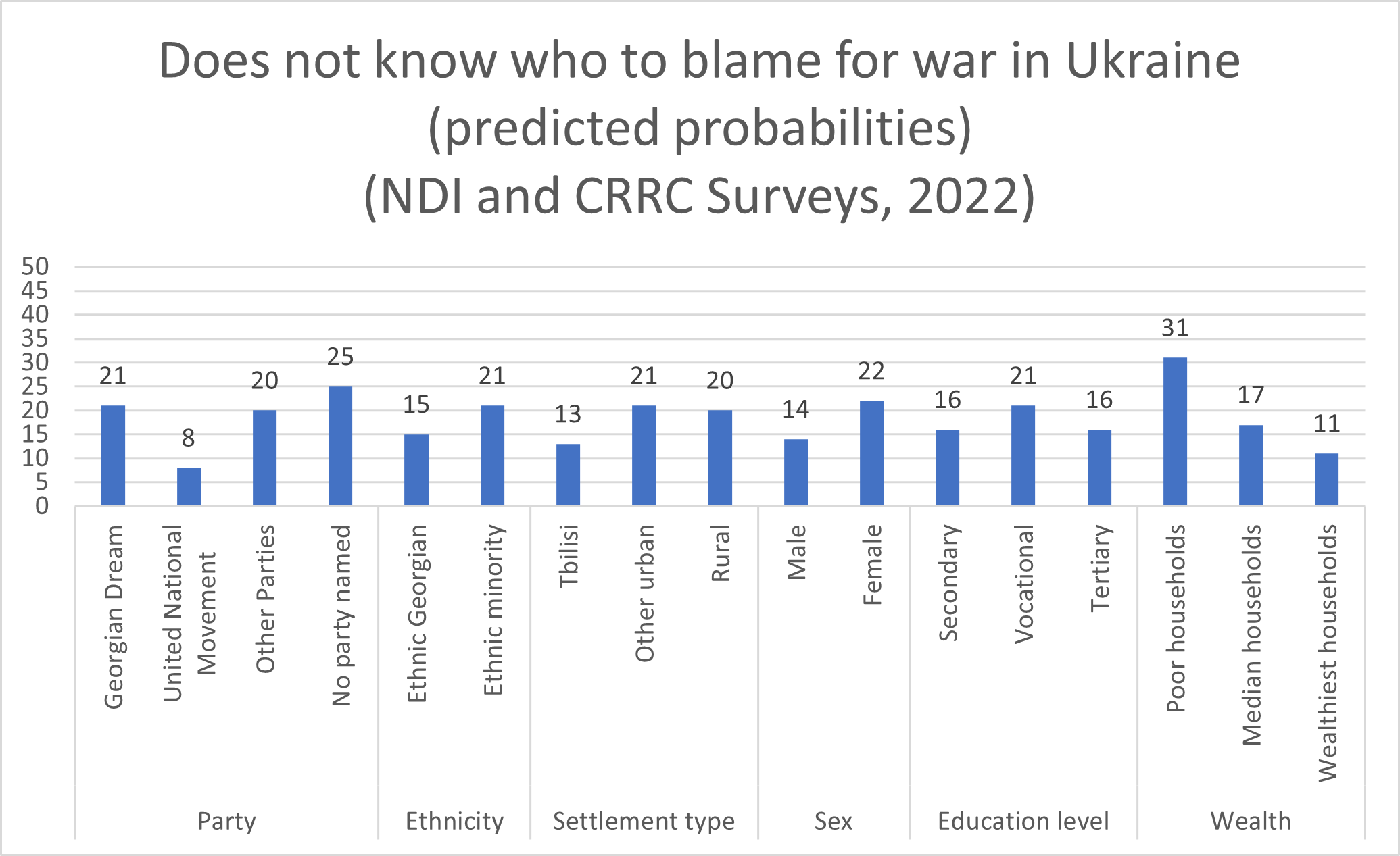
Furthermore, beliefs about who is responsible for the war inUkraine are also associated with perceptions of the likelihood that Georgia will become involved in a war. Respondents who blame Ukraine or Ukrainian President Volodymyr Zelensky for the war are 9 percentage point more likely to perceive that it is unlikely Georgia will be involved in any war, compared to those who blame Russian President Vladimir Putin.
In contrast, respondents who answered “Don’t Know” regarding responsibility are 19 percentage points less likely to believe that Georgia’s involvement in any war is unlikely, compared to those who blame Russia or Putin. Furthermore, those who are uncertain about who holds responsibility are also more likely to be undecided about Georgia’s potential involvement in a war, with 24 percentage point higher likelihood of choosing “Don’t Know” about risk of war. Finally, those who blame Ukraine or Zelensky are 10 points less likely to be undecided about Georgia’s potential involvement in a war compared to those who blame Russia or Putin.
Finally, perceptions of the country’s political direction are also linked to how people assess the risk of Georgia becoming involved in a war. People who believe Georgia is going in the right direction are 16 percentage points more likely to say war is unlikely compared to those who think it’s going in the wrong direction. Respondents who don’t know how the country is doing politically are less likely to say war is unlikely and more likely to say they don’t know about a risk of war. Those who think there’s no change in the political direction are 7 percentage points more likely to say “Don’t know” about a risk of war.

Finally, respondents who support Georgia’s EU membership are 9 percentage points less likely to believe that it is likely Georgia will become involved in a war, compared to those who do not support EU membership. In contrast, support for NATO membership shows no significant association with perceptions of war risk.

Overall, perceptions of Georgia’s potential involvement in a war is shaped not only by demographics, but also by political views, media trust, beliefs about responsibility for the war in Ukraine, perceptions of the country’s domestic politics and support of EU membership. Those who do not trust TV or watch TV are more likely to perceive a higher risk of Georgia’s involvement in a war. People who support opposition parties are also more likely to view the risk of involvement as higher. On the other hand, those who believe Georgia is going in the right direction are more likely to say war is unlikely, while those who feel there is no change in the political direction are more likely to say “Don’t know” about the risk of a war. Similarly, respondents who blame Ukraine or Zelensky for the war are more likely to think that Georgia will not become involved in any conflict. Notably, support for Georgia’s EU membership is associated with a lower perceived likelihood of the country becoming involved in a war.
This article was written by Eto Gagunashvili, a researcher at CRRC Georgia.
This analysis is based on a multinomial logistic regression, where the dependent variable is ‘How likely or unlikely is it that Georgia gets involved in any war?’ with three answer options: Unlikely, Likely, and Don’t Know. The independent variables include gender, age, settlement type, education, ethnicity, employment, household wealth index, partisanship, trust towards TV stations, who holds the most responsibility for the war in Ukraine, In which direction is Georgia’s domestic politics going, to what extent would you support Georgia’s membership in the EU and to what extent you support Georgia’s membership in-NATO.