Showing posts with label Religion. Show all posts

Tuesday, July 01, 2025

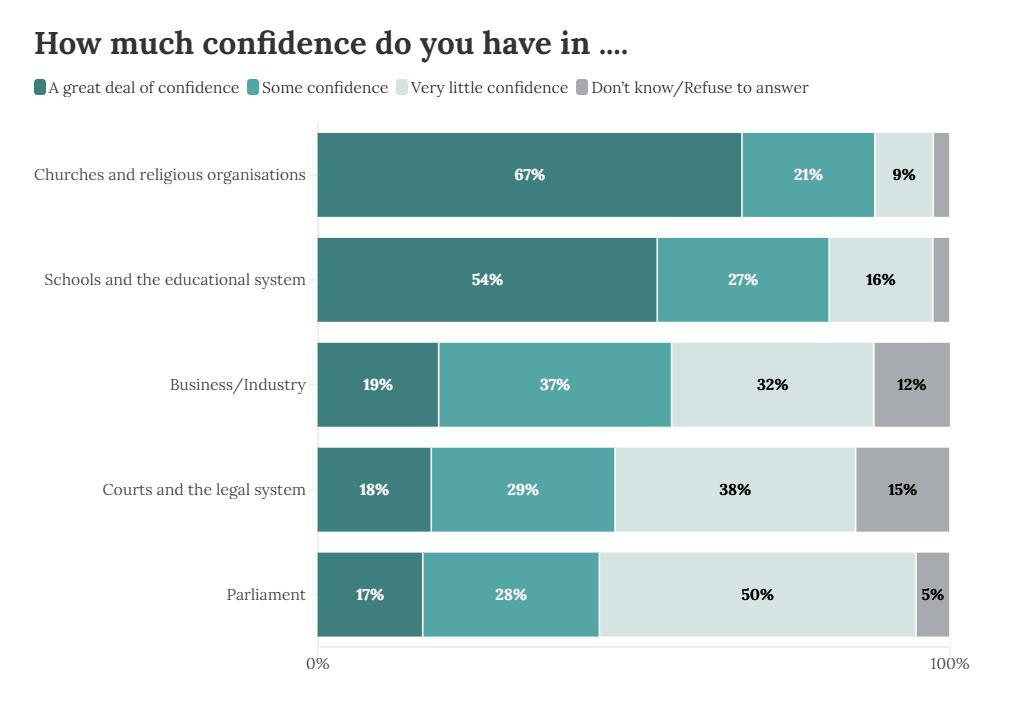
Georgians don’t want to be ruled by church, despite confidence in religious institutions

Note: This article first appeared on the Caucasus Data Blog, a joint effort of CRRC-Georgia and OC Media. This article was written by Teimuraz Kobakhidze and Katharine Khamhaengwong, researchers at CRRC Georgia. The views expressed are those of the authors and do not necessarily reflect the views of CRRC Georgia or its affiliates.

However, despite this confidence, 71% of Georgians agree that religious leaders should not try to influence how people vote, compared to 15% who disagree, 9% who neither agree nor disagree, and 4% who were uncertain or refused to answer the question.

Additionally, a plurality of Georgians, 42%, think churches and religious institutions have too much power in the country, while only 14% think they have too little power. Slightly over a third (36%) think religious organisations have the right amount, and 8% refused to answer or were uncertain over how to respond to the question.

Regression analyses looking at settlement type, sex, age group, education, having a partner or not, and frequency of religious service attendance shows that attitudes vary among different groups towards religious institutions’ role in society.

For confidence in churches and religious groups, sex, age group, and relationship status were not predictors of attitudes, while settlement type, education level, and religious service attendance were.

The groups most likely to express a great deal of confidence in churches and religious institutions were people in rural areas, weekly church attendees, and people with a secondary or lower education.

Education level similarly predicted responses to whether people believe religious leaders should try to influence voters — people with a higher education were less likely to agree that religious leaders should try to influence votes. Sex and relationship status were also correlated: women and those without partners were more likely to say that religious leaders should not influence voting.

Settlement type, age group, and frequency of religious service attendance did not predict attitudes.

Unlike the previous two questions, education level was not predictive of views on whether or not churches and religious organisations had too much or too little power in society. Settlement type, sex, and relationship status were likewise uncorrelated.

Age and frequency of religious service attendance, on the other hand, were predictive.

People who never or very rarely attended religious services were most likely to say that churches and religious institutions had too much power. Similarly, young people (18–34) were more likely to believe religious institutions have too much power. Notably, people who attended religious services monthly were actually more likely than those who attended weekly to think churches and religious institutions should have more power — 20% compared to 15%.

Despite their general favourability toward the church and religious institutions, Georgians do not think these institutions should have more power or that their leaders should try to influence voters.

Wednesday, May 18, 2022

Both religion and the county’s Soviet past contribute to Homophobia in Georgia

Note: This article first appeared on the Caucasus Data Blog, a joint effort of CRRC Georgia and OC Media. It was written by Giorgi Babunashvili, a senior researcher at CRRC-Georgia and Anano Kipiani, a policy analyst at CRRC-Georgia. The views presented in the article are of the authors alone, and do not necessarily reflect the views of CRRC Georgia, or any related entity. This article is based on a paper, which was published in the International Journal of Sociology.

People’s values and attitudes are shaped by many factors, religion and historical experience being important among them. 

A paper we recently published in the International Journal of Sociology suggests that Georgia’s communist past is associated with higher degrees of homophobia just as religiosity is. 

However, the experience of a communist past also moderates the impact of religiosity on homophobia. In post-Communist countries, an individual’s religiosity has a weaker effect on liberal attitudes toward same-sex relations than it has in countries with no communist government in their historical experience. 

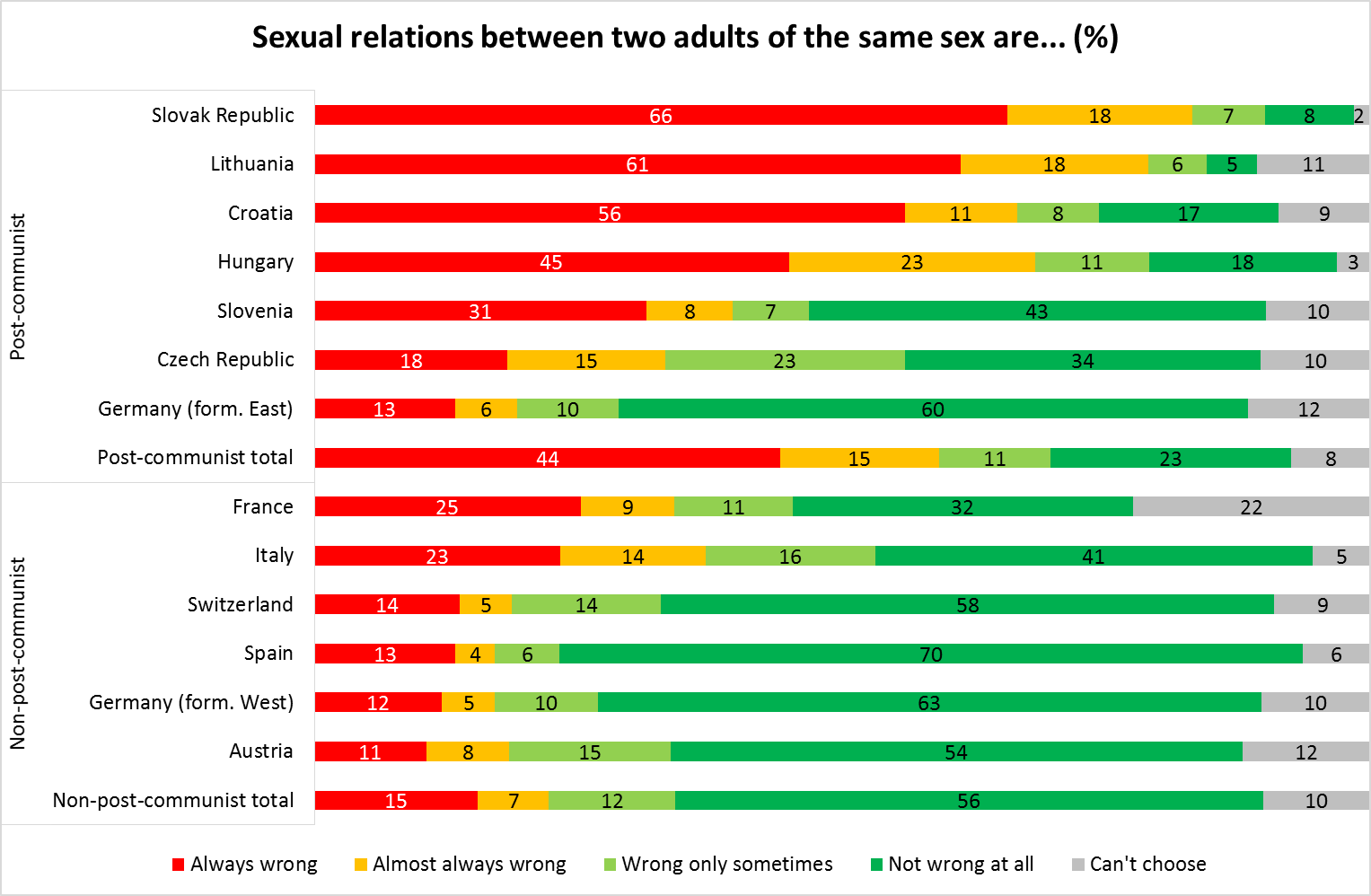
To show this, we used data collected between 2017 and 2020 in 17 countries through the International Social Survey Program (ISSP). The countries were selected to ensure that different religious denominations were present that both had and did not have a communist past. 

Under communism, same-sex relations were either illegal or treated as a psychological disorder. This may explain why post-communist societies are less tolerant towards same-sex relations. In the post-communist countries in the sample, 44% of people perceive sexual relations between two adults of the same sex as always wrong, in contrast to 15% in their non-post-communist counterparts.

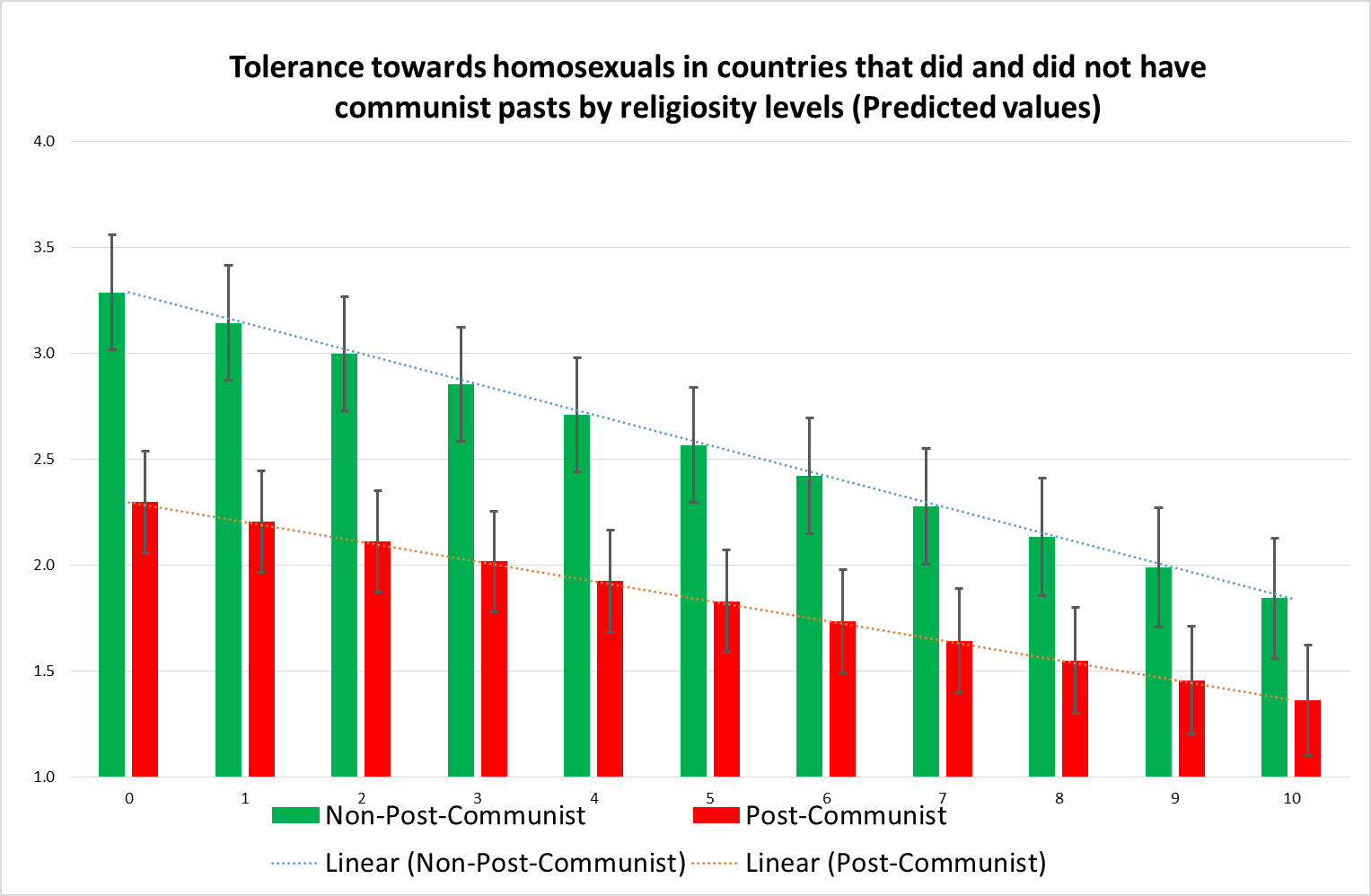
Organised religion is often the dominant force against queer rights globally. A regression analysis shows that religiosity is an important factor affecting homophobic sentiments: a higher religiosity level is associated with lower tolerance of queer people.

Another important factor affecting tolerance towards queer people is society’s historical experience: individuals in post-communist countries are 0.6 points less tolerant on a four-point homosexuality-tolerance scale, compared to their counterparts in non-communist countries.

The effect of religiosity on homophobia is weaker in post-communist countries, where the difference in tolerance towards same-sex relations between the most and the least religious individuals is smaller compared to the similar difference in non-post-communist countries.  

Thus, religiosity appears to encourage homophobia. So too does a communist past. While religiosity also drives homophobia in post-communist countries, it does so to a lesser extent. This appears to stem, in part, from people in post-communist countries being more homophobic across the spectrum of religiosity. 


Tuesday, June 01, 2021

Does religion make Georgians happy?

Note: This article first appeared in the Caucasus Data Blog, a joint production of CRRC Georgia and OC Media. It was written by Davit Lursmanashvili, a Junior Fellow at CRRC Georgia. The views presented in this article are the author’s alone and do not necessarily represent the views of CRRC Georgia or any related entity. 

The connection between religion and happiness has been explored in a wide variety of studies, with data pointing to the religious being happier in many countries. However, data from the ISSP survey on religion, which was conducted in Georgia in early 2020, suggests that there is relatively weak evidence of religiosity being tied to happiness in Georgia. 

To explore whether happiness was tied to religiosity, four variables related to religiosity were used, including self-assessed religiosity, self-described spirituality and belief in religion, frequency of prayer, and frequency of engagement in religious activities aside from attending services. 

On the ISSP survey, a majority of the population (88%) said they consider themselves to be religious to some degree when asked how they would assess their own religiosity. 

When it came to spirituality and adherence to an organised religion, most (63%) considered themselves to be spiritual and follow a religion, 14% reported that they followed a religion but were not spiritual, 20% said that they were spiritual but did not follow a religion, and 3% said they neither followed a religion nor were spiritual. 

About half (48%) of the public said they never took part in religious activities aside from attending services, 40% did several times a year, and 12% did so on a monthly basis or more. 

With prayer, 10% of Georgians said they never prayed, 14% prayed several times a year, and 75% did so monthly or more often. A majority also reported being happy (76%).

The data was included in regression analyses which controlled for respondent age, sex, education level, whether they were working or not, had children in their household, settlement type, ethnicity, and marital status. 

When the analysis was run testing whether more religious and less religious people were more likely to be happy, the data suggested no statistically significant association. 

Similarly, how frequently people engaged in religious events aside from attendance at non-holiday sermons was not associated with happiness. Frequency of prayer was not associated with happiness either.

However, spirituality was associated with people’s happiness. 

Those who did not follow an organised religion but were spiritual were significantly more likely to be happy than those that reported following a religion. The non-religious and non-spiritual were not significantly more likely to be happy than the religious according to the regression analysis, but this likely stems from the small sample size within this group. 

The data is less than conclusive, though still striking. Of the four religiosity variables tested for association with happiness, three were not associated with happiness. The one that was associated with happiness worked in the opposite direction than is usually seen internationally. 

This pattern stands in contrast to the general picture globally, calling for further research into religion and happiness in Georgia.

Note: The data used in this article is available here. The results presented in this article are based on a logistic regression model. The outcome variable, happiness, is coded as happy or not happy. The religion variables are coded as follows: How would you describe yourself? (Religious, not religious); Which best describes you? (I follow a religion, I am a spiritual person; I follow a religion, I am not a spiritual person; I don't follow a religion, I am a spiritual person;  I don't follow a religion, I am not a spiritual person); How often do you pray? (Never, up to several times a year, once a month or more). How often do you participate in religious activities other than attending religious service? (Never, up to several times a year, once a month or more).  The control variables included age, sex, education level (tertiary education or not), whether the respondent was working or not, had children in their household or not, settlement type (Tbilisi, other urban, rural), ethnicity (minority or not), and marital status (married or not).

Wednesday, January 20, 2021

Almost everyone in Georgia believes in the supernatural

[Note: This article was co-published by CRRC Georgia and OC Media on the Caucasus Data Blog. It was written by Anano Kipiani, a policy analyst at CRRC Georgia, and Kristina Vacharadze, the Programs Director at CRRC Georgia. The views presented in this article do not reflect the views of CRRC Georgia or any related entity.]

Georgian folklore is filled with stories of demons and devils; yet, everyone knows children’s stories are just that. However, new opinion polling from the ISSP Survey on Religion suggests that the vast majority of Georgians believe in the supernatural.

The study, which was conducted in 2019 by CRRC Georgia, asked about whether people think the following statements are true or false:

  • Good luck charms sometimes do bring good luck;
  • Some fortunetellers really can foresee the future;
  • Some faith healers do have God-given healing powers;
  • A person’s star sign at birth or horoscope can affect the course of the future.

Overall, 91% of the public reported that at least one of the above statements was true. Belief in faith healers was most common, with 57% reporting this was true. Belief in horoscopes (37%), good luck charms (30%), and fortune-tellers (20%) were less common.

Almost half (48%) the public also said they believed that ancestors had supernatural powers. A third (35%) said they did not believe this, and the remainder (16%) were uncertain. 

Further analyses of the data shows few differences in the number of superstitious beliefs people hold in different social and demographic groups. 

People with and without a higher education reported belief in a similar number of the above superstitions. Similarly, there was no difference between people in rural and urban areas. Older and younger people also held similar views. 

The only statistically significant difference present in the data was with regard to people who are more religious, who believed in more superstitions on average while controlling for other factors. 

Even though almost everyone in Georgia believes in at least some superstition, most people also think people should put more faith in science. The study asked whether people agreed with the statement: ‘We trust too much in science and not enough in religious faith’. Only a quarter of the public (25%) agreed, 29% neither agreed nor disagreed, and almost half the population (46%) disagreed. 

That is, while most people in Georgia believe in the supernatural, a plurality also put some faith in science.

Note: The above analysis is based on an ordinary least squares regression analysis, where the dependent variable is the number of supernatural beliefs a person reported believing. The independent variables are gender, age group, ethnicity, religious affiliation, settlement type, level of education, and a religiosity index. The data used in the blog is available here

Monday, August 03, 2020

Church scandals have hurt trust in the Georgian Orthodox Church

[Note: This article was co-published with OC Media. It was written by Dustin Gilbreath, Deputy Research Director at CRRC Georgia. The views presented in this article do not represent the views of CRRC Georgia or any related entity. The data used in the above analysis is available here.] 

The Georgian Orthodox Church has been hit by numerous scandals in recent years, but have those scandals affected public trust?

In 2017, a priest was charged and convicted of attempting to murder Patriarch Ilia II’s secretary. On numerous occasions, scandal has emerged as a result of the government handing over land to the Church for a symbolic price. The homophobic riots in 2013 on International Day against Homophobia and Transphobia, which included Orthodox priests, were another salient event which likely hurt the Church’s credibility in the eyes of many in the public

More recently, sexual abuse scandals have emerged, and even more recently the Church’s actions around the COVID-19 crisis were controversial. A new study suggests that these scandals are taking a toll on trust in the Church in Georgia, at least in the short term.

Given the above, it is likely unsurprising that trust in the Church has been on the decline in recent years. While 75% of Orthodox Christians fully trusted the Church in 2008, only 38% did in 2017. In 2019, the data suggest a similar picture.

Although this apparent decline is likely linked to the scandals, making a causal connection is difficult. Numerous factors could lead to declines in trust in the Church from changing values to less interest in religion. 

However, a natural experiment which occurred during the fieldwork for CRRC’s Caucasus Barometer survey in 2019 enables a better understanding of the impact of Church scandals on people’s trust in the Church.

On 26 October, Iakob Iakobishvili, at the time an Archbishop in the Georgian Orthodox Church, suggested that the government had approached him with an offer to attempt to remove Ilia II.  

On 31 October, the Church expelled Archbishop Petre Tsaava. Following the meeting, the archbishop accused Ilia II of being a paedophile. The allegations were shocking for Georgian society — Ilia II is generally accepted to be the most trusted figure in Georgian society. 

At the same time as the above scandal was taking place, the Caucasus Barometer survey was ongoing and asked respondents about trust in the religious institution which they belong to. Through comparing randomly selected respondents who participated in the survey before and after the scandal, the natural experiment enables an understanding of whether there was a causal impact of the scandal on attitudes. 
The results suggest that the scandal led to a significant decline in Georgians’ trust in the Church, with a 15 percentage point decline in those reporting they either fully or partially trust the Georgian Orthodox Church.


Further analysis was conducted to look at who the scandal affected most. The results suggest that there was a larger decline in trust among people in urban areas outside Tbilisi and those with higher levels of education. 

In contrast, men and women, those who are working and not, and older and younger people were no more or less affected by the scandal, controlling for other factors.

The data also appears to suggest that the scandal had a larger effect on the religiously observant. The survey asked respondents about religious attendance and fasting. 

Taking into account other factors, regular churchgoers appear to be more affected by the scandal. Similarly, those who reported that they fast often when religion dictates appear to have been more affected, in one of the two analyses conducted in the study. 

While the above data analysis strongly suggests that the events of late October shook the public’s trust in the Church, this could be a short term effect. The data used for this analysis were collected in the weeks before and days after the scandal. Whether the decline in trust associated with the Church scandals is lasting is an open question as far as the data is concerned. More recent data that was released on 23 July suggested the public’s trust had further declined as a result of the scandals surrounding COVID-19.

However, the long-term decline in trust in the Church that has taken place concomitantly with numerous scandals suggest that the Church’s woes are having a lasting impact on Georgians’ trust in the Orthodox Church. 

Monday, April 27, 2020

Who trusts the healthcare system in Georgia?

[Note: This article was co-published with OC Media. It was written by Rati Shubladze, a policy analyst at CRRC Georgia. The views presented in this article do not represent the views of CRRC Georgia or any related entity.]

Trust in healthcare institutions is important, especially during a pandemic like the current COVID-19 outbreak. In the name of public health, numerous individual freedoms and economic activities are restricted.

Without trust in the messages of public health officials, measures aimed at preventing the spread of the virus are less likely to be complied with, exacerbating the spread of the virus.

The recent events surrounding attendance at religious ceremonies and healthcare highlights the importance of trust in health institutions. The tensions between the church and healthcare professionals, including a public verbal clash between a high ranking church official and the National Center for Disease Control and Public Health, show this.

Indeed, despite recommendations from healthcare specialists to stay home, the Orthodox Church in Georgia still held Easter liturgy with parishioners in attendance.

This situation leads to the questions: who is more or less likely to trust healthcare officials in Georgia and does this trust interact with religious belief?

The 2019 Caucasus Barometer Survey provides some answers to these questions. The data was collected in mid-autumn 2019, before the current crisis. This has both advantages and disadvantages.

On the one hand, attitudes could not have been influenced by the current crisis. Therefore, the responses allow an understanding of who would be more or less predisposed to trusting healthcare institutions before the crisis and therefore who would be more or less likely to comply with healthcare institution mandates.

On the other hand, the data do not enable an understanding of how trust has changed in response to the current crisis.

At the time of the 2019 Caucasus Barometer survey, the plurality (43%) of Georgians trusted the country’s healthcare system. This is a relatively high level of trust compared to other institutions.

Out of 15 social and political institutions, the healthcare system was the fourth most trusted institution.


Further analysis using demographic variables, including settlement type, age, gender, employment, internet usage, minority status, and education suggests that males, those living in rural areas, ethnic minorities, and those that do not use the internet have higher chances of trusting the healthcare system, controlling for other factors. Other demographic factors do not show statistically significant differences.


Note: The original healthcare trust questions was asked using a 5-point scale. For the purpose of analysis, the options ‘fully trust’ and ‘rather trust’ were coded as ‘trust’ and options ‘fully distrust’ and ‘rather distrust’ were coded as ‘distrust’. The variables about ethnicity and Internet usage were also recoded. The minority status variable codes the following ethnicities as non-Georgian: Armenian, Azerbaijani, Russian, Kurd or Yezidi, other Caucasian, and other ethnicities. In the internet usage variable, options ‘at least once a week’, ‘at least once a month’, and ‘less often’ were coded as ‘less often’; ‘never’ and ‘do not know what the internet is’ were coded as ‘never’. 

Importantly, three of the above characteristics are interconnected, as minorities mostly dwell in rural areas of Georgia, and internet usage is least common in rural areas and among ethnic minorities.

Indeed, the higher levels of trust among these groups could be because minorities and rural people are more likely to trust public institutions generally.

Given the situation surrounding public health officials and the church, it is important to understand whether there are interactions between trust in religious institutions and healthcare officials.

Indeed, the Caucasus Barometer data suggest trust toward religious institutions is associated with trust in the healthcare system. However, the observed relation tells us more about the phenomenon of general institutional trust. The results are similar when the relation between trust in the healthcare system and trust toward other institutions, like the army, police, banking system, or media are examined.

A second way of looking at it that does not suffer from trust being correlated with trust is through looking at the association between frequency of attending religious ceremonies and trust in healthcare institutions.

Caucasus Barometer 2019 data suggest no statistically significant association between trust in the healthcare system and how frequently people attend religious ceremonies, controlling for other demographic factors.

Based on this, the church-going population appears to have been no more or less likely to trust healthcare officials before the COVID-19 crisis.

Prior to the COVID-19 crisis, trust toward the healthcare system was associated with where people live, ethnicity, sex, and internet usage. Religiosity did not appear to be related to trust in the healthcare system before COVID-19. Whether these factors still hold true remains to be seen.

To explore the Caucasus Barometer 2019 survey findings for Georgia, visit CRRC’s Online Data Analysis portal. Replication code for the data analysis is available at CRRC’s GitHub repository here

Tuesday, April 21, 2020

Study suggests large numbers in Georgia to celebrate Easter in church

Note: This article was co-published with OC Media. It was written by Koba Turmanidze, President of CRRC Georgia. The views presented in this article do not necessarily reflect the views of CRRC Georgia or any related entity.

Research by CRRC Georgia suggests that a large number of Georgia’s Orthodox Christians intend to celebrate at Church.

As Easter celebrations approach in Georgia, a study by CRRC Georgia suggests that a large number of Georgia’s Orthodox Christians still intend to celebrate at Church. The survey of Facebook users found that around 40% of people who usually celebrate Easter in Church intended to do so again this year despite the pandemic.

With Easter celebrations approaching, quarantine rules have become even stricter: driving of private cars has been forbidden and movement in and out of the four largest cities of Georgia has been restricted.

While most organisations are closed or are working digitally, the Georgian Orthodox Church has continued traditional services. Moreover, the church has refused to call on believers to celebrate Easter at home, and the government seems unwilling to enforce emergency rules on the Church.

Instead, the Prime Minister has hinted that it is the responsibility of citizens to stay home, while the churches should remain open. ‘I’m sure that wise citizens will guess that they should not place responsibility on the church and should not want to hear the call from the church – don’t come to the church’, he stated.     

This is not the first time government officials have used subtle suggestions, or nudges, with the goal of altering people’s church-going habits.

Earlier this month, Paata Imnadze, the highly regarded deputy head of the National Centre for Disease Control and Public Health also voiced a similar view.

‘I would like to address Christian believers. Let’s protect our mother-Church, and our priests, by praying at home and not going to church.’

While such nudges often succeed in changing people’s attitudes and even behaviours, CRRC Georgia’s research shows that in the current situation, this approach may not be working.

To test the impact of Imnadze’s ‘nudge’ on people’s intentions to go to church for Easter celebrations, CRRC Georgia conducted an experiment using Facebook’s A/B test tool.

The tool disseminates two or more announcements which will randomly show up in Facebook users’ news feeds. In this case, Facebook users were randomly shown advertisements to fill out one of the two versions of a questionnaire: one included Imnadze’s statement as an introduction to the survey, while the other did not. The two surveys were identical in every other respect. 

The randomised test was active for 72 hours from 11–14 April and reached 240,000 users, accumulated 22,100 clicks, and resulted in 7,560 completed questionnaires.

Of the 7,560 adults, 42% read or saw Imnadze’s statement before filling out the questionnaire. Analysis of the results did not show any impact from the nudge.

In the two groups, 16% reported that they would celebrate Easter in the church. As expected, far more respondents reported celebrating Easter in the church in the past (38%), suggesting that people have adapted their plans to the emergency situation.

Yet the nudge played no role: regardless of being in the treatment or control group, about 60% of respondents who usually would celebrate Easter in Church reported they would stay home this year, while about 40% still planned to go to church.


Importantly, there was no effect of the nudge across different demographic groups (e.g. men and women, older and younger people).

Further analysis looked at different factors that correlate with whether people changed their choice to celebrate Easter at the Church.

Respondents’ religiosity shows an unsurprising pattern. Frequent churchgoers and respondents who consider religion important in their lives were more likely to stay loyal to their past practise of celebrating Easter in the church than less religious respondents (i.e. those who go to church less frequently and consider religion less important).

Perhaps unsurprisingly, concern about the spread of COVID-19 makes respondents more cautious, and hence, more likely to change Easter celebration practice from church to home.

Women, people with tertiary education, and older respondents are also more likely to move Easter celebrations from church to home, whereas employed respondents are less likely to change their past practice of celebrating in the church.

While the survey gathered a large number of responses, the results should be read with caution.
The survey is clearly not representative of the population of Georgia, which is reflected in a different demographic profile of the Facebook respondents.

Unlike nationally representative surveys, the Facebook sample overrepresented women (82%), the employed (61%), the university-educated (65%), and younger people (the average age was 37). Moreover, it is hard to say whether the survey represents Facebook users in Georgia, since respondents self-selected into the survey.

Nevertheless, the group that saw and did not see Imnadze’s message on the survey were very similar, with identical demographic profiles. Hence, if the treatment and control groups answered the Easter celebration question differently, this could be attributed to the reminder of Imnadze’s nudge.

While it is not possible to exclude the possibility that the tested and similar nudges already impacted the respondents before they completed the Facebook survey, the findings still suggest that subtle suggestions are not sufficient to change people’s Easter holiday plans.

While a significant share of respondents changed their usual ways of celebration, a reminder of Imnadze’s suggestion did not change this.

Religiosity seems to be an obstacle towards adaptation to the current situation: while many believers and frequent churchgoers reported they would celebrate from home, many are still unconvinced and will likely help spread the virus this Sunday unless emergency rules are enforced on the Church as elsewhere in the country.

Monday, August 13, 2018

Is Georgia’s Orthodox Christian population losing (trust in) their religion?

Surveys conducted in Georgia have repeatedly shown that the Georgian Orthodox Church’s leader Patriarch Ilia II is the most trusted public figure in the country. Yet, CRRC’s Caucasus Barometer survey data from 2008 to 2017 suggests that both the share of Orthodox Christians in Georgia that trust the Church and the degree to which they trust the Church is on the decline. Although the survey does not provide direct evidence, the scandals surrounding the church in recent years could have contributed to this. For instance, in 2017, a priest was convicted of attempting to poison the Secretary of Ilia II. The government has sold land to the Church at symbolic prices on numerous occasions, often leading to negative media coverage. In 2013, priests were involved in an anti-LGBT rights riot.

CB data on Georgia’s Orthodox Christians’ trust towards the Church shows that 75% reported fully trusting it in 2008. Only 33% did in 2017. During the same period, the share of those who reported trusting the Church more moderately (‘rather trust’ responses) increased from 15% to 38%. Combining the options ‘rather trust’ and ‘fully trust’ is also telling. In 2015, a total of 82% of Orthodox Christians reported trusting the Church; 71% did in 2017, an 11 percentage point decline.

Note: Only answers of those who identified themselves as Orthodox Christians are presented in the charts in this blog post. Answer options “Don’t know” and “Refuse to answer,” which made up less than 5% of responses in any given wave of the survey, are not shown in the charts throughout this blog post.

The decline in trust in the Church between 2015 and 2017 was starkest in Tbilisi, where reported trust declined by 18 percentage points. In Tbilisi, the share of people reporting distrust increased, while outside Tbilisi it did not change beyond the margin of error.

The decline in reported trust in the Orthodox Church is not reflected in changes in some forms of religious practice. Orthodox Christians have reported fasting at similar levels since 2008. There are small fluctuations in reported attendance of religious services, but no clear trend.
 

Note: The original answer options “Always fast” and “Often fast” were combined into the category “Often or always fast” on the chart above. The answer options “Rarely fast” and “Never fast” were combined into the category “Never or rarely fast”. 

Note: The original answer options “Everyday”, “More than once a week”, “Once a week”, and “At least once a month” were combined into the category “At least once a month”. Answer options “Less often” and “Never” were combined into the category “Less often or never”. 

While Orthodox Christians in Georgia may not be losing their religion, fewer trust in its key institution - the Church.

The data used in this blog post is available here.


Monday, November 17, 2014

Exploring Homophobia in Georgia: Part 3

This is the third blog post in a series where we analyze homophobia in Tbilisi and is focused on potential relationships between religiosity and homophobia. The previous blog posts in this series can be found here: Part 1, Part 2.

In a number of studies, religiosity has been linked to lower levels of support for human rights for homosexuals (Johnson, Brems, & Alford-Keating, 1997; Adamczyk, A., & Pitt, C., 2009; Merino, S. M., 2013). This literature, on the one hand, and the clergy’s active participation in the May 17 events in Tbilisi in 2013 on the other hand, led us to the question - are religiosity and homophobia related to each other, and if they are, what is the strength of the relationship?

In the CRRC-Georgia survey on the events of May 17, 2013, religiosity was measured with one variable - frequency of attendance at religious services (question “Not to speak about special occasions, such as weddings or funerals, how often do you attend religious services?”). It was expected that those who do so regularly and, hence, have more exposure to religious sermons, would be more homophobic than those who attend religious activities less often. The findings, however, do not prove this hypothesis. As the chart below shows, over half of Tbilisi residents rarely or never attend religious services.
 
 
Homophobia was measured by a dummy variable generated based on the question, “[Whom] would you not wish to [be] your neighbor most?” with the categories 0 = others, 1 = homosexuals. Neither independent t-test (t (n=526) =.669, p = 504), nor correlation (Kendall’s τ (214) = -.09) showed any evidence that frequency of attendance of religious services was statistically related to homophobic attitudes.
 
This finding may come as a surprise for many readers, and it should certainly be interpreted taking into consideration the nature of religiosity in Georgia. According to the CRRC 2013 Caucasus Barometer survey, the overwhelming majority of  Georgians consider themselves to belong to the Georgian Orthodox Church (10% of the population reports being Muslim). Trust in the religious institutions people belong to, and the reported importance of religion in their daily lives are high: 72% of the population reports fully trusting these institutions, and 93% think that religion is either “very important” or “rather important” in their daily lives. At the same time and in contrast to these reported attitudes, actual religious practices such as service attendance, fasting and prayer are rather low throughout Georgia. In light of this, the lack of a statistical relationship between religious service attendance and homophobia is less surprising than at first glance.
 
Finally, if we assume that attending religious services leads people to a better understanding and internalization of religious principles, this finding becomes even less surprising. Since there is much more in the Bible about love and tolerance than there is about hatred and judging others, those who attend religious services may have internalized these messages.
 
The mismatch between high trust towards the church and the reported importance of religion, on the one hand, and a lack of actual involvement in religious practices, on the other hand, highlights the multidimensional nature of religiosity in Georgia. In the May 17 survey, CRRC-Georgia asked respondents about only one dimension of religiosity – religious service attendance. This dimension may not be the most accurate measure of religiosity in Georgia (and, most probably, only one measure would not be enough to understand this phenomenon anyway). Having data on other aspects of religiosity, like participation in religious practices, the level of trust towards religious institutions or the importance of religion in one’s daily life, would allow us to conduct a more sophisticated analysis of the relationship between religiosity and homophobia and could change the picture that we have at this point. We consider this task a priority for further analysis.

The next blog post in this series will discuss the influence of education and liberal values on homophobic attitudes among Tbilisi residents.
 

Monday, September 08, 2014

Is xenophobia on the rise in Georgia?


On September 1, 2014 new rules and regulations came into force for foreigners interested in visiting Georgia. Under the previous visa regime, citizens of 118 countries could stay in Georgia without a visa. Many with visa free travel privileges could receive a visa stamp at the airport that would be valid for 360 days, and simply renew their visa by crossing an international border and returning to Georgia. Even nationals of many countries not covered by this visa free travel regime could receive a visa upon arrival in Georgia. This was a liberal visa regime. Under the new visa regime, a shorter list of foreign nationals will be allowed to visit Georgia for 90 days (within a 180-day period), and can receive a visa stamp upon arrival. The new policy intends to bring Georgia in line with EU policy, and it was prescribed by the EU to allow easier access for Georgians to enter the Schengen Zone under the EU-Georgia visa liberalization action plan (VLAP).

Despite the fact that the policy brings Georgia in line with EU legislation, some have questioned the logic of the law. Specifically, many consider the law to be xenophobic and punitive, as Gavin Slade has argued. This change was likely made so that Georgia would not be an entry point for illegal migration to Europe via Turkey. With all of this in mind, readers may be interested in whether xenophobia is on the rise in Georgia. This post looks at the level of approval of foreigners marrying Georgian women, and at the level of approval of Georgian citizens doing business with other ethnicities between 2009 and 2013 (as a proxy for xenophobic attitudes in Georgia).  

If xenophobia were on the rise in Georgia, one would expect an increasing level of disapproval of doing business with foreigners or Georgian women marrying other ethnicities.  Yet, data from the Caucasus Barometer (CB) shows that xenophobia is not on the rise; approval rates for both interethnic marriage (27% on average) and for doing business with different ethnicities (77% on average) have not changed drastically from 2009 to 2013.


Note: Only ethnic groups that were consistently present in the CB from 2009 to 2013 were included in the average calculation. These include Turks, Russians, Armenians, Azerbaijanis, Kurds/Yezidis, Abkhazians, Ossetians, Americans, and Jews. This group is referred to as a ‘collection of ethnicities’. During the CB survey, respondents were asked “Would you approve or disapprove of people of your ethnicity doing business with,” and “Would you approve or disapprove of women of your ethnicity marrying,” followed by a list of ethnicities. Respondents were able to respond ‘approve’ or ‘disapprove’. Approve was coded as 1 and disapprove was coded as 0. In the graph above, averages of respondents’ answers to each ethnicity below or equal to 0.50 were coded as disapprove, and averages greater than 0.50 were coded as approve. The same method was used to calculate averages below. 

Although the above graph suggests that there has not been a pronounced increase in anti-foreign feelings in the last five years, some ethnicities are appraised as more favorable for marriage and business than other ethnicities. Generally, Russians, Americans, and Europeans of different ethnicities are viewed more favorably, and Yezidis/Kurds, Chinese, Iranians, Indians, and Turks are generally perceived as less favorable for marriage and business. The graph below shows views for marriage regarding these and other groups in 2013.
The figure also shows that marriages to ethnicities which tend to be Christian receive higher approval rates than to those generally associated with Islam and other non-Christian religions. The figure below gives averages of approval ratings for marriage and doing business with ethnicities that tend to be Christian, and with those that tend to be non-Christian from 2009 to 2013. The figure shows that Georgians have consistently approved of marriage (by 15 to 20 percentage points) with foreign ethnicities that tend to be Christian, than to those that tend to be non-Christian. It also shows that Georgians have been between 5 and 12 percentage points more likely to approve of business with foreign Christians as opposed to foreign non-Christians. Both trends have been stable over time.
Note: The category Christian in the above graph consists of Russians, Americans, Armenians, Ossetians, and Abkhazians. The non-Christian category consists of Jews, Turks, Yezidis/Kurds, and Azerbaijanis. Only ethnic groups that were consistently present in the CB from 2009 to 2013 were included in the average calculation. Calculations were made as described below the first graph in this blog post.

This blog post has shown that the average level of approval of doing business with foreigners, and Georgian women marrying foreigners, has not changed much in the past four years. The blog has also shown that differences in approval rates between specific ethnicities appear to be related to religion. Georgians are more likely to approve of marriage and business relations with ethnicities that tend to be Christian. Importantly, these levels have been quite consistent from 2009 to 2013 which suggests that, with respect to these specific factors, xenophobic attitudes are not on the rise in Georgia.

To explore issues related to marriage and business relations in Georgia, take a look at this blog post on Georgian nationalism, or examine the data directly with CRRC’s Online Data Analysis tool.

Monday, September 01, 2014

A Tangled Path to Europe: A review of Bittersweet Europe

This week's blog post was originally published on Friday, August 29th on New Eastern Europe. The original version may be viewed here.

Review of Bittersweet Europe. Albanian and Georgian Discourses on Europe, 1878-2008. By: Adrian Brisku. Publisher: Berghahn Books, August 2013.


BriskuBittersweet

Since independence, Georgia has been on what has often looked like a quixotic quest towards joining the EU. Multiple wars, a resurgent Russia, breakaway territories and a consistently difficult economic situation which has gone through hyper-inflation and has had consistently high unemployment and underemployment over the last 25 years must, at the minimum, make prospects for EU integration seem distant at best to many in Brussels. Yet, with the recent signing of the Association Agreement with the European Union on June 27th 2014, Georgia is closer to its European dreams than ever. Remembering that the EuroMaiden protests, which were the match to the powder keg igniting the Ukraine Crisis, were set off by former Ukrainian president Viktor Yanukovych’s failure to sign an association agreement that would have brought Ukraine closer to Europe and considering the historical ambivalence among elites in Albania and Georgia towards Europe over the course of the last 130 years, there could not be a more important time for academics, policymakers and journalists working on the Eurasian region to read Adrian Brisku’s Bittersweet Europe.

Brisku skillfully disentangles the often competing webs of discourse on Europe coming out of Georgia over the past 130 years. The book simultaneously decentres Caucasus watchers’ purview through placing Georgian discourse on Europe in a comparative perspective with Albania’s conversations on Europe over the same period. Furthermore, by implanting the conversation in broader pan-European historical frames, the author provides valuable insight into how Georgia’s relationship to Europe has been conditioned historically.

Since the Russian imperial period, discourse on Europe has been mixed, but one of the most important points of contention in Georgia has been whether the country would “look West” on its own or look north to Russia in order to look West to what Brisku describes as the “triadic Europe.” The triadic Europe which Brisku refers to is Europe “as geopolitically important; as a torchbearer of progress; and as the symbol of civilisation and high culture”. This distinction is valuable in that it lends an understanding to the often confounding claims of Europeanness from Georgian elites due to its ambiguous geographical location on the crossroads of Europe and Asia and the sometimes questionable reasoning behind such claims by providing the polysemous meaning of Europe in Georgia.

In diametric contrast to nationalist leaders today, the Georgian “Father of the Nation” and canonized Saint in the Georgian Orthodox Church, Ilia Chavchavadze, believed that Georgia should and would move towards Europe, but through its relationship with Russia, as Georgia was a part of the Tsarist Empire at the time. In opposition to this, Noe Zhordania, another aristocrat but one who had studied in France during his first term in exile from Georgia, developing an inclination towards French Socialism in the process, and the eventual first and only president of the independent, Menshevik, Georgian Republic of 1918-1921, thought that Georgia’s relationship to Europe should not be mediated through the Russian space. The contentions surrounding Europe and Georgia as a part of Europe would not end here though.

With the First World War and the Bolshevik takeover of Georgia, the discourse shifted. As the socialist state was supposed to be the vanguard of progressivism in the world, Georgia, as part of the Soviet Union, was meant to be in a position to help the working classes of Europe towards the progress represented by socialism. Much like how Karl Marx had flipped Georg W.F. Hegel on his head in philosophy, who and what represented progress had been spun around in the Georgian discourse.

Georgia has had a pro-European policy since independence, with short exceptions, and Brisku traces this shift back to the 1975 signing of the Helsinki Accords. In Georgia, Zviad Gamsakhurdia, through co-founding the Georgian Helsinki Group, began the discursive shift towards relations with Europe directly instead of through the mediation of the Soviet state. In doing so, he set the stage for changes to come. From this point onward, with one exception, and especially after independence, a pro-European discourse emanated from Georgia.

In a strange twist of irony, the exception to Georgia’s pro-EU discourse came from the same person who re-ignited it, Zviad Gamsakhurdia. This though, was not the dissident Zviad Gamsakhurdia which founded the Helsinki Group in Tbilisi nor the man who led the anti-Soviet movement in Georgia to the Soviet Union’s collapse, but the Zviad Gamsakhurdia who was elected the first head of state of Georgia after independence. His rule was characterised by strong nationalist tendencies which alienated the country’s ethnic minorities leading to the de facto loss of control of South Ossetia for Georgia. From human rights advocate and dissident to human rights violator, Zviad Gamsakhurdia in his turn moved away from Europe due to European criticism of his human rights abuses.

The persistent question which has dominated and lay beneath the surface of the discourses on Europe in both Georgia and Albania is “Are we European?” From this underlying question, Brisku highlights the ethnocentric euro-centrism that emerged in both contexts from anxieties and insecurities and the overcompensation resulting from this question. In both contexts, prominent thinkers and politicians ended up emphasising the countries’ ancient histories and numerous invasions in order to justify their Europeanness in contrast to cultural and confessional differences compared to predominant conceptions of what it conventionally meant to be European. Mikheil Saakashvili, Georgia’s third post-Soviet elected head of state stated in European Parliament that"since the time when Prometheus was chained to our mountains and the Argonauts came to our country in search of the Golden Fleece ... we are an ancient European nation." Hyperbole not intended.

Further contributing to these anxieties and adding to the reader’s understanding of how they emerged, the book tracks how European powers have interacted with the two countries historically. Being small countries, the feeling that interaction, and more importantly the frequent lack thereof, was based on Europe’s interests have contributed to anxieties in both nations.

The book concludes that the political and intellectual elite in Georgia and Albania have historically been “ambivalent” about their relationship to Europe. Today, in Georgia, we can see this ambivalence quite strongly. When it comes to policy, Georgian support for closer ties to the EU is unquestionable. The ruling Georgian Dream Coalition and the opposition United National Movement disagree on what seems to be just about everything, but the one thing that neither side has wavered from is their dedication to further Euro-Atlantic integration. Moreover, according to the study, “Knowledge and Attitudes towards the EU in Georgia: Changes and Trends 2009 – 2013” conducted by CRRC-Georgia for the Eurasia Partnership Foundation in 2013, 83 per cent of Georgians reported that they would vote to join the EU tomorrow if a referendum were to be held, with support consistently near these levels in recent years. At the popular and elite level, support for closer integration with Europe is clear.

Despite this clear policy direction, opposition to the recently passed anti-discrimination law, which was required for the signing of the Association Agreement with the EU, highlights that many Georgians still oppose or potentially misunderstand some features commonly associated with Europe, specifically the defence of sexual minority rights. Controversy surrounded the bill as a number of priests claimed that the bill would lead to the legalisation of gay marriage in Georgia (it wouldn’t and hasn’t), something the population of the country would largely be against. Moreover, the passing of the law at certain times was opposed by the Patriarch Illia II of the Georgian Orthodox Church, who is widely considered to be the most trusted person in Georgia. In this way, aspects of the cultural Europe, which Brisku identifies early on, are those which many Georgians today are still ambivalent about.

Overall, Bittersweet Europe offers a masterful juxtaposition of Georgian and Albanian discourses towards Europe in addition to the accompanying insecurities over Europe and Europeanness in both countries. This in conjunction to the decentring effect gained through the added context leads the reader to a better understanding of Georgia’s history and relationship to Europe - something needed now more than ever.

Monday, August 18, 2014

One step forward, two steps back? European integration in Georgia after the Association Agreement


So far, 2014 is shaping up to be the year that Georgia might begin to reap the benefits of its pro-EU and pro-NATO foreign policy. In June, Georgia signed the EU Association Agreement despite fears over Russian agitation. NATO has indicated its readiness to discuss a “substantive package” for Georgia, if not a Membership Action Plan. However, despite these gestures towards closer cooperation, some elements of the decision to sign the Agreement have caused friction. For example, the introduction of an anti-discrimination law in April, that contained protection for sexual minorities, was designed to make the Georgian legal environment more EU-compatible. However, the introduction of this protection resulted in backlash from the Georgian Orthodox Church (GOC). Thus, although the signing of the Association Agreement is widely seen by Georgians as a step forward for the country, friction over values has the potential to push the integration agenda back.

The Association Agreement is a sign of strengthening political and economic ties with Europe. However, movement towards a shared cultural space and value system has received less attention in the run-up to the signing. As survey results from the 2013 Survey on Knowledge and Attitudes toward the EU show, political, economic and institutional ties were often cited as anticipated outcomes of the Agreement. Legal reforms aimed at lessening discrimination and protecting minority rights were not an integral part of the public debate about what EU integration would mean for Georgia.


Note: This survey was conducted by CRRC-Georgia for the Eurasia Partnership Foundation. The respondents could select one option from a show card

The adoption of the European-style anti-discrimination law in April 2014 has sparked a debate about the compatibility of traditional Georgian values with European norms, especially with respect to the protection of sexual minorities. This suggests that the widespread public support (88%) for strengthening ties with the EU in Georgia may be dependent on assumptions about the political or economic nature of the EU, rather than norms and values. Legal reforms related to the Association Agreement have had an immediate impact on Georgian life (unlike closer political and economic ties), and there are an estimated 350 EU laws in the pipeline. The law itself bans all forms of discrimination, whether on the basis of language, gender, religion or sexual orientation. Although the anti-discrimination law is just one of many legal components to the EU-Georgia cooperation, the vocal reaction of the GOC against the inclusion of sexual minorities, which the Patriarch deemed “the legalization of illegality,” suggests that the journey towards greater European integration might pose some challenges.

During a street party that followed the signing of the Association Agreement on June 27, 2014, the Patriarch addressed the crowd with a message of celebration and caution. While describing the event as “a happy day”, the Patriarch reinforced the idea that moving closer to Europe is “not only a huge honor, but also a huge responsibility” for a country with its own ancient culture and values. This is important, especially since that the majority of Georgians (82%) trust their religious institutions – much more than those who trust in the EU (33%). Moreover, in 2013, 52% of Georgians said that they would vote against EU membership because of harm to Georgia’s culture and traditions. Thus, it will be interesting to see whether this percentage increases in 2014. In an article in Foreign Policy, Peter Pomerantsev noted that, “the church's [GOC] opposition to some EU principles puts it on a de facto collision course with EU integration policy."


Thus far, the signing of the Association Agreement has resulted in a celebratory mood in Georgia. If integration is to continue moving forward, continued public support and the commitment of Georgian politicians, EU representatives and religious spokespeople will each be key. This blog has explored the climate in Georgia following the signing of the Association Agreement. It has also focused on attitudes towards the new anti-discrimination law and trust in the EU, as well as in religious institutions. You can read more analysis on trends in Georgians’ attitudes towards the EU here. Also, please visit our Online Data Analysis tool.

Thursday, November 14, 2013

Attitudes towards atheists in the South Caucasus

After just over seventy years of formal state atheism during the Soviet Union, attitudes towards relationships with atheists are generally negative in the South Caucasus. Most people in Armenia and Georgia (and lesser in Azerbaijan) consider themselves to be religious, and the predominant religions in these countries (Georgian Orthodoxy and the Armenian Apostolic faith, respectively) are strongly connected to each country’s national identity. In addition to the usual questions on religiosity, the 2012 Caucasus Barometer (CB) included two questions on attitudes towards atheism for the first time– one concerning personal relationships and family (attitudes towards marrying atheists), and another on professional relationships (business with atheists). Comparing these attitudes provides a deeper understanding of attitudes towards atheism.

The WIN-Gallup 2012 Religiosity Index asked, “Irrespective of whether you attend a place of worship or not, would you say you are a religious person, not a religious persons or a convinced atheist?” With a global average of 59% who call themselves religious, Armenia is in the top ten most religious countries by declared level of religious belief, with 92% considering themselves religious (with a further 3% non-religious, 2% convinced atheists and 2% unsure). 84% of Georgians say the same (12% non-religious, 1% convinced atheists and 3% unsure). Much fewer Azerbaijanis consider themselves religious (44%) and 51% say they are non-religious (0% convinced atheists and 5% unsure). The 2012 CB also shows that a majority of people in all three countries of the South Caucasus consider religion to be important in their daily lives (although attendance of religious services is much lower). South Caucasians thus appear to have more of a subjective attachment to religion.


The Helsinki Committee’s 2010 Study on Freedom of Religion in Armenia noted that, “Nationalist ideas began to replace the old Soviet ideology, and the traditional church was often equated to national identity”. Accordingly, the special roles of the Armenian Apostolic Church in Armenia and Georgian Orthodox Church in Georgia were recognized by each state through signed concordats in 2007 and 2002, respectively. For some, atheism is thus a rejection of these established churches which are viewed as important elements of national identity. Though the relationship between the State and the CMB (Caucasian Muslim Board) in Azerbaijan is more complex, Islam similarly plays a crucial cultural part in Azerbaijani national identity.

The numbers of and exposure to atheists are negligible in the South Caucasus. In the 2012 CB, 4% of Armenians 0.2% in Azerbaijan and 0.7% in Georgia said they had no religion. However, being irreligious, indifferent and atheist are not synonymous. Regarding contact, the majority of people in all three countries say they have not had any contact with atheists. Interestingly, Azerbaijanis appear to have the most contact with atheists on a regular basis (10% on a daily basis).


There are overwhelmingly negative attitudes to marriage with atheists in all three countries. Georgians show the highest level of uncertainty (15%). Armenians have the most negative attitudes to this idea (77% object overall), while Azerbaijanis are slightly more tolerant when it comes to having an atheist in the family.


However, people have more accepting attitudes towards doing business with atheists. This may indicate a tendency in the South Caucasus to object to more personal relationships with atheists, while being more accepting of professional relationships


Negative attitudes towards atheists (despite having almost no contact with them), are widespread across the South Caucasus. Despite their subjective attachment to their religions, people in the South Caucasus perceive religious belief as a desirable quality in business partners and spouses, though it is more significant in a personal relationship such as the latter. Although there is a notable difference in the declared religiosity between Azerbaijanis, on the one hand, and Armenians and Georgians on the other, all three groups have overwhelmingly negative attitudes towards atheists. Georgians are the most uncertain on their attitudes towards business and marriage with atheists, whilst Azerbaijanis are most uncertain about their contact with atheists.

As one interviewee from the Helsinki Foundation’s study said, “I have a positive attitude towards the [Armenian Apostolic] Church because it was an institution created by Armenian people, rather than imposed on us by anyone from above.” This quote illustrates post-Soviet perceptions of religious identities well – Soviet atheism being perceived as an imposition from above and abroad, in contrast to the traditional religious beliefs of the peoples of the South Caucasus.

Attitudes towards atheism is one of many complex and interesting topics in the South Caucasus which would benefit from further study. What do you think are possible causes for the negative attitudes shown? Explore further by downloading any of the Caucasus Barometer datasets here.