Showing posts with label Economy. Show all posts

Tuesday, March 21, 2023

People in Georgia are highly uncertain about their economic future

Note: This article first appeared on the Caucasus Data Blog, a joint effort of CRRC Georgia and OC Media. It was written by Nino Zubashvili, a Researcher at CRRC-Georgia, The views presented in the article are of the author alone, and do not necessarily reflect the views of CRRC-Georgia, or any related entity.

Across various demographic groups, Georgians are uncertain about what their economic futures might hold, with those from lower-income backgrounds more uncertain than those with a higher income.

Georgia today faces numerous structural challenges that hinder social and economic development, such as low productivity and low-quality jobs, poor quality of education, poor links between education and employment, high unemployment, and poverty. 

On top of this, high use of the dollar alongside the country’s own currency, and reliance on income from tourism make the country vulnerable to external shocks. 

Despite some positive developments, including becoming an upper middle income country in 2016, a ‘very high’ rating on the Human Development Index, and a low average multidimensional poverty score (37%), public opinion polling has found that the public is highly uncertain about their economic prospects. 

CRRC Georgia’s Caucasus Barometer 2021 data shows that while a plurality of the population feel they are part of the middle class, almost half are uncertain about their households’ future economic well-being. 

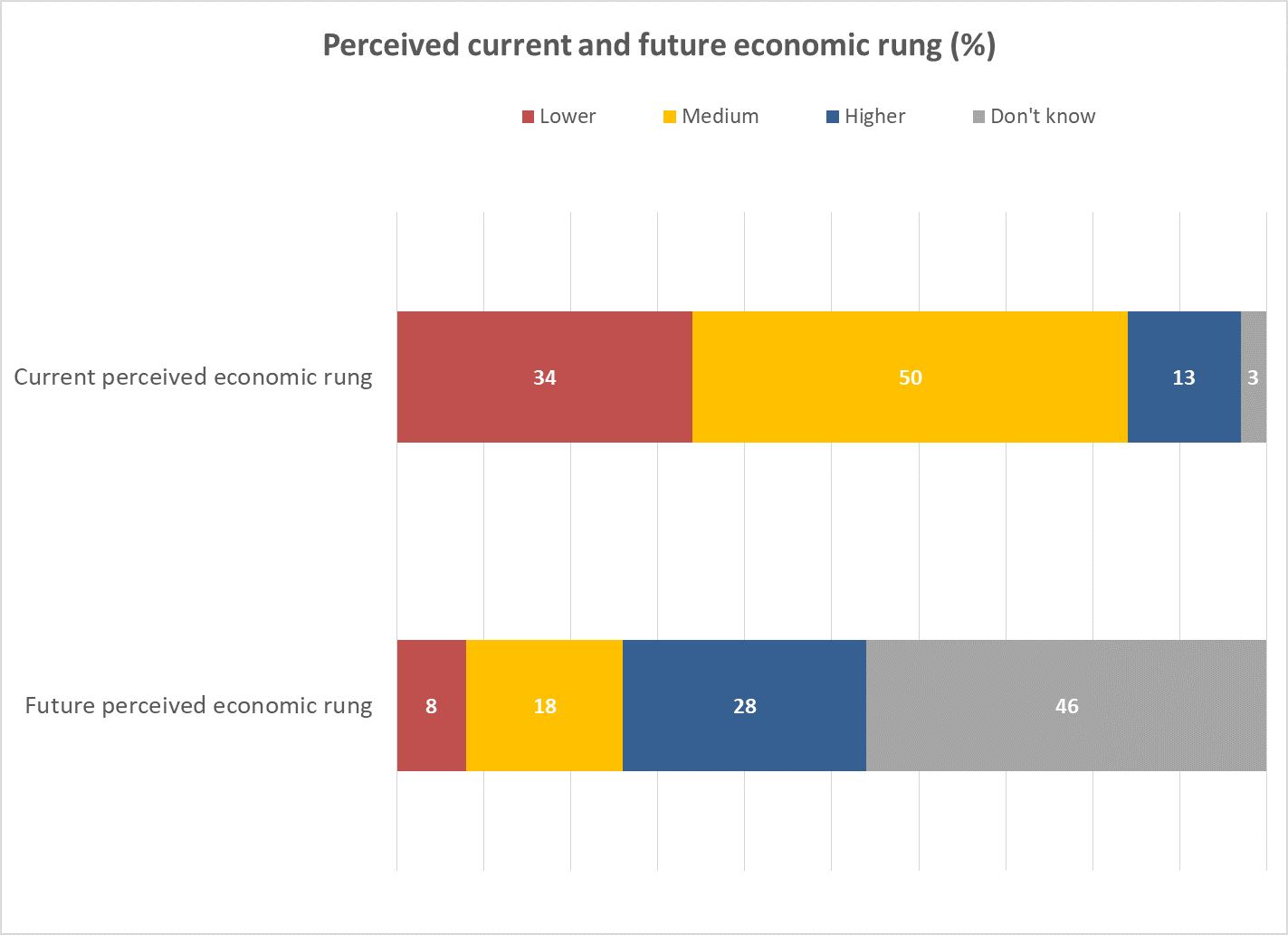
Half (50%) of Georgia’s population perceive their current economic status as in the middle, 34% as poor, and only 13% as high. 

When asked what they expect their economic status to be five years in the future,  8% of the population see themselves on the lower rungs of the economic ladder, with 18% seeing themselves in the middle class. Notably, 28% believe they will be relatively well off, twice as many as currently see themselves in that category.

But uncertainty about the future is substantial. Almost half of the public (46%) answered that they didn’t know what their household’s economic status would be in five years. 
Numerous factors are associated with how people in Georgia perceive their future economic rung. 

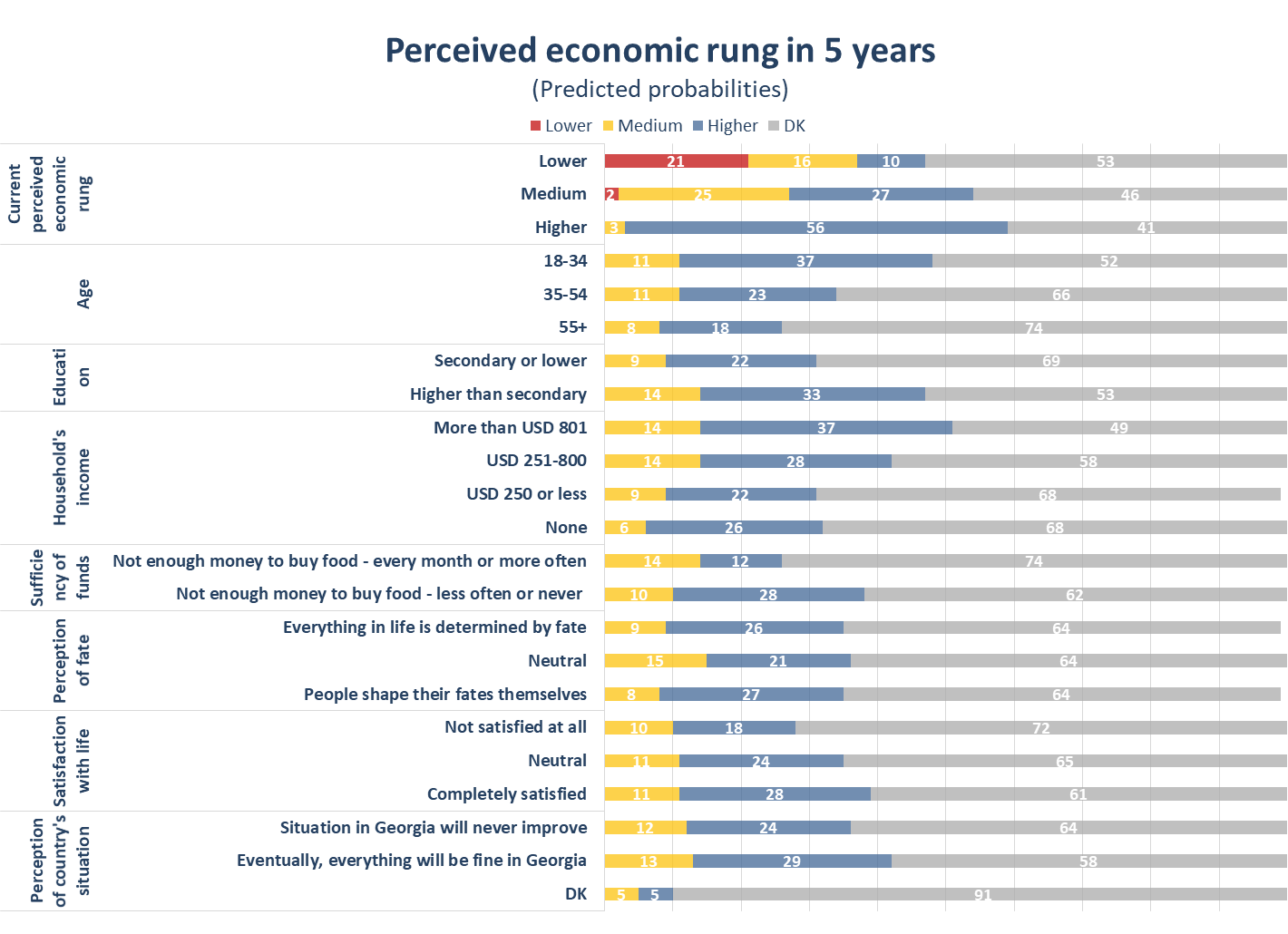
More than half of those who perceive themselves to be on the lowest rungs of the economic ladder are uncertain about the future. A fifth on the lower rungs expect to stay there, and around a fifth expect to move to the middle of the ladder. Few on the lowest rungs today expect to move to a relatively well-off rung. 

In contrast, wealthier people, as measured along a wide range of variables, tend to expect a better future for themselves. People who perceive themselves to be relatively well-off have less uncertainty about their economic futures, and expect to continue to be relatively well-off. 

Similar patterns are present for people and households with higher measured incomes, and who do not struggle to buy food.

In terms of age, younger Georgians (aged 18-34) have higher expectations for a better economic future and less uncertainty compared to other age groups. With age, expectations for a better economic future decrease, and uncertainty increases. 

Economic expectations are also notably higher and uncertainty notably lower among those with a higher education, compared to those with a lower level of education.

Personal beliefs and perceptions of the country’s future are also associated with a household’s perceived future economic rung. Those who believe that ‘the situation in Georgia will never improve’ are slightly less likely to expect improvements in the economic situation compared to those who believe that everything will be fine in Georgia. 

Finally, it is perhaps unsurprising that people who are currently more satisfied with life are also more likely to have positive expectations for their economic futures. 
Gender, ethnicity, settlement type, employment, religious denomination, frequency of attendance at religious services, whether or not someone has enough money to buy durable goods or not, ownership of durable goods, party affiliation, whether people think everything in life is determined by fate or not, and generalised trust were not associated with what people think their household’s economic future holds.

The largest share of people in almost every socio-demographic group in Georgia are uncertain about their economic futures, regardless of their level of education, perceptions of fate, or perspective on Georgia’s politics. 

Note: The data used in the article can be found on CRRC’s online data analysis tool.

The analysis was carried out using logistic regression. The regression included the following social and demographic variables in all cases: sex (male or female), age group (18–35, 35–55, 55+), ethnic group (ethnic Georgian or other ethnicity), settlement type (capital, other urban, rural), educational attainment (secondary or lower education, or higher education), employment situation (working or not), party support (GD, opposition, no party, DK/RA), current perceived economic rung (low, medium, high), religious denomination (Orthodox Christian, other, none), frequency of attendance to religious services (frequently, sometimes, rarely, never). Household’s economic well-being measurements included household’s income, household’s purchasing power (Money not enough for durables, money enough for durables and more), sufficiency of household’s income (Not enough money to buy food every month or more often, not enough money to buy food less often or never), ownership of durable goods. Attitudinal variables tested as part of the analysis included, whether or not one believes in fate, generalized trust, satisfaction with life, whether politics in Georgia is going in the right or wrong direction, whether the situation in Georgia will improve. Both attitudinal variables and measures of households’ economic well-being were tested independently in separate regression analyses that controlled for the previously mentioned social and demographic variables.

Tuesday, October 18, 2022

Inflation and a Georgian’s choice of fuel

Note: This article first appeared on the Caucasus Data Blog, a joint effort of CRRC Georgia and OC Media. It was written by Makhare Atchaidze, a Researcher at CRRC-Georgia, The views presented in the article are of the author alone, and do not necessarily reflect the views of CRRC-Georgia, or any related entity.

A global pandemic and Russia’s invasion of Ukraine have both contributed to skyrocketing rates of inflation worldwide. Georgia is no exception, as people reevaluated their preferences for fuel throughout the past two years.

In August 2022, Georgia’s inflation rate stood at 10.9%, with the price of petrol rising by 18% and the price of diesel by 45% compared with those of August 2021 — this is due in large part to Russia’s invasion of Ukraine.

In response to rising fuel prices, Georgian drivers have been protesting. In early November 2021, during a period of price increases, Soso Pkhakadze, the chair and president of Wissol Group, one of Georgia’s largest oil companies, stated that fuel prices should be even higher due to globally rising prices. 

While arguably a reasonable point, the comment led to protests among Georgian drivers. The Facebook campaign, No to Fuel Prices, was created on November 3 and more than 162,000 people had joined by April 2022. On 27 March, police detained 20 of the campaign’s protestors for paralysing traffic in central Tbilisi as part of demonstrations over fuel prices. Similar large-scale protests have also taken place in Batumi, Kutaisi, Telavi, and Ozurgeti.

According to Geostat, Georgia’s national statistics office, the price of gasoline in March 2022 increased by 45.7%, while the price of diesel increased by 45.65% compared to the same month of the previous year. 

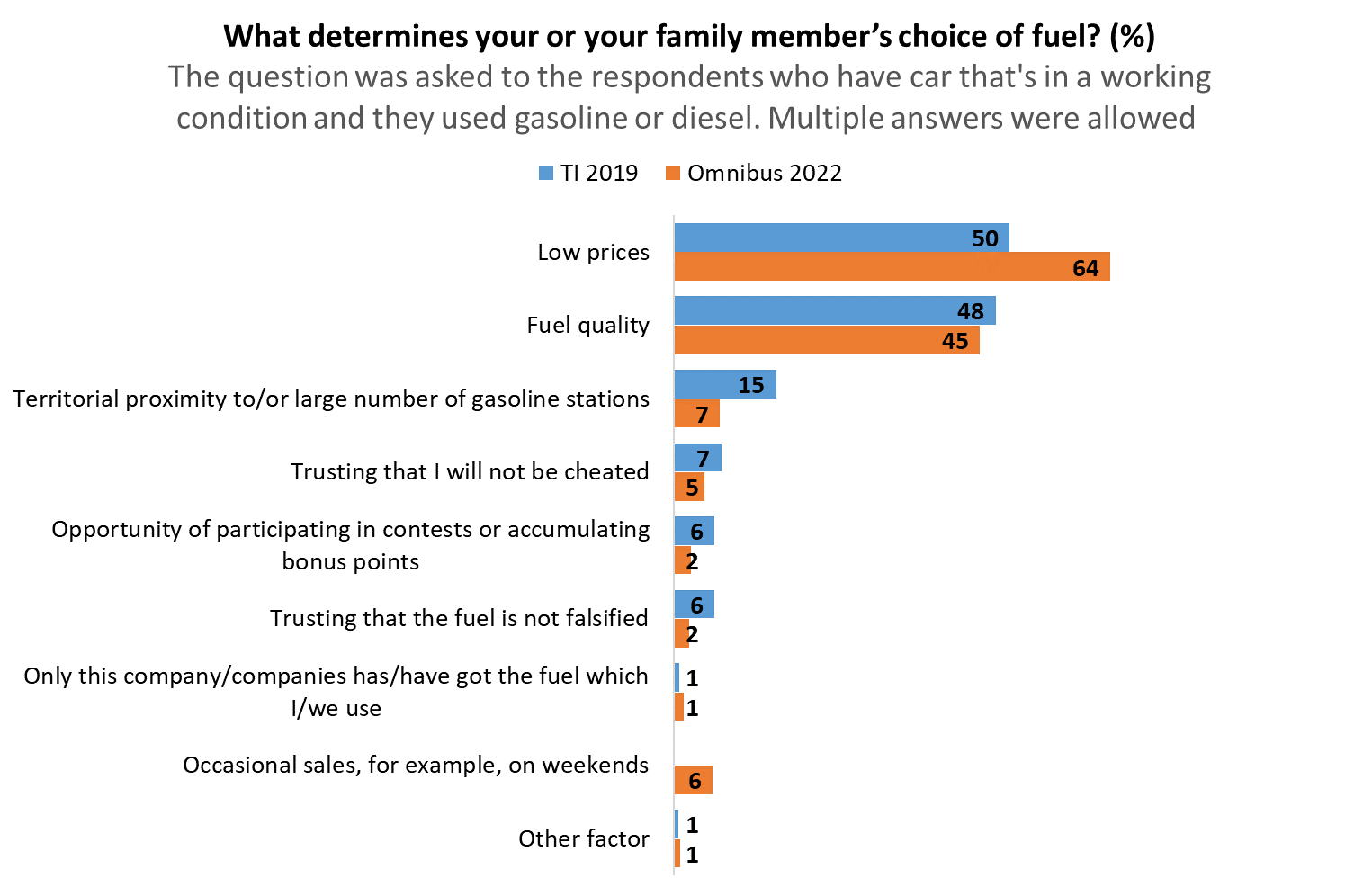
This is in a context where Georgian drivers already were highly price-oriented when selecting which fuel to purchase. Data from the Transparency International survey on public policy, which CRRC Georgia conducted in 2015, 2016, 2018, and 2019 suggests that low prices and fuel quality were the key factors in people’s decision-making on where to purchase fuel. When respondents were asked what factors affect their choice of fuel, 50% mentioned low prices and 48% indicated that they would prefer higher-quality petrol. A further 15% mentioned proximity to the petrol station. Other factors were mentioned by less than 10% of respondents. 

CRRC Georgia’s Omnibus survey conducted in July 2022 suggests that the importance of fuel prices has increased, with nearly two-thirds (64%) naming low fuel prices as a determining factor — a 14 percentage point increase. Notably, the share of people naming proximity halved between 2019 and 2022.

Note: Caption: Respondents were allowed to give multiple answers. Therefore, percentages do not add up to 100%.

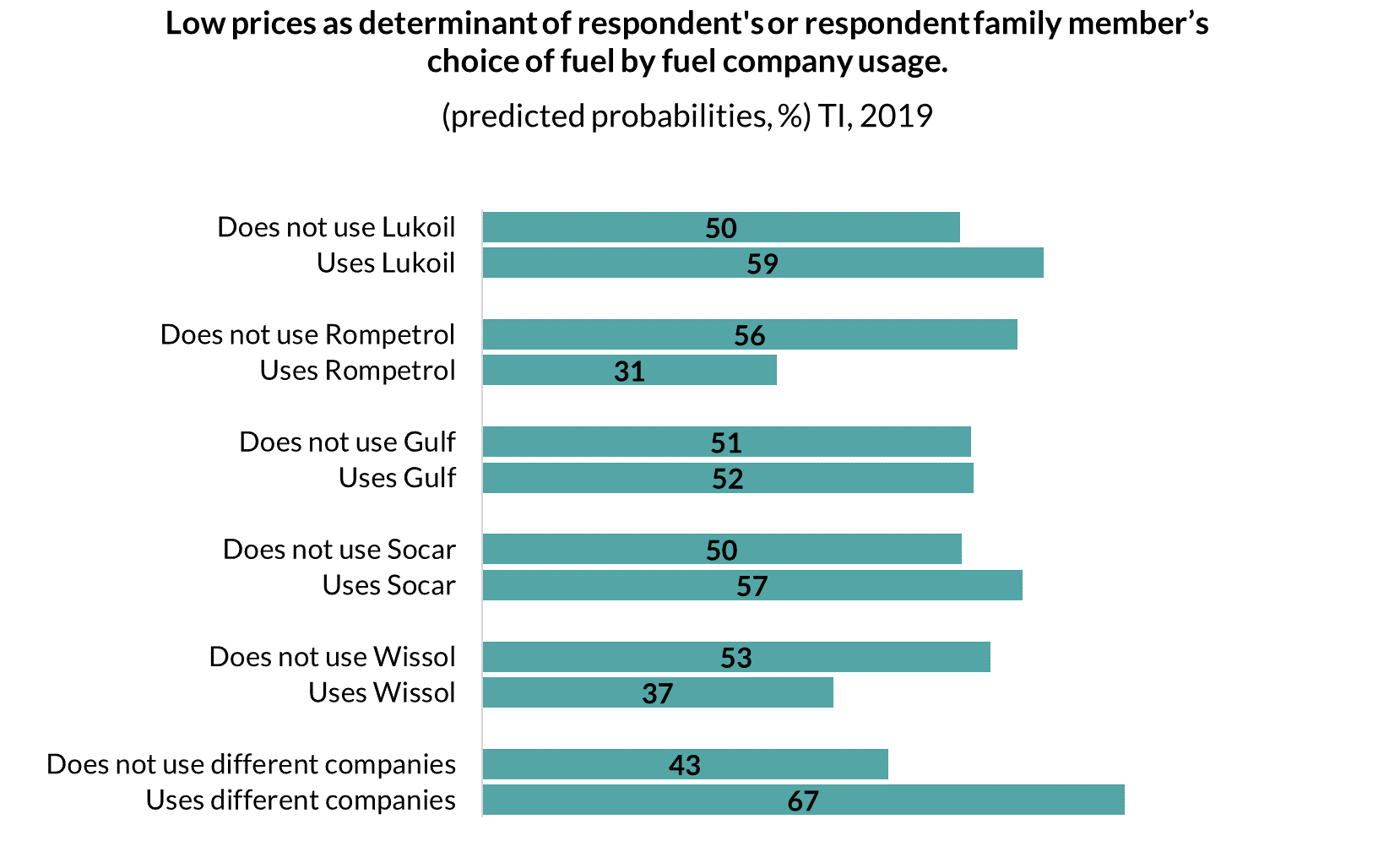
The 2019 data shows that price was a particularly important determinant for people who use non-branded fuel companies, Lukoil customers, and SOCAR customers. In contrast, Rompetrol and Wissol customers were less price-conscious and more concerned with fuel quality.

Note: This chart is based on a binomial logistic regression model. The model includes gender (male, female), age groups (18–34, 35–54, 55+), settlement type (capital, urban, rural), education (secondary or lower, technical, incomplete or complete tertiary), employment status (employed, unemployed), Wissol fuel use (mentioned, not mentioned), Lukoil fuel use (mentioned, not mentioned), Rompetrol fuel use (mentioned, not mentioned), Gulf fuel use (mentioned, not mentioned), SOCAR fuel use (mentioned, not mentioned), and other fuel use (mentioned, not mentioned).

Given the data above, it is perhaps unsurprising that the vast majority of drivers (96%) are concerned about rising fuel costs, and a large majority (82%) report that they are driving less, according to the July 2022 data.

Taken together, the above shows that drivers are increasingly concerned about the cost of fuel. 

The data used in this article is available here. The replication code for the above analysis is available here.

Tuesday, August 02, 2022

Georgia’s uneven post-pandemic economic recovery

Note: This article first appeared on the Caucasus Data Blog, a joint effort of CRRC Georgia and OC Media. It was written by Dustin Gilbreath, a Non-resident Senior Fellow at CRRC-Georgia. The views presented in the article are of the author alone, and do not necessarily reflect the views of CRRC Georgia, or any related entity.

Saying that COVID-19 changed the world is perhaps an understatement. Although a health catastrophe first and foremost, economies also plunged with the emergence of wide-ranging restrictions on activity. World Bank data suggests the global economy shrank between 2019 and 2020 by approximately 3.3%. In Georgia, the corresponding figures were a 6.7% decline in the size of the economy. 

As COVID-19 restrictions have been largely removed, the world has witnessed an economic recovery, albeit combined with the highest rate of inflation seen in recent memory. Despite wide-ranging rhetoric around building back better, data from a newly released World Bank study, which CRRC Georgia conducted, suggests that while the economy is recovering, many groups are facing greater barriers to re-entering the workforce.

Since December 2020, CRRC Georgia has been conducting a series of telephone surveys for the World Bank. The results of the survey show a clear rise in the share of the public that is engaged in employment. While 32% of the public (over the age of 18) reported having a job in December 2020, 43% did in March of 2022.

Still, this data indicates that employment has yet to recover to pre-pandemic levels, with 51% of the public reporting that they had been employed prior to the pandemic.


While the economy is clearly recovering, the data also show that recovery in employment is unequal.

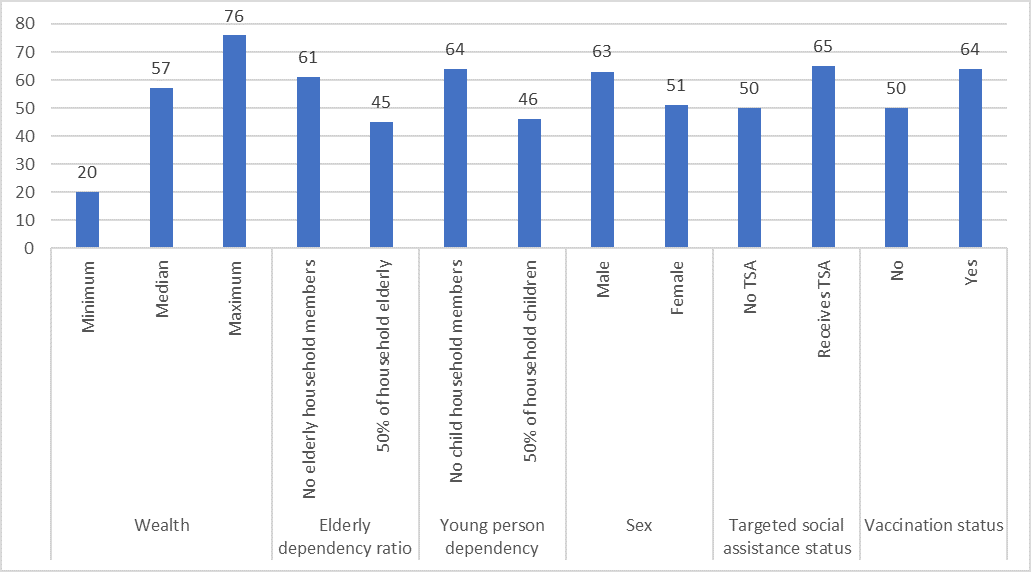
Regression analysis comparing people who lost a job during the pandemic and have not returned to employment to people who lost a job during the pandemic and did return to work suggests that a number of traditionally economically disadvantaged groups face larger challenges in re-entering the workforce.

Women who lost a job during the pandemic are 12 percentage points more likely not to be working at present than men, while people in poor households are substantially less likely to have re-entered the workforce.

In addition, the more elderly people there are in a household, the less likely someone who lost a job during the pandemic is to have returned. 

Similarly, in households with relatively large shares of children, people who lost a job during the pandemic are significantly less likely to be working today than in households with fewer children. 

People who did not get vaccinated are 14 percentage points less likely to have returned to the workforce than people who did get vaccinated.

In the one bright point in the analysis, people in families that receive targeted social assistance were more likely to return to work than in families that do not receive social assistance.

In contrast, there are no significant differences between age groups, settlement types, households with more and fewer members, people of different education levels, ethnic groups, and people who did and did not catch COVID-19 after controlling for the factors shown in the chart above.

Women, people with greater numbers of elderly people, and greater numbers of children in them all remain less likely to be employed at present than men and people without children or elderly people in the household.

This suggests that domestic work and care work burdens related to the pandemic may be at play in people’s lack of return to the workforce. However, this would require further research to confirm.

In the above context, actors working on Georgia’s economic recovery should look into policies which can support a more equal recovery.

Note: The data this article is based on is available here. The analysis of which groups have and have not returned to the workforce was conducted using a logistic regression which controlled for the following variables: Age (18-34, 35-54, 55+); Sex; Settlement type (Tbilisi, other urban, rural); Household member count; Education level (tertiary or not); Child dependency ratio (share of household 18 or under); Elderly dependency ratio (share of household over the age of 64); Received targeted social assistance aside from an old age pension; Caught COVID 19/ had a family member with COVID 19 or not; Vaccinated against COVID 19 or not; Ethnicity (Ethnic Georgian or ethnic minority); Wealth index (A simple additive index of ownership of a number of durable goods within a household).

Tuesday, August 10, 2021

Data suggests Georgia has handled the pandemic poorly

Note: This post first appeared on the Caucasus Data Blog, a joint production of CRRC Georgia and OC Media. It was written by Givi Silagadze, a researcher at CRRC Georgia. The views expressed in this article are those of the author’s alone and do not in any way reflect the views of the CRRC Georgia, or any related entity.

Despite initial praise as a model case of handling the pandemic, Georgia is now seeing record numbers of COVID-19 cases and related deaths. Both health and economic data now suggests that the country has not fared well compared to its neighbours.

In early August 2021, Georgia was among the worst countries in the world in terms of COVID-19 case counts and deaths. Indeed, over the last week, over 1% of the adult population had COVID-19 at the same time.

At the start of the pandemic, headlines in international media praised Georgia as a, ‘Coronavirus success story’, and officials declared that they had ‘managed to stand ready to cope with the virus’. However, circumstances took a turn for the worse in the late autumn and the situation has not been assuring since. 

Despite the quickly deteriorating situation, government officials have been resistant to introducing measures aimed at preventing the spread of the virus. In July, public health officials said that their decisions and methods of tackling the pandemic had been successful. Moreover, polling from June 2021 suggests that 60% of the population is very satisfied (13%) or somewhat satisfied (47%) with the government’s response to COVID-19. 

But official health and economic data suggest Georgia has fared poorly compared to its neighbours, with the potential exception of performance on testing.

Health data

In the spring and summer of 2020, Georgia registered the lowest number of new, daily cases in its neighbourhood. However, by late autumn 2020, Georgia led the neighbourhood (and at times, the world) in new cases per capita. Throughout the summer of 2021, Georgia has performed worse than neighbouring countries.  


COVID-related deaths probably are the single most important indicator of how the country has handled the crisis. Georgia’s cumulative COVID-19 deaths per capita are the second-worst in the region, following Armenia.

Since late autumn 2020, Georgia has consistently fared the worst among its neighbours in COVID-19 deaths per capita. The exceptions in this regard are in the late spring of 2021 and a couple of weeks in July.

Georgia also lags behind its neighbours when it comes to vaccination, with only Armenia further behind. 

As of 10 August, at least 1 in 4 people were vaccinated with at least one dose in Azerbaijan and Russia, and 1 in 2 people in Turkey. Slightly more than 1 in 10 people received at least one dose in Georgia and fewer than 5% in Armenia.

While Georgia tends to lag behind its neighbours on many pandemic related indicators, Georgia is outperforming them on testing and tracking the virus in general. As of 9 August, 1,955 tests per thousand people have been conducted in Georgia since the beginning of the pandemic. 

The figure is significantly lower in neighbouring countries, especially in Armenia and Azerbaijan. However, this data might be misleading because Georgian officials decided to add antigen tests to the test count in December 2020, while Azerbaijan, Russia, and Turkey report only PCR tests (see here).

Moreover, Georgia registered the lowest number of excess deaths throughout 2020. 

In total, there were 333 excess deaths per 100,000 people throughout 2020 in Armenia, 190 excess deaths in Azerbaijan, 245 excess deaths in Russia, and 130 in Georgia (data was not available for Turkey). 

However, data is not available for 2021 and hence, cannot portray the full picture. 

Considering that in August 2021 Georgia tops the neighbourhood in terms of new cases as well as new deaths, it is likely that excess mortality figures have substantially deteriorated as of summer 2021. 

The fact that Armenia and Azerbaijan engaged in military conflict in autumn 2020 further complicates the task of drawing unequivocal conclusions regarding the countries’ efforts to track the virus.


Economic data

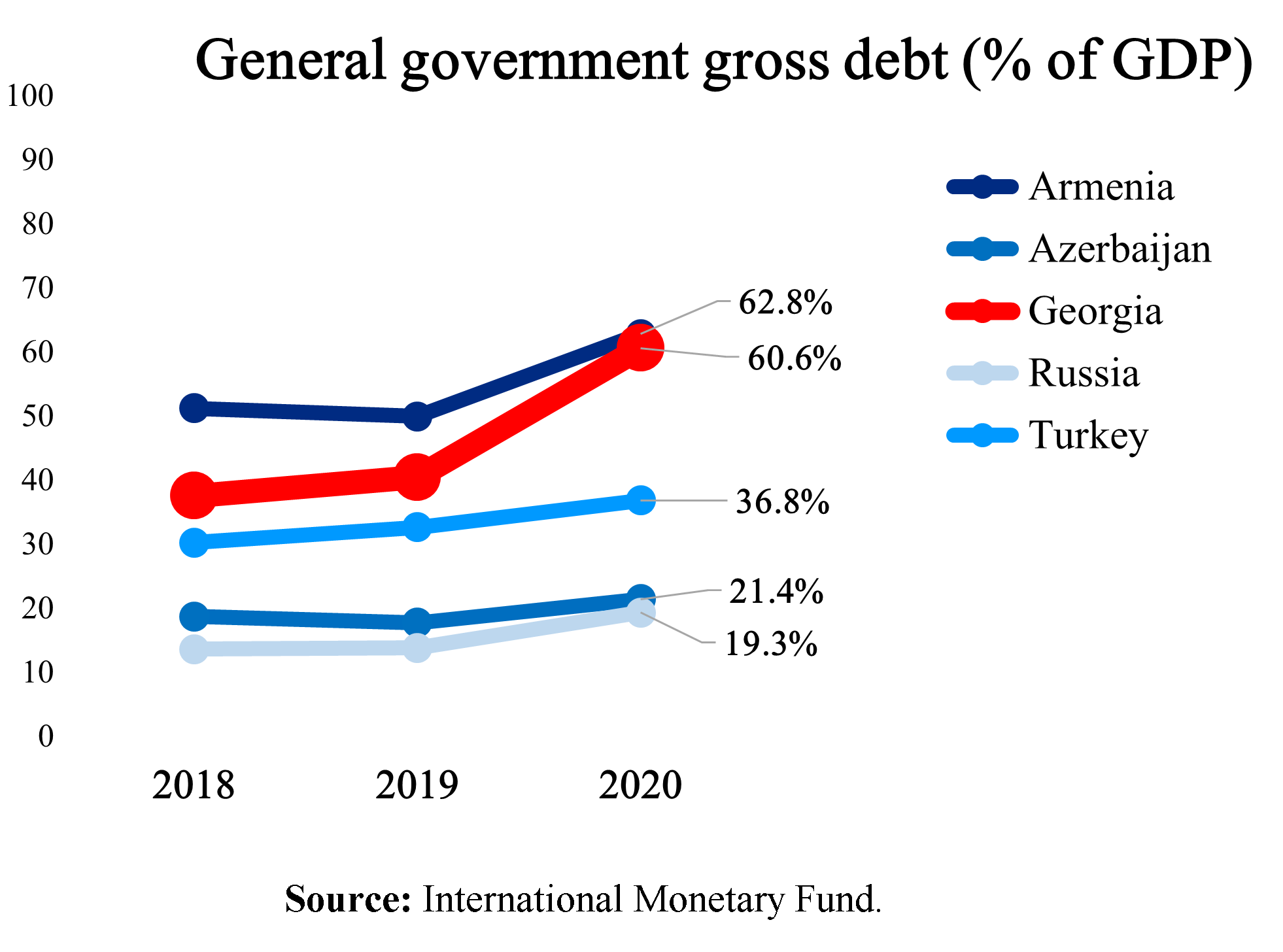
The economy of Georgia has also suffered. According to data from the World Bank and International Monetary Fund, Georgia had the second-highest inflation rate, the second-worst recession, and Georgia’s debt to GDP ratio is the second-largest in the neighbourhood.


Official data suggests Georgia has not done well in comparison to its neighbours in terms of managing the epidemic, with the exception of testing and tracking the virus, at least in 2020. 

Despite the initial success in containing the virus, since autumn 2020 Georgia has been the worst-hit country in the neighbourhood. 

That Georgia lags behind in terms of vaccination is perhaps the most concerning part of this. Vaccination is considered to be the only way to substantively reduce hospitalisation and fatality rates.

Had the economic figures looked encouraging, one could have argued that the country prioritised minimising economic hardship. Yet, if that was the case, the country failed, with the second-highest inflation rate and the second-worst economic recession in the region. What is more, among its neighbours, only Armenia has a larger debt ratio to its economy than Georgia.

Tuesday, September 08, 2020

Lockdown vs re-opening the economy in Georgia

[Note: This blog was originally published in partnership with OC Media on the Caucasus Data Blog, a joint effort of CRRC Georgia and OC Media.]

As the number of new daily confirmed cases is again on the rise, we look at how people felt about the anti-coronavirus restrictions in May.

Aside from the public health situation, COVID-19 has led to rising unemployment, reduced incomes, and food insecurity in Georgia. As the number of new daily confirmed cases is again on the rise, the Caucasus Datablog takes a look at how people felt about the anti-coronavirus restrictions when they were at their height.

Despite polling from CRRC Georgia’s COVID-19 Monitor surveys showing that the public supported the vast majority of the government’s anti-coronavirus policies, the data also suggests people were eager for the economy to reopen. In fact, a majority said they favoured opening up over a more cautious approach.

CRRC asked the public about the relative importance of caution versus opening up the economy on two surveys conducted between 7–10 May and 14–17 May. Most people agreed with the idea that the economic impacts of COVID-19 were worse than the virus itself and disagreed that it was more important to wait for the virus to be under control than to open the economy.  

In addition, the share of Georgians thinking that economic consequences of the virus could be as severe as virus itself also rose from 51% during the 7–10 May period to 64% during the 14–17 May.

The data from the 14–17 May survey was further analysed to explore differences between socio-demographic groups like age, gender, settlement type, education, employment, ethnicity, and household wealth.

This logistic regression showed that people in Tbilisi were less likely to think it was important to wait for COVID-19 to subside before opening up the economy. Older people were also less likely to support waiting for the epidemiological situation to get under control. 

When it comes to the economic costs of COVID-19, there were no statistical differences between key socio-demographic variables. During the crisis, large shares were uncertain how long the COVID-19 crisis would last (35% in the 7–10 May period and 42% during the 14–17 May period). 

Uncertainty on this question was associated with the idea that the economic costs of the virus could be worse than the virus itself. Controlling for demographic variables from the previous model, those uncertain about the possible period of the crisis were less supportive of the idea that the economic costs of the virus were worse than the virus itself.  

Still, a majority of those who were certain or uncertain about the length of the crisis thought that the economic consequences were worse than COVID-19’s health implications.

Overall, the majority of Georgians were supportive of opening up the economy during the COVID-19 crisis, and this support was increasing during the period when the economy was effectively closed. 


The negative economic impacts of COVID-19 also gained more public attention during this time. 

In general, urban settlements were more supportive of re-starting normal economic activities. Older people were also more prone to agree with opening up. 

Besides socio-demographic variables, uncertainties associated with the COVID-19 timeline also shaped public opinions. Uncertain people generally tended to disagree with the idea that the economic costs were harsher than the virus itself. 

The data presented in this blog post is available here. Replication code for the above analysis is available here.

This article was written by Rati Shubladze. Rati is a policy analyst at CRRC Georgia. The views presented in this article represent the author’s alone and do not represent the views of CRRC Georgia, the Embassy of the Netherlands in Georgia, or any related entity.

Monday, June 01, 2020

Are Lion’s Whelps Equally Lions?!

In Georgia, tradition has it that a son stays in the family and is responsible for taking care of his parents in their old age. Consequently, tradition also gives parents’ property to their sons. This limits women’s access to economic resources. New data from Caucasus Barometer shows that regardless of whether people think that a son or daughter or both equally should take care of their parents in their old age, many believe the son should still get the inheritance.

The data shows that people are either for equally distributing the house between sons and daughters or in favor of giving it only to the son. Daughters are rarely seen as the main heirs of the property. About half (52%) of the population believe that the apartment should be given to both children equally. At the same time, almost half of the population (47%) think that son is the main heir. Only 1% think daughters should inherit their parents’ apartment.

In contrast, Georgians overwhelmingly believe in sharing the responsibilities when it comes to caring for their parents. Three-quarters of Georgians believe that children of both genders should equally take care of parents, and twenty percent think that a son should take care of their parents more. Only 6% believe that the primary caregiver should be a daughter.

Most of those respondents (77%) who think a son should take care of his parents believe that property should be given to him. One fifth (21%) are for equal distribution, and only 1% believe that the property should be given to a daughter. Most people (60%) who think that both should equally care for their parents think that property should be distributed equally. Still, 37% think that the son should inherit and 1% that the daughter should. What is more, (55%) of those who believe that daughters should take care of their parents believe that property should be given to the son, while 40% thinks that it should be equally distributed. These numbers, however, should be treated with caution given the small sample of individuals that reported they think daughters should take care of parents in their old age.


Note: Answer options don’t know and refuse to answer are dropped from the analysis. Overall, less than 2% responded with these answer options to either question. The question “Imagine that there are a son and a daughter in a household; and the household only owns one apartment. In your opinion, who should inherit the apartment?” was shortened to “In your opinion, who should inherit the apartment?”

Further analysis shows that women are less likely to say that sons should inherit property than men. Tbilisi residents are less likely to mention that the inheritance should be given to sons than people in rural areas. Those in Tbilisi are also more likely to say that the inheritance should be given to all children equally. Those who have secondary or lower education are more likely to say that a son should inherit property than those with higher education. Moreover, they are less likely to say that all children should inherit property equally.


Note: On the above chart, base categories for each variable are as follows: male, 18-35 age group, should take care equally, rural, ethnic Georgian, and tertiary education. Answer options don’t know, refuse to answer, and other are not included in the analysis. 

The data shows that people are either for equally allocating inheritances between their children or giving it only to a son. Most people think that all children should take care of their parents equally despite their gender.  Taken together, this shows that gender equality in inheritance still has a ways to go in Georgia.

Note: The above analysis is based on a multinomial logistic regression analysis, where the dependent variable is responses to the question “Who should inherit the apartment: a girl or a boy?” The independent variables are gender, age group, ethnicity, settlement type, education, and conservative index. The data used in the blog is available here. Replication code of the above data analysis is available here.


Monday, November 25, 2019

Attitudes towards the new banking regulations

The share of the public with loans from formal financial institutions doubled from 2011 to 2016 according to World Bank Group’s analysis based on Integrated Household Survey in Georgia. The July 2019 CRRC/NDI survey data suggests that about half of the population has a loan. To address perceived over-indebtedness, on 1 January, 2019 the National Bank of Georgia introduced new regulations, restricting lending without more extensive analysis of a consumer’s solvency. The analysis includes looking at an individual’s income, expenses and total obligations, and determination of debtors’ capacity to service their loans without significant financial difficulties.

But, what does the public think about the new regulations?

Almost half of the population approves of the new regulations, a third disapproves, and the remainder are uncertain or did not respond to the question. Considering that the Georgian Dream introduced the regulation it is unsurprising that Georgian Dream supporters have a more favorable view of the legislation than people who identify with the United National Movement (UNM). People who identify with liberal parties or support no party at all are less likely to approve of the new regulations compared to GD supporters. Apart from party support there are no significant differences between different social and demographic groups. Nor is there any significant difference in approval between people who have and do not have loans.


Although every second person in Georgia has a loan, the data suggests that having a loan is not associated with approval of the new regulations. However, support for different parties is. Those who identify with UNM, liberal parties or no party are less likely to approve the regulations compared to ruling party’s supporters.

Note: This blog post is based on a binary logistic regression analysis. The analysis includes having a loan or not, age group, settlement type, education level, party support, and employment status. The party support variable is coded as follows. The category “No party” consists of individuals that responded none or don’t know when asked which party was closest to them. The liberal group consists of New Rights, Bakradze-Ugulava - European Georgia, the Republican Party, the Free Democrats, the New Political Center – Girchi, the Movement State for the People, Political Platform - New Georgia, European Democrats, and Development Movement. The other grouping consists of the Alliance of Patriots of Georgia, Free Georgia, Democratic Movement – United Georgia, Left Alliance, Industry will save Georgia/Industrialists, the Georgian Conservative Party, the Georgian Labor Party, the Unity of Georgian Traditionalists, Tamaz Mechiauri for United Georgia, and Georgian Troupe. The data this blog post is based on is available here. The replication code for the above analysis is available here.


Monday, September 10, 2018

Pension reform is underway in Georgia, but only about half of the population is aware of it

On July 21, 2018 Georgian legislators approved an accumulative pension scheme, after years of discussion. As one of the requirements of the new law, employees with contracts who are under the age of 40 have to contribute 2% of their remuneration to the state-run pension fund, on a monthly basis. Although other employees are not legally required to do so, they may participate in the scheme voluntarily. This law is a first step in a larger reform of Georgia’s pension system. Opposition politicians have criticized the new law citing that it counters the country’s constitution as it introduces a new tax without a referendum. Several civil society groups also expressed criticism of the reform, questioning its legitimacy.

According to June 2018 CRRC/NDI survey that was conducted before the law was passed, only 46% of people in Georgia were aware of the proposed reform of the country’s pension system. People with tertiary education reported being more informed (57%) compared to the rest of the population. Although the new pension scheme primarily targets younger employees, young people were significantly less likely to have heard of the proposed changes (36%) compared to those who were older than 40 (53%). Ethnic minorities were also far less likely to know about the reform than ethnic Georgians (22% and 48%, respectively).

A majority were against the idea of mandatory contributions to the pension fund. If they had a choice of mandatory or voluntary contributions, only 17% would prefer the mandatory option, while the majority (61%) would choose the voluntarily option. Even people whose political sympathies are close to the ruling Georgian Dream party are significantly more likely to favor voluntary contributions compared to the mandatory ones.

Note: The full wording of the first question was: “There are several proposals regarding the pension reform. Which of these two proposals is acceptable for you? According to one of the proposals, employees under the age of 40 mandatorily contribute 2% of their salary to the pension fund every month. According to another proposal, employees under the age of 40 voluntarily contribute 2% of their salary to the pension fund every month.” For the question, “Which party is closest to you?” only first choice has been considered for the chart above. 

People in Georgia need to be informed better about the new pension scheme that was recently adopted. Importantly, it lacks public support even among those who feel close to the ruling party.

The data used in this blog post is available here.

Monday, May 28, 2018

Perceptions of the problems faced by women in Georgia

People in Georgia consistently name unemployment as the main problem the country faces. Women, compared with men, report having a job less often. Based on CRRC/NDI December 2017 survey findings, this blog post presents the population’s perceptions of some of the issues that women in Georgia face that may partially explain women’s lower labor force participation rate.

During the survey, several issues were evaluated from the point of view of whether these represent a problem for women in Georgia or not. Approximately half of Georgia’s population considers a lack of kindergartens to be a problem for women, followed by bad maternity leave conditions, which are perceived to be slightly worse in the private sector than in the public sector. Quite a large share of the population (39%) reports that in their opinion, employers prefer to hire men over women, although 50% do not think so. Similarly, more people disagree than agree with the opinion that women are not being hired in Georgia for leadership positions. The chart below lists both the issues and the assessments.


Note: Distribution of answers “Don’t know” and “Refuse to answer” is not shown in the charts through this blog post. 

Interestingly, men and women answer very similarly regarding kindergartens and employers’ gender preferences. There are, however, some differences when it comes to maternity leave conditions and women not being hired for leadership positions. Slightly more women than men name these as problems.


Note: Only the share of positive answers is shown in this chart. 

People living in different settlement types answer these questions slightly differently. A lack of kindergartens is perceived to be much more problematic in Tbilisi than in rural settlements. Compared to the urban population, a slightly larger share of people living in villages and ethnic minority settlements report that employers prefer to hire men over women as a problem. Women not being hired for leadership positions is also more often perceived as a problem in villages and ethnic minority settlements.


Note: Only the share of positive answers is shown in this chart. 
This blog post illustrates some of the potential obstacles for women’s employment in Georgia, as perceived by the population. Do you think that these issues help explain why relatively few women participate in the labor force in Georgia? Share your thoughts with us on Facebook or Twitter.

To explore the data used in this blog post further, visit our Online Data Analysis platform.

Monday, February 12, 2018

What factors help to land a good job? Views in Armenia and Georgia

What are the factors that help one get a good job? The question is important around the world, and arguably even more important in countries with high reported unemployment, like Georgia and Armenia. While it would require an in-depth study of the labor market of a given country to find out what actually helps a person get a good job, what people think about this issue is also interesting. CRRC’s 2017 Caucasus Barometer (CB) survey asked the population of Armenia and Georgia which factors where important for getting a good job in their country.

In both Armenia and Georgia, connections was the most frequent answer, and was picked by almost a third of the populations. For this blog post, answer options are grouped into two categories: meritocratic and non-meritocratic factors. While the former includes education, professional abilities, work experience, and talent, the latter combines connections, luck, age, appearance and doing favors for the “right” people. In Georgia, approximately half of the population named meritocratic factors, while just above a third named these in Armenia.

Note: A show card was used during the interviews. Answer options “Other” and “Don’t know” (less than 5% if combined) are not shown on the charts in this blog post. 

Although there are differences between Armenia and Georgia at the national level, a similar pattern is found when settlement types are compared within each country. The population of rural settlements in both countries tended to name meritocratic factors as important for getting a good job more often than the population of urban settlements.

In both countries, differences in the frequency of mentioning meritocratic vs. non-meritocratic factors were rather small among people with different levels of education. The only notable difference was that in Armenia, 39% of people with higher than secondary education named connections as the most important factor for getting a good job, while only 27% of those with secondary or lower education reported the same.
Note: Answer options to the question “What is the highest level of education you have achieved to date?” were recorded in the following way: “No primary education”, “Primary education”, “Incomplete secondary education”, and “Completed secondary education” were combined into the category “Secondary education or lower”. “Incomplete higher education”, “Completed higher education (BA, MA, or Specialist degree)”, and “Post-graduate degree” were combined into the category “Higher than secondary education”. 

Overall, in both countries, connections were named most frequently as the most important single factor to get a good job. People in Georgia report the importance of meritocratic factors more often than in Armenia. In both countries, the rural populations name meritocratic factors more often than the urban populations, a fact which deserves further research to understand its underlying causes.

To have a closer look at CRRC’s Caucasus Barometer data, visit our Online Data Analysis portal. 


Monday, August 21, 2017

Statistical Hiccups Cause Georgia to Become Lower-Middle Income Country

[Note: This article originally appeared on Eurasianet. It was written by Dustin Gilbreath, a Policy Analyst at CRRC-Georgia. The views expressed within the article do not necessarily reflect the views of CRRC-Georgia or any related entity.]

Georgia’s economy appeared to take a step backward earlier this summer when the World Bank demoted the country to “lower-middle-income” status. The demotion, however, has more to do with statistical hiccups than it does with a substantial decline in economic activity.

In 2016, Georgian officials cheered when the World Bank promoted the country into the ranks of “upper-middle-income” states. It was big news in Tbilisi, the capital. But in July, officials didn’t have much to say when the country slipped back into the “lower-middle-income” ranks.

To understand the up-and-down tale of Georgia’s economic status, one needs to know how the World Bank classifies countries into income groups, a bit about Georgia’s 2002 and 2014 censuses, Georgia’s fluctuating exchange rate, and what country classifications are used for in practice.

To start, the World Bank measures economic status primarily by relying on gross national income (GNI) per capita, which is composed of GDP, as well as incomes flowing to the country from abroad, including interest and dividends. To make these calculations, the Bank uses something called the Atlas method, which accounts for fluctuations in the exchange rate using a three-year, inflation-adjusted average of rates.

Thresholds for each income group change slightly every year based on inflation. In the most recent year, countries with less than $1,005 in GNI per capita were designated low-income countries; those with GNIs from $1,006 to $3,955 fell into the lower- middle-income group; $3,956 to $12,235 were upper middle income; and those with $12,236 and above attained high-income status.

Georgia isn’t the only post-Soviet country to experience a downgrade in recent years due to exchange-rate woes and other factors. Russia, for example, moved down to upper-middle-income status in 2016 after three years in the high-income group.  Meanwhile, Azerbaijan, which is grappling with a severe downturn due to the global drop in energy prices, is at risk of demotion to lower-middle-income status next year. And Kyrgyzstan and Tajikistan appear poised to slip back into the lower-income category.

GNI per capita is a population-based measure. That means that as the number of people decreases, the figure increases. For this reason, the 2014 census made Georgia an upper-middle income country. This fact stems from Georgia’s population size between 2002 and 2014 being estimated using the 2002 census. In 2002, the Georgian government carried out its first census since the last Soviet census in 1989. The census’s final population count is believed to have heavily overestimated the population at about 4.4 million citizens. Between censuses, the population data is updated using birth and death registries. These too had problems, showing that Georgia’s population was growing steadily.

In contrast to the 2002 census, the 2014 census was more rigorous. It showed a 17% smaller population figure than the Georgian National Statistics Office had estimated for 2014. This meant that the per capita figures for GNI jumped, pushing Georgia into upper-middle income status. Notably, estimates of GNI per capita which use more realistic population figures for the years between 2002 and 2014 suggest that Georgia had likely crossed the upper-middle income threshold in 2013.

Even though the Atlas method takes into account fluctuations in exchange rate, GNI per capita is ultimately denominated in dollars for the World Bank’s calculations. In Georgia’s case, the Lari has dropped from around GEL 1.7 to the dollar in early 2014 to about GEL 2.4 to the dollar at the time of this writing. The value of the Lari was even lower for a time. In practice this has decreased Georgia’s GNI per capita figures to the point of knocking the country into a different income category.

Against the backdrop of population estimate revisions and fluctuating exchange rates, Georgia’s economy has been growing, albeit very slowly for a developing country in recent years. Georgia’s economy grew at an average rate of about 5.9 percent from 1995-2013; since 2014, it has grown at an average rate of 3.4 percent

The exchange rate fluctuation is hampering growth prospects. For one, rate volatility makes it harder for businesses to predict costs. In addition, many Georgians have dollar-denominated loans, while their incomes are in Georgian Lari. Although nominal salaries have slightly outpaced inflation, they have not kept pace with the decline in the Georgian currency’s value. Hence, debt payments consume a rising share of income for those trying to pay off dollar-denominated loans. The Georgian Government and National Bank are addressing this situation via a program that subsidizes the conversion of foreign-currency loans into Georgian Lari at a favorable rate.

While Georgia’s income group status has more to do with how the statistic is calculated than the actual state of Georgia’s economy, the changes have had clear implications. For instance, the Global Fund - an organization that has provided over USD 100 million to Georgia over the years to combat tuberculosis and AIDS - has different rules on aid for lower-middle-income and upper-middle-income countries. Meanwhile, a Brookings Institution study suggests that upper-middle income countries receive aid more often in the form of credits (i.e. loans) than grants when compared with lower middle income countries.

Some development organizations explicitly change lending terms when a country moves from lower middle to upper middle income status, although the World Bank itself does not. Hence, Georgia’s downgrading may have a silver lining, potentially leading to more aid opportunities.

But downgrading also has significant downsides. In political terms, it’s not good news for incumbents because it fosters an appearance among the population that the country is moving backwards. It also can impact the decisions of potential foreign investors. The demotion in status is unlikely to make Georgia a more attractive investment destination.


Monday, February 06, 2017

The state procurement system in Georgia: Companies’ views (Part 2)

The first part of this blog post presented findings about Georgian companies’ participation in the state procurement system. This post provides an overview of companies representatives’ assessments of the state procurement system and how these assessments differ depending upon the company’s participation or non-participation in the state procurement process.

Company representatives report that their main sources of information about state procurement include the websites of procuring state entities (17%) and the State Procurement Agency’s Unified Electronic System (16%). However, representatives of companies that do not participate in state procurement report that they do not or cannot get information about the state entities’ procurement tenders.


Note: The number of answer options was not limited during the interviews.

Most companies (60%) report trusting the State Procurement Agency, with only a small share (8%) saying they do not trust it. At the same time, almost a third of companies (30%) say they don’t know whether they trust the Agency or not. Notably, representatives of companies which have never bid on state procurement tenders answer “don’t know” more frequently than representatives of companies that have. Moreover, representatives of the companies which have participated in the state procurement process at least once report trusting the Agency more often than the non-participating companies. This result likely indicates that the participating companies’ experiences working with the State Procurement Agency were positive.


Responses to the question, “How much do you agree or disagree that companies which have connections with the government win tenders?” also vary based on whether companies have experience participating in the state procurement system. Representatives of companies that have such experience disagree with this statement more often. Moreover, representatives of companies which have not participated in the state procurement system respond “don’t know” twice as often as participating companies.


Around one third (36%) of the companies that have participated in state procurement think that tenders are often “tailored” to one specific company and the goal is to ensure that this particular company wins. However, almost half (48%) of the participating companies do not agree with this statement. While 27% of the companies which have participated in the state procurement system agree with the statement that tenders may be repeatedly rejected by the procuring side with the aim of awarding the contract to a particular company through simplified tender, almost half disagree with this statement.


Note: This question was asked to the representatives of the 17% of companies that have participated in the state procurement system.  

As the findings presented in this blog post show, representatives of companies that have participated in the state procurement system at least once assess the State Procurement Agency’s work more positively. Most of them trust the Agency and believe that there is no need to have connections with the government to win tenders. Most representatives of companies that have not participated in the state procurement system have difficulty stating their opinion on these issues. The findings presented in this blog post indicate that the State Procurement Agency should do more to raise awareness among companies about the state procurement system.

To explore this topic more, take a look at CRRC-Georgia’s report Survey of companies on state procurement. 


Friday, January 27, 2017

The state procurement system in Georgia: Companies’ views (Part 1)

The Unified Electronic System for State Procurement was introduced in Georgia in 2010. The system aimed to simplify the state procurement process and make it transparent. According to the State Procurement Agency, “Every year, the state spends hundreds of millions of lari on procurement of different kinds of goods, services and construction. … Accordingly, private companies ought to be interested in state procurement as an important potential source of increasing their incomes.” However, according to the findings of a Survey of companies on the state procurement system conducted by CRRC-Georgia for Deloitte Consulting LLP and USAID in August 2016, a majority of companies do not actively participate in the state procurement process. Based on CRRC-Georgia’s report on the subject, this blog post discusses problems with the system in the companies’ views.

According to the State Procurement Agency’s 2015 annual report, 15.6% of active companies have bid on state procurement tenders (pg.17). On CRRC-Georgia’s survey 17% of companies report taking part in the state procurement process, and approximately half of these companies report doing so only sometimes or rarely. Seventy-three percent of companies report not being registered in the Unified Electronic System for State Procurement (UES), which is a requirement for bidding on state procurement tenders.


Note: 2% of companies, whose representatives answered “Don’t know” to the question: “Is your company registered in Unified Electronic System for State Procurement?” were excluded from the analysis. 

The results of the survey provide some insight about why companies do not participate in state procurement. Most frequently (56%), a lack of interest in participating in the state procurement process was mentioned as the main reason for not participating. We do not, however, have any information about why there is a lack of interest. The second most common reason company representatives mentioned for not participating was that the tenders announced are not applicable to the company’s field of activity (27%).


Note: Only answers of the representatives of companies that are not registered in the Unified Electronic System for State Procurement (73%) are presented in the chart above. 

A majority of companies (64%) report having no information about the announcement of state procurement tenders. Given this general lack of information, it is not surprising that their representatives found it difficult to assess how fairly different types of tenders are conducted. Notably, representatives of 76% of the companies report they have not heard about seminars which the State Procurement Agency conducts with the aim of increasing the knowledge of business people about the state procurement system.


Note: The chart shows distribution of answers of the 83% of companies that have not participated in state procurement system. Companies whose representatives answered “Refuse to answer” to the question are excluded from analysis. There are five types of state procurement tenders in Georgia: simplified procurement, simplified electronic tender, electronic tender, consolidated tender and contest. Definitions of each type of tender are available here.

It is possible that the lack of information is an obstacle to greater participation in state procurement processes. Thus, the State Procurement Agency should better inform companies about its activities.

The second part of this blog post, which will be published next Monday, shows how representatives of companies assess the state procurement system based on whether they have or have not participated in the state procurement system.

Monday, October 03, 2016

Companies’ lack of interest in DCFTA trade may slow benefits

Positive expectations abound in Georgia around the potential impact of the Deep and Comprehensive Free Trade Area (DCFTA) Agreement with the EU. Yet, it is still unclear if the agreement’s trade-related components have increased trade. According to CRRC-Georgia’s Tax Perceptions Survey conducted from September to November 2015 for USAID’s Governing for Growth (G4G) project, only 6% of surveyed companies traded with the EU under the DCFTA Agreement. Moreover, according to the same survey, most Georgian companies report not being interested in trading in the DCFTA. This is a troubling finding, since, by law, all Georgian companies will eventually have to comply with DCFTA standards whether they export or not. That is to say, even if companies are not interested in exporting to the EU, the standards of their products will still need to increase. This will benefit consumers in the long run, but may hurt companies in the short term during the period of approximation of Georgian legislation with the EU’s.

When looking at the difference in absolute value of exports from Georgia to the EU one year before the agreement entered into force (September 2013 to August 2014) and the year after (September 2014 to August 2015), we see that it fell by 10% in US dollars, while the value of imports from the EU increased by 2% in USD. While the devaluation of the lari could be one explanation why the value fell, there was still a 7% drop in exports valued in lari. This decrease in exports is unexpected, given that DCFTA removed almost all tariffs between the EU and Georgia.


This change can be partially explained by the value of exports fluctuating from year to year.  The value of exports was particularly high during the period of September 2013 to August 2014, 61% higher in respect to the preceding 12-month period.

In addition to the absolute value of exports to the EU declining after the implementation of the DCFTA, the share of Georgia’s exports heading to the EU has not increased substantially either. Between September 2012 and August 2013, 17% of Georgia’s exports went to the EU. In the subsequent 12-month period, the respective share was 25%, and increased to just 26% in the year following DCFTA’s implementation in September 2014. That is to say, following DCFTA, the share of Georgian exports going to the EU increased by only one percentage point.

The EU is an important trade partner for Georgia, and the DCFTA should lead to increased trade between the EU and Georgia over time. However, it appears that it is yet to bear fruit in terms of exports to the EU. One factor that may be contributing to this is that, to a certain extent, the Government of Georgia has taken an "if we build it, they will come" approach to the implementation of the DCFTA. While the Ministry of Economy and Sustainable Development of Georgia provides information to companies that want to export, there are few tailored forms of promotion outside general awareness-raising. This may explain why CRRC survey findings show that a majority of companies, even many of those involved in external trade, report to be uninterested in the DCFTA.

The Tax Perceptions Survey showed that 90% of surveyed companies do not trade under the DCFTA regime. Of these companies, 69% said it was because they were not interested, 11% because they did not know about it, and 8% because they could not satisfy the terms.

It makes sense that not every company would trade under the DCFTA agreement - a corner shop, for example, is unlikely to have a product to export after all. However, companies that export also expressed disinterest. Seventy percent of these companies reported they do not take advantage of the DCFTA and almost half (46%) reported they were not interested in it.

This lack of interest is a clear issue. The DCFTA Agreement will eventually require the approximation of Georgian legislation with the EU’s, and the vast majority of companies will need to comply with the terms of the agreement. Although this will result in improved quality of many products on the Georgian market, it will also create additional costs for businesses. Without greater interest in exporting, these costs will not be offset by the increased trade, potentially bringing pain upon the local economy.

The survey didn’t ask about why companies are not interested in the DCFTA. Hence, further research should be done to gather comprehensive information on the issue. In the meantime, the EU and the Government of Georgia should be alert to the fact that targeted outreach is needed to encourage companies to meet DCFTA requirements and provide support to make this process as painless as possible. Outreach should also target exporters to explain to them how they can benefit from the DCFTA.