Showing posts with label Covid 19. Show all posts

Tuesday, August 02, 2022

Georgia’s uneven post-pandemic economic recovery

Note: This article first appeared on the Caucasus Data Blog, a joint effort of CRRC Georgia and OC Media. It was written by Dustin Gilbreath, a Non-resident Senior Fellow at CRRC-Georgia. The views presented in the article are of the author alone, and do not necessarily reflect the views of CRRC Georgia, or any related entity.

Saying that COVID-19 changed the world is perhaps an understatement. Although a health catastrophe first and foremost, economies also plunged with the emergence of wide-ranging restrictions on activity. World Bank data suggests the global economy shrank between 2019 and 2020 by approximately 3.3%. In Georgia, the corresponding figures were a 6.7% decline in the size of the economy. 

As COVID-19 restrictions have been largely removed, the world has witnessed an economic recovery, albeit combined with the highest rate of inflation seen in recent memory. Despite wide-ranging rhetoric around building back better, data from a newly released World Bank study, which CRRC Georgia conducted, suggests that while the economy is recovering, many groups are facing greater barriers to re-entering the workforce.

Since December 2020, CRRC Georgia has been conducting a series of telephone surveys for the World Bank. The results of the survey show a clear rise in the share of the public that is engaged in employment. While 32% of the public (over the age of 18) reported having a job in December 2020, 43% did in March of 2022.

Still, this data indicates that employment has yet to recover to pre-pandemic levels, with 51% of the public reporting that they had been employed prior to the pandemic.

 

While the economy is clearly recovering, the data also show that recovery in employment is unequal.

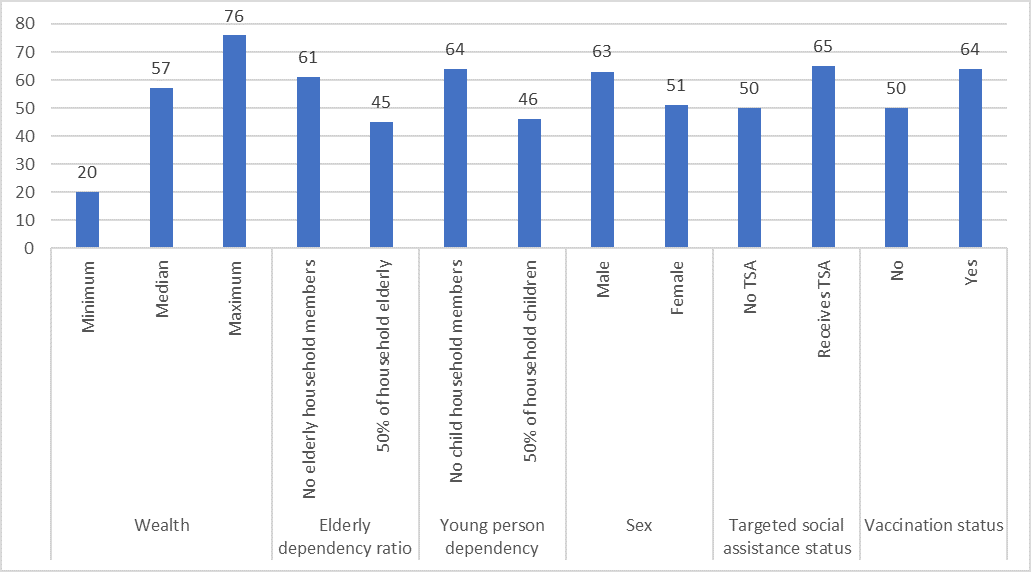
Regression analysis comparing people who lost a job during the pandemic and have not returned to employment to people who lost a job during the pandemic and did return to work suggests that a number of traditionally economically disadvantaged groups face larger challenges in re-entering the workforce.

Women who lost a job during the pandemic are 12 percentage points more likely not to be working at present than men, while people in poor households are substantially less likely to have re-entered the workforce.

In addition, the more elderly people there are in a household, the less likely someone who lost a job during the pandemic is to have returned. 

Similarly, in households with relatively large shares of children, people who lost a job during the pandemic are significantly less likely to be working today than in households with fewer children. 

People who did not get vaccinated are 14 percentage points less likely to have returned to the workforce than people who did get vaccinated.

In the one bright point in the analysis, people in families that receive targeted social assistance were more likely to return to work than in families that do not receive social assistance.

In contrast, there are no significant differences between age groups, settlement types, households with more and fewer members, people of different education levels, ethnic groups, and people who did and did not catch COVID-19 after controlling for the factors shown in the chart above.

Women, people with greater numbers of elderly people, and greater numbers of children in them all remain less likely to be employed at present than men and people without children or elderly people in the household.

This suggests that domestic work and care work burdens related to the pandemic may be at play in people’s lack of return to the workforce. However, this would require further research to confirm.

In the above context, actors working on Georgia’s economic recovery should look into policies which can support a more equal recovery.

Note: The data this article is based on is available here. The analysis of which groups have and have not returned to the workforce was conducted using a logistic regression which controlled for the following variables: Age (18-34, 35-54, 55+); Sex; Settlement type (Tbilisi, other urban, rural); Household member count; Education level (tertiary or not); Child dependency ratio (share of household 18 or under); Elderly dependency ratio (share of household over the age of 64); Received targeted social assistance aside from an old age pension; Caught COVID 19/ had a family member with COVID 19 or not; Vaccinated against COVID 19 or not; Ethnicity (Ethnic Georgian or ethnic minority); Wealth index (A simple additive index of ownership of a number of durable goods within a household).

Wednesday, April 27, 2022

Georgians are becoming less satisfied with the government’s COVID response

Note: This article first appeared on the Caucasus Data Blog, a joint effort of CRRC Georgia and OC Media. It was written by Natia Liluashvili, a junior fellow at CRRC-Georgia. The views presented in the article are of the author alone, and do not necessarily reflect the views of CRRC Georgia, or any related entity.

In the two years since the first coronavirus case was detected in Georgia, roughly 1.6 million people have caught COVID-19 in the country, and more than 1 in 235 people have died due to the virus.

The most recent wave caused by the Omicron variant resulted in over 5% of the country having an active case of COVID-19 at the same time.

During this wave, the government abolished the green passport requirement and lifted most restrictions on businesses. This approach stands in contrast to the government’s approach at the start of the pandemic, which included lockdown policies. But what does the public think of how the government has handled the pandemic?

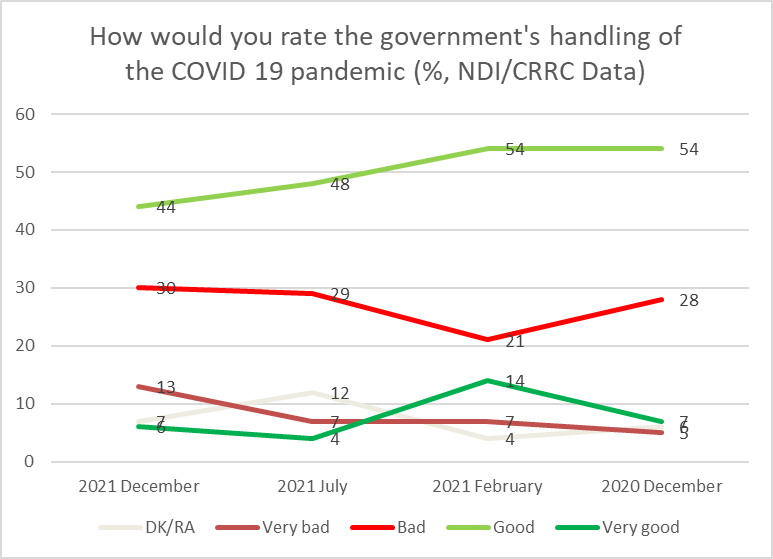
In December 2020, Georgia was in partial lockdown. According to data from the 2020 NDI/CRRC survey, 61% of the public thought the government handled the pandemic well or very well, while 33% rated the government’s handling of the pandemic negatively.

In February 2021, the number of people who positively assessed the management of the pandemic increased to 68%, while only 28% thought that they did a bad job. Notably, this survey took place during the period in which Giorgi Gakharia, Georgia’s former prime minister, withdrew from politics.

Unlike his predecessor, Irakli Garibashvili began to open up the country. At the same time, Georgia started to provide vaccines. Against this background, in July 2021, positive attitudes towards the government’s handling of the pandemic declined to 52%.

In December 2021, the number of daily confirmed cases increased dramatically, which was also reflected in the mortality rate. According to the latest NDI data, half the population (50%) think that the government was handling the pandemic well, with negative attitudes towards the government’s handling of the pandemic increasing from 36% to 43%.

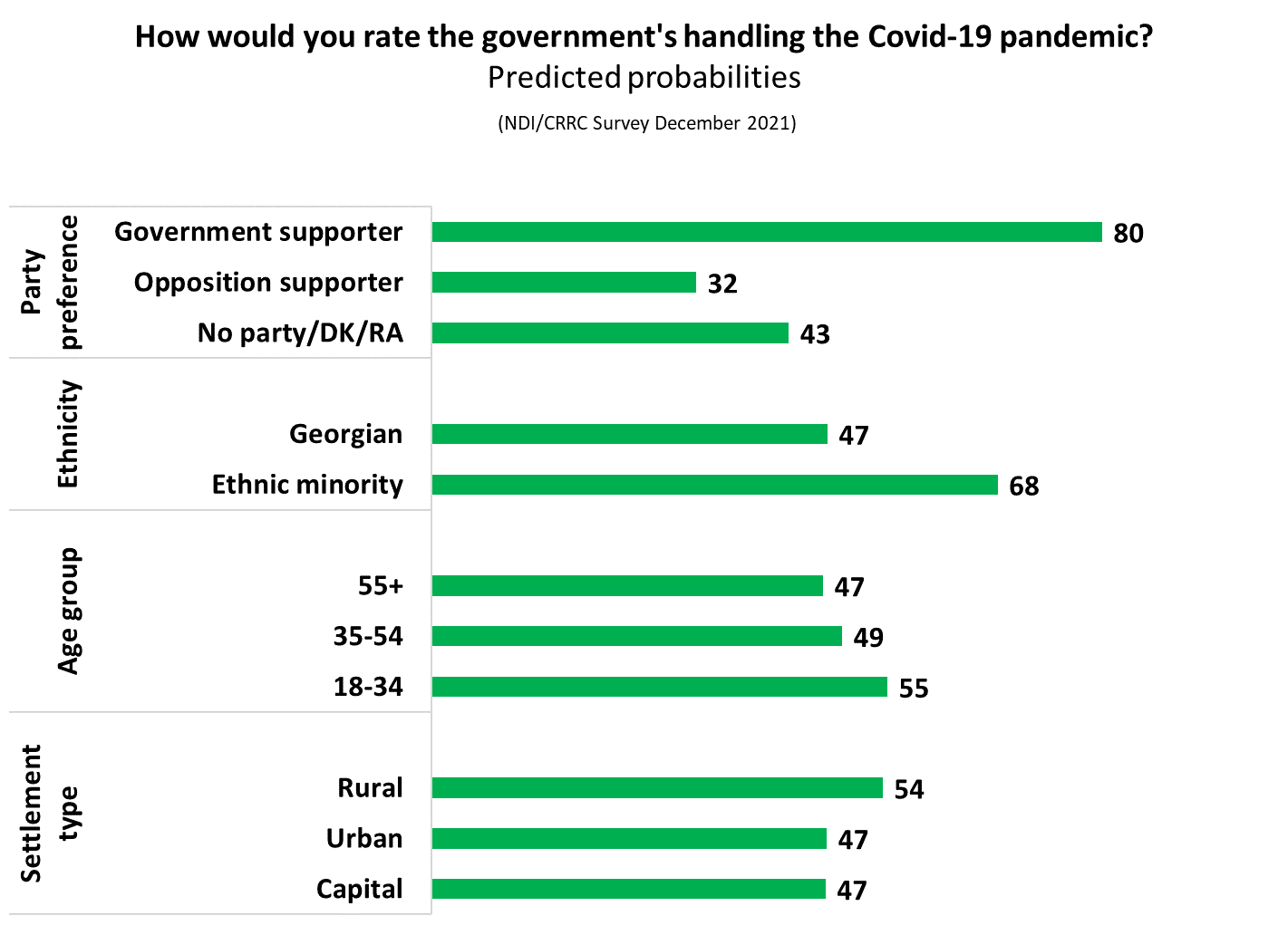
A regression analysis of the December 2021 data shows that the attitudes towards government policies differ significantly by party preference, ethnicity, age group, and settlement type.

People in rural areas have more positive attitudes towards the government’s handling of the pandemic than people in urban areas. Compared to the elderly, young people are more likely to think that the government is handling the COVID-19 pandemic well. Ethnic Georgians also hold less favourable attitudes than ethnic minorities, while Georgian Dream supporters are substantially more positive about the government’s policy than those who support the opposition or no party at all.

Note: This chart was generated from a regression model. The model includes gender (male, female), age group (18–34, 35–54, 55+), settlement type (capital, urban, rural), education (secondary or lower, secondary technical, tertiary), household composition in terms of having children under 12 (have children under 12, do not have children under 12), household composition in terms of having members over 60 (have members over 60, do not have members over 60),  household composition in terms of having members with severe chronic disease (have member with serious chronic disease, do not have member with serious chronic disease), ethnicity (Georgian, ethnic minority), party respondent names as closest to his/her views (Georgian Dream, opposition party, did not name a party (don’t know, refuse to answer, or no party affiliation)).

Even though the number of people who think that the Government is handling the pandemic well is slowly declining, it is high, especially in rural areas, among older people, and among ethnic minorities.

The data this article is based on is available here.

Tuesday, February 08, 2022

Georgians remain hesitant about vaccinating kids

Note: This article first appeared on the Caucasus Data Blog, a joint effort of CRRC Georgia and OC Media. was written by Tsisana Khundadze, a Senior Researcher at CRRC Georgia, and Dustin Gilbreath, the Deputy Research Director at CRRC Georgia. The views expressed in this blog post reflect the views of the authors alone, and do not necessarily reflect the views of NDI or CRRC Georgia. 

Data from the CRRC Georgia and NDI December 2021 survey suggest that even fewer people in Georgia are willing to vaccinate their children than those who are willing to get vaccinated themselves.

A 9 November decision by Georgian authorities enabled children aged 12 or older to be vaccinated against COVID-19, so long as there was parental consent

In the December 2021 survey, 29% of Georgians reported already being vaccinated while 25% said they plan to get vaccinated, equivalent to 44% of the adult population in total. In contrast, 42% of Georgians said they would not get vaccinated against the coronavirus.  Two-thirds of those who are already vaccinated or willing to be said they would get a booster or already had. 

In contrast, only a quarter of people reported they would be willing to vaccinate, or had already had vaccinated, their children. The majority (59%) says they would not vaccinate their children.

The data indicates that there are a number of differences between those willing to and those not willing to vaccinate their children. 

Notably, people who do not have children under 12 in the household are 1.3 times more likely to say they would vaccinate them compared to people who have children under 12 in the household. 

People who say they are planning to get the vaccine or are already vaccinated themselves are 5 times more likely to say they would vaccinate their children.

People with higher education are 1.3 times more likely to report they would vaccinate their children than people with secondary or lower education. 

People who trust the healthcare system in Georgia are 1.2 times more likely to report the same compared with those who do not trust the healthcare system. 

Georgian Dream and opposition supporters are 1.2 times more likely to say they would vaccinate their children compared to people who did not name any party as closest to them. 

The wealthier a household is, the more likely a person is to say they would vaccinate their child. 

Older people are 1.5 times more likely to express willingness in vaccinating children than young people. 

Note: This chart was generated from a regression model. The additive index of ownership of different items is a common proxy for wealth.

With this data in mind, together with the late rollout of vaccines for children, perhaps it is unsurprising that as of 16 January, only 15,841 children were vaccinated with at least one dose in Georgia.

The data used in this article is available here.

Tuesday, September 21, 2021

Georgia’s COVID-19 cases exploded due to the 2020 parliamentary elections

Note: This article first appeared on the Caucasus Data Blog, a joint production of CRRC Georgia and OC Media. The article was written by Givi Silagadze, a Researcher at CRRC Georgia, and Dustin Gilbreath, Deputy Research Director at CRRC Georgia. The views presented in the article represent the authors' alone and do not reflect the views of CRRC Georgia or any related entity.

New analysis released in CRRC Georgia’s policy bulletin suggests that the 2020 parliamentary elections led to a massive rise in COVID-19 cases and deaths in Georgia. 

While the analysis of last year’s vote looks bleak, this is not to say that the 2 October local elections should be cancelled, which this analysis in no way addresses. However, political parties, the government, and voters need to exercise caution if a repeat of last year is to be avoided. 

The newly released policy brief estimates that approximately 1,250–1,450 of Georgia’s COVID-19 deaths and 100,000–140,000 cases are associated with Georgia’s October 2020 parliamentary elections.

To come to these estimates, a synthetic controls model was used. Synthetic controls models are a type of quasi-experimental statistical model which help to estimate what would have happened in the absence of a large-scale policy change or event. To do so, it constructs a baseline scenario from other countries which are not affected by the particular event. By comparing the baseline scenario to what actually happened, it is possible to estimate the effect of an event.

The chart below shows the results of a model for COVID-19 deaths per million people. The results suggest that around 1,450 people passed away from COVID-19 that would not have had elections not been held. Other models suggested approximately 1,250 deaths were associated with the elections.

Notably, the divergence between the baseline scenario and real Georgia starts two weeks after the elections, in line with the scientific consensus that death rates pick up approximately two weeks after COVID-19 cases start to pick up. The model suggests Georgia had elevated deaths for three months. Two additional models in the policy brief provide lower point estimates of around 1,250 deaths, but substantively similar results.

Similar models were created for COVID-19 cases per capita. The models suggest that between 100,000 and 140,000 cases are associated with the elections. As with the model above, the elevated case counts lasted for approximately two to three months.


The model’s estimates of the increase in COVID-19 cases are in line with the estimated COVID-19 per capita deaths. During this time period, approximately 1.1% of COVID-19 cases resulted in fatalities in Georgia. The deaths and cases the model attributes to the elections is in line with this figure at 1.03%–1.28%.

These results suggest that the government needs to actively work on preventing the spread of COVID-19 on election day on 2 October, and citizens need to follow safety guidelines to prevent the local elections from resembling the 2020 parliamentary elections in terms of COVID-19 spread. 

The full policy brief this article is based on is available here. The full replication code for the analysis is available here.

Tuesday, August 31, 2021

Georgia has a vaccine inequality problem

Note: This article first appeared on the Caucasus Data Blog, a joint effort of OC Media and CRRC Georgia. It was written by David Sichinava, CRRC Georgia's Research Director. The views expressed in this article are those of the author’s alone and do not in any way reflect the views of CRRC Georgia, or any related entity.

A fast and timely rollout of COVID-19 vaccines is essential for keeping the pandemic at bay. While far-reaching immunisation helps save lives, it also helps with quickly reopening the economy. Nevertheless, not everyone has access to life-saving vaccines. Rich countries have been quick to hoard doses to vaccinate their own populations, leaving poorer states lagging behind. 

But unequal access to COVID-19 vaccines within countries also threatens the effective and timely mitigation of the pandemic. Notably, even in countries boasting high rates of vaccine rollout, such as the UK and Israel, COVID-19 vaccines are less accessible to vulnerable and disadvantaged populations. As recent CRRC/NDI data shows, Georgia is no exception.

Despite initial successes in curbing the COVID-19 pandemic, Georgia has done considerably worse in managing infection rates and vaccinations than its neighbours. In the first 10 days of August 2021, the country led global league tables in infection and death rates per 100,000 residents, while simultaneously lagging far behind in immunisation.

As of 25 July 2021, when the last interviews of the CRRC/NDI study were administered, about 7% of Georgians in the survey reported receiving at least one dose of the COVID-19 vaccine. The Georgian government initially prioritised vaccinating older people, so this group is slightly more likely to be inoculated (10%) than those younger than 35 (4%) and between 35 and 54 (8%). More Tbilisi residents (16%) received at least one shot than those from other urban areas (6%) and rural areas (2%).

Notably, a respondent’s socio-economic status predicted whether they had been vaccinated. About 16% of Georgians with a higher education had received at least one dose, as opposed to a mere 4% of those with no higher education. 

About a quarter of respondents with the highest socio-economic standing in the country (as measured by an asset ownership index) had received at least one dose, compared to 6% of those with the median number of assets, and 3% of Georgians within the lowest socioeconomic bracket.

A lack of information might contribute to low immunisation rates. The research indicates that those groups who were least likely to be vaccinated also claimed that they did not have enough information on the immunisation process. For instance, only 18% in the highest socio-economic status say that they did not have enough information on the vaccination process in Georgia, compared to almost half of those within the median (48%) and lowest standing on the socio-economic bracket (46%). 

Similarly, a larger share of Georgians with no higher education (47%) stated that they did not have enough information on vaccination, than those who had attained higher education (30%).

There was also geographic variation. For example, only one-third of Tbilisians reported not having enough information about Georgia’s immunisation process, compared with 43% in other urban areas and 47% in rural areas. 

Not surprisingly, in the days of the initial phase of vaccine rollout, available vaccination time slots in the capital and larger urban areas were filled almost instantaneously. Many Tbilisians even booked available places in vaccination centres outside the capital. This may be because they had better access to information and knowledge of the online booking system: CRRC/NDI data shows that 61% of Tbilisi residents knew how to access online booking system, as opposed to 45% of Georgians from other urban areas and only 27% of rural residents.

Those who reside outside the capital are not the only group put in a disadvantaged position. Other vulnerable groups such as older people, ethnic minorities, poorer Georgians, and those with no higher education were also less likely to have knowledge of how to use the online vaccination booking system. Few among those who claimed not to have enough information on the immunisation process knew how to use the online booking system.

While in the last few weeks, Georgia has accelerated its immunisation efforts, vaccinating more than 20,000 people daily, it is likely that the factors described in this article will continue to affect the timely and equitable access to life-saving vaccines. 

Considering the lack of pro-immunisation information provided by the government and the prevalence of anti-vaccine sentiment among many Georgians, it is crucial that information be disseminated explaining the process and benefits of immunisation. As the data above shows, it’s also critical that this is done in a manner that effectively reaches all Georgians.

Note: Differences were identified using two logistic regression model predicting (a) whether the respondent had a COVID-19 vaccine, (b) whether they reported not having enough information on the immunization process in Georgia, and (c) whether the respondent knew how to use online vaccine booking system. Predictors in each of the models included the following social and demographic variables: gender, age, education, settlement type, ethnicity, partisanship, and a durable goods index. A durable goods index is a common proxy measure of a household’s economic status, which counts the number of appliances present in the household. The lowest value corresponds to the score of 0. The median value corresponds to 6, and the highest value of the index is 10. The replication code is available here.

Tuesday, August 10, 2021

Data suggests Georgia has handled the pandemic poorly

Note: This post first appeared on the Caucasus Data Blog, a joint production of CRRC Georgia and OC Media. It was written by Givi Silagadze, a researcher at CRRC Georgia. The views expressed in this article are those of the author’s alone and do not in any way reflect the views of the CRRC Georgia, or any related entity.

Despite initial praise as a model case of handling the pandemic, Georgia is now seeing record numbers of COVID-19 cases and related deaths. Both health and economic data now suggests that the country has not fared well compared to its neighbours.

In early August 2021, Georgia was among the worst countries in the world in terms of COVID-19 case counts and deaths. Indeed, over the last week, over 1% of the adult population had COVID-19 at the same time.

At the start of the pandemic, headlines in international media praised Georgia as a, ‘Coronavirus success story’, and officials declared that they had ‘managed to stand ready to cope with the virus’. However, circumstances took a turn for the worse in the late autumn and the situation has not been assuring since. 

Despite the quickly deteriorating situation, government officials have been resistant to introducing measures aimed at preventing the spread of the virus. In July, public health officials said that their decisions and methods of tackling the pandemic had been successful. Moreover, polling from June 2021 suggests that 60% of the population is very satisfied (13%) or somewhat satisfied (47%) with the government’s response to COVID-19. 

But official health and economic data suggest Georgia has fared poorly compared to its neighbours, with the potential exception of performance on testing.

Health data

In the spring and summer of 2020, Georgia registered the lowest number of new, daily cases in its neighbourhood. However, by late autumn 2020, Georgia led the neighbourhood (and at times, the world) in new cases per capita. Throughout the summer of 2021, Georgia has performed worse than neighbouring countries.  


COVID-related deaths probably are the single most important indicator of how the country has handled the crisis. Georgia’s cumulative COVID-19 deaths per capita are the second-worst in the region, following Armenia.

Since late autumn 2020, Georgia has consistently fared the worst among its neighbours in COVID-19 deaths per capita. The exceptions in this regard are in the late spring of 2021 and a couple of weeks in July.

Georgia also lags behind its neighbours when it comes to vaccination, with only Armenia further behind. 

As of 10 August, at least 1 in 4 people were vaccinated with at least one dose in Azerbaijan and Russia, and 1 in 2 people in Turkey. Slightly more than 1 in 10 people received at least one dose in Georgia and fewer than 5% in Armenia.

While Georgia tends to lag behind its neighbours on many pandemic related indicators, Georgia is outperforming them on testing and tracking the virus in general. As of 9 August, 1,955 tests per thousand people have been conducted in Georgia since the beginning of the pandemic. 

The figure is significantly lower in neighbouring countries, especially in Armenia and Azerbaijan. However, this data might be misleading because Georgian officials decided to add antigen tests to the test count in December 2020, while Azerbaijan, Russia, and Turkey report only PCR tests (see here).

Moreover, Georgia registered the lowest number of excess deaths throughout 2020. 

In total, there were 333 excess deaths per 100,000 people throughout 2020 in Armenia, 190 excess deaths in Azerbaijan, 245 excess deaths in Russia, and 130 in Georgia (data was not available for Turkey). 

However, data is not available for 2021 and hence, cannot portray the full picture. 

Considering that in August 2021 Georgia tops the neighbourhood in terms of new cases as well as new deaths, it is likely that excess mortality figures have substantially deteriorated as of summer 2021. 

The fact that Armenia and Azerbaijan engaged in military conflict in autumn 2020 further complicates the task of drawing unequivocal conclusions regarding the countries’ efforts to track the virus.


Economic data

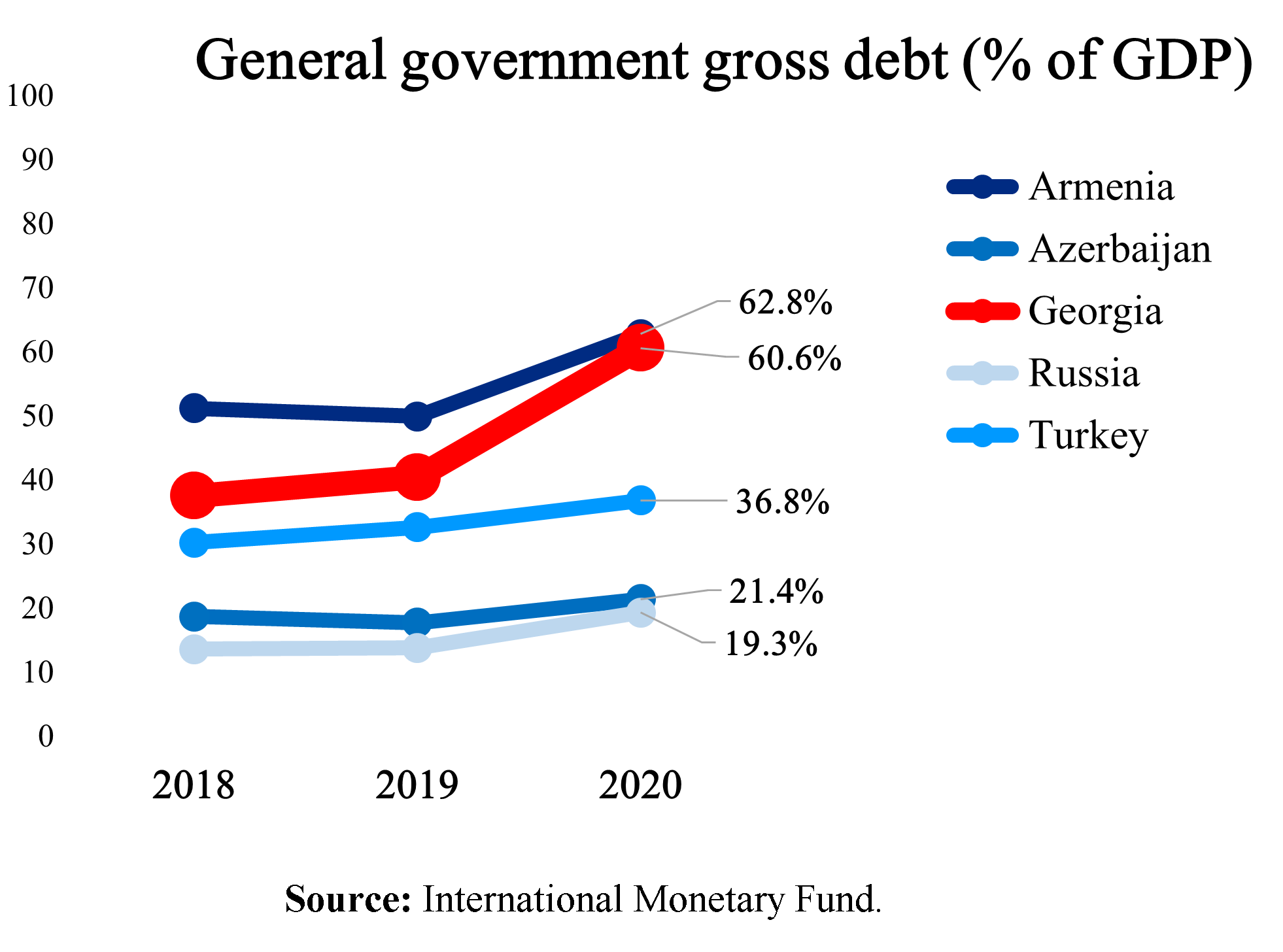
The economy of Georgia has also suffered. According to data from the World Bank and International Monetary Fund, Georgia had the second-highest inflation rate, the second-worst recession, and Georgia’s debt to GDP ratio is the second-largest in the neighbourhood.


Official data suggests Georgia has not done well in comparison to its neighbours in terms of managing the epidemic, with the exception of testing and tracking the virus, at least in 2020. 

Despite the initial success in containing the virus, since autumn 2020 Georgia has been the worst-hit country in the neighbourhood. 

That Georgia lags behind in terms of vaccination is perhaps the most concerning part of this. Vaccination is considered to be the only way to substantively reduce hospitalisation and fatality rates.

Had the economic figures looked encouraging, one could have argued that the country prioritised minimising economic hardship. Yet, if that was the case, the country failed, with the second-highest inflation rate and the second-worst economic recession in the region. What is more, among its neighbours, only Armenia has a larger debt ratio to its economy than Georgia.

Tuesday, April 06, 2021

Drug prices as big a concern as COVID-19 for Georgians

Note: This article was first published on the Caucasus Data Blog, a joint production of CRRC Georgia and OC Media. The article was written by Avto Dolidze, a Junior Fellow at CRRC Georgia. The views expressed in this article represent the views of the author alone, and do not necessarily represent the views of CRRC Georgia, NDI, or any related entity

While Georgia’s healthcare system has faced significant challenges as a result of the pandemic, just under half of Georgians consider an issue related to COVID-19 to be among the main challenges facing the country’s healthcare system with medicine prices remaining a big worry, polling suggests. 

In the December 2020 NDI and CRRC Georgia survey, respondents were asked what the largest issue facing the healthcare system was. They were allowed to name up to three issues. The most commonly named issues were the cost of medicine (46%), access to hospitals due to COVID-19 issues (16%), and other COVID-19 related issues (25%).

When grouped by whether or not someone mentioned an issue directly related to COVID-19, the data suggest that half the public thinks issues unrelated to COVID-19 are the main issues facing the healthcare system. 

One in five respondents (19%) named only COVID-19 related issues. Almost a third (29%) named at least one COVID-19 related issue, and at least one non-COVID-19 issue. Overall, half of the population (52%) named only issues not directly related to COVID-19.


Note: The responses “Accessibility of hospitals due to COVID-19 issues”, “Accessibility of doctors for COVID-19 issues”, “Accessibility of COVID-19 tests”, and “Other COVID-19 related issues” are considered COVID-19 related issues. The responses “Cost of Medicine”, “Lack of qualification of doctors and medical personal”, “Cost of Medical care/doctor’s visits”, “Availability of hospitals and healthcare services”, “Bureaucracy of the healthcare system”, “Cost of medical supplies”, “Poor quality medicine”, “Poor hospital infrastructure and equipment”, and “Bad sanitary conditions in hospital and clinics” are not counted as COVID-19 related issues. 

There were few significant predictors of whether or not someone thinks COVID-19 is among the healthcare system’s main issues. Women and men, people in cities and villages, people in relatively wealthy and poor households, and those with higher and lower education levels were similarly more or less likely to name at least one COVID-19 related issue. However, attitudes did vary by age and ethnicity. 

Older people were more likely to be concerned about issues not related to COVID-19 than younger people, who, in turn, were more likely to be concerned about both COVID-19 and non-related issues. 

This may be unsurprising, as past analyses have shown that even though the cost of medicine is the biggest issue for all age groups, older people are particularly concerned about drug prices. Ethnic minorities were less likely to mention COVID-19 related issues than ethnic Georgians.

Note: The above chart used a multinomial regression model. The model controlled for age group (18–34, 35–54, 55+), sex (female, male), settlement type (Capital, urban, rural), education (secondary or lower, secondary technical, higher than secondary), ethnicity (Georgian, ethnic minority), and a simple additive index of durable goods owned by the respondent’s household, a common proxy for wealth. 

While COVID-19 is straining healthcare systems around the world, including in Georgia, half the public do not consider it among the largest issues facing the healthcare system in the country. Older people in particular are more concerned about the cost of medicine. 

The data used in this article is available here.

Tuesday, March 30, 2021

Georgia among worst in the world for vaccine hesitancy

Note: This article first appeared on the Caucasus Data Blog, a joint OC Media and CRRC Georgia effort. The article was written by Dr. David Sichinava, Research Director at CRRC Georgia. The views presented in the article represent the views of the authors’ alone and do not represent the views of CRRC Georgia or any related entity. 

Scientists agree that global mass immunisation against COVID-19 is the only pathway to putting the virus under control. Yet, the World Health Organisation has argued that actually getting people to take vaccines is ‘an unprecedented challenge’, which might undermine mass immunisation efforts. 

New data suggests that the Georgian public is among the least interested in getting a vaccine globally, given available data. 

On the January 2021 Omnibus survey, CRRC Georgia asked respondents whether they wanted to be vaccinated against COVID-19 if a safe and effective vaccine was available tomorrow. While half the public (48%) said yes, half were against being vaccinated (40%) or uncertain (12%). 

Since this poll was conducted, the government has expanded those eligible to be vaccinated to include the general public over the age of 65, after take-up among medical workers was low. 

Vaccination efforts encountered a significant challenge when a nurse who was promoting vaccination passed away as a result of an allergic reaction to the vaccine itself. 

More recent polling from February, which was collected prior to the above described events, has shown an even lower share of the public wants to be vaccinated (35%). 

With this context in mind, how does Georgia fare globally in terms of vaccine acceptance? CRRC data puts the country near the bottom in the global league table of countries where polling data on vaccine hesitancy is available. 

Georgians are on par with the populations of the Philippines, France, and Russia regarding openness to getting vaccinated.


How do different groups of Georgians compare in terms of vaccine hesitancy? 

More women than men are hesitant about getting a COVID-19 jab. About half of Georgian men (52%) said that they would get vaccinated compared to 45% of women. Forty-three percent of women said they would not get inoculated, with only 37% of men saying they would not. 

Georgians with a higher education (53%) are eight percentage points more likely to want a vaccine than those without (46%). 

There is a notable partisan split when it comes to openness to vaccination. While most supporters of both the Georgian Dream and opposition parties want a vaccine, more Georgian Dream supporters (62%) said that they will vaccinate than opposition supporters (52%). Georgian Dream supporters were less likely to say that they would not vaccinate (27%) than supporters of other political parties (41%). Importantly, non-partisans were more likely to say that they would not vaccinate (46%) than vaccinate (41%).

Further analysis of the data shows that vaccine hesitancy is also related to other attitudes. For instance, more than half (54%) of those who believe that COVID-19 is a real threat (three-quarters of Georgians) would vaccinate. Those that think the danger of COVID-19 is exaggerated (19% of the total population) are more likely to refuse a vaccine. Only about 25% of such respondents would get a COVID-19 jab, while 66% would refuse to be inoculated.

How do those who refuse to be vaccinated or are uncertain explain their attitudes? Most (55%) respondents said that they do not trust vaccines. Seventeen percent said that they do not need a vaccine. About 10% were afraid of vaccination, and 5% said they are anxious about the vaccines’ potential side effects. Two percent named other reasons, while 11% were unsure. 

Notably, opposition supporters are almost twice as likely to say that they do not trust vaccines (72%) than those that identify with Georgian Dream (38%). While this finding should be taken with caution due to the small sample size, the differences are still suggestive.

Georgia’s vaccine hesitancy problem might partially stem from misinformation. An earlier analysis showed that almost the entire population believed in false facts about vaccines, such as jabs causing autism, that they negatively affect children’s development, or harm the human immune system.

Another reason for such hesitancy could be political. As vaccine reluctance in Georgia correlates to political feelings, further calls for division along partisan lines might well undermine the public’s trust in the process of mass immunisation. 

Instead, politicians should bear in mind an acute public health emergency, set aside political differences, and endorse a consensus about vaccination.

The data used in this article is available here. Replication code for the above analysis is available here.

The analysis above is based on series of multinomial regression models predicting vaccine hesitancy. Demographic controls include gender, age, settlement type, employment status, ethnicity, education, assets index, internet usage, experience of been infected by COVID-19, attendance of religious services and presence of children in the household. Attitudinal predictors control for party affiliation, trust in the government’s ability to deal with the COVID-19 situation, perception whether COVID-19 is a real threat, and optimism regarding COVID-19 situation.

Thursday, March 04, 2021

UNM supporters are especially pessimistic about their economic future

With the pandemic still raging and accompanying economic restrictions still in force, Georgians are unsurprisingly pessimistic about their economic future. This holds true especially for supporters of the opposition United National Movement Party, above all other party supporters.

COVID-19 restrictions have impacted people’s economic activity heavily. This is reflected in key economic indicators such as GDP, which declined by 5.9% year on year between January and November 2020

It is also reflected in employment, with fewer people reporting starting new jobs and more people reporting having lost one, according to the 2020 Caucasus Barometer.

The survey, conducted in December 2020, shows that people’s expectations of their financial futures tend towards pessimism and uncertainty. Only around 1 in 10 Georgians said they expected their family to be better off financially in one year’s time; 29% said they would be in the same situation financially and 37% said that they would be worse off. 

Around a quarter of people said they were uncertain of what their financial situation will be like in one year’s time. 

Analysis of the data showed differences in people’s attitudes depending on their age, and party affiliation. There were no significant differences between people of different sexes, settlement types, education levels, employment statuses, or economic situations.

Unsurprisingly, people who had a household member start a new job during the last 12 months were more optimistic, while those who reported a household member losing a job were pessimistic. 

People aged 35–54 were 1.3 times more likely to say that their household would be worse off in a year’s time compared to younger people and those over 55. 

Note: This chart was generated from a regression model. The model includes sex (male, female), age group (18–34, 35–54, 55+), settlement type (capital, urban, rural), education (secondary or lower, secondary technical, tertiary), party support (No party, Georgian Dream, refuse to answer, don’t know, UNM and other), employment status (employed, not employed), household member starting a job in the last 12 months (yes, no), household member losing a job in the last 12 months (yes, no), and an additive index of ownership of different items, a common proxy for wealth.

The data showed that supporters of the United National Movement (UNM) were significantly more pessimistic about their future financial situation than supporters of other parties. 

People who named the UNM as the party closest to them were 1.9 times more likely to have negative expectations than those who preferred Georgian Dream. 

In general, UNM supporters were also more likely to report losing a job than people who supported other parties

Nevertheless, the link between party support and financial expectations holds whether or not someone in the household lost a job or not. 

For all other party supporters, people whose household member lost a job were more pessimistic, than those who did not lose a job. UNM supporters were pessimistic regardless of whether a family member lost a job or not.

Note: The chart shows those who answered ‘worse off’ only. 

The data showed that more than a third of Georgians were expecting their financial situation to be worse in one years’ time. Around a quarter were uncertain of the near future. 

Expectations were worse for people aged 35–54 years old, those whose family members had lost a job during the last 12 months, and UNM supporters.

For more data on people’s attitudes towards various issues see the Caucasus Barometer 2020 dataset on CRRC’s online data analysis tool. The views expressed in the article are the author’s alone, and do not reflect the views of CRRC Georgia, the National Democratic Institute, or any related entity.

Wednesday, February 24, 2021

Who thinks Georgia handled the pandemic successfully?

[Note: This post first appeared on the Caucasus Data Blog, a joint effort of OC Media and CRRC Georgia. The article was written by Givi Silagadze, a researcher at CRRC Georgia. The views presented in the article reflect the author's alone and do not represent the views of CRRC Georgia or any related entity.]

Prior to the most recent episode in Georgia's political crises, COVID-19 was the country's main concern. Yet, data on how the public views the country's handling of the crisis shows a stark partisan divide.

It has been a year since the first case of coronavirus was detected in Georgia. Since then, over 260,000 cases have been confirmed, over 3,300 fatalities, and the economy has suffered the largest decline since 1994. In light of this, how does the Georgian public assess the country’s handling of the pandemic? 

Data from the 2020 Caucasus Barometer survey offers a snapshot of how well people think the country did in dealing with the outbreak. 

The data suggests that there are few differences between demographic groups, but that political division is evident in evaluations of the country’s performance.

A slight majority (56%) reported that Georgia had done a somewhat good job (45%) or a good job (11%); 38% said it had done a bad job.

People’s assessments were associated with several social and demographic variables. 

People with a higher education were 8 percentage points less likely to praise the country’s response than those with a lower level of education. 

People aged 35–55 were 10 percentage points less likely to report that Georgia had done well than younger people (aged 18–35).

Other socio-demographic variables, including IDP status, ethnicity, employment situation, settlement type, sex, wealth, or whether or not someone had tested positive for COVID-19, did not appear to be associated with how well someone rated the country’s performance.

While there were relatively few differences between social and demographic groups, there was a stark partisan divide. 

Georgian Dream supporters were 45 percentage points more likely to report that Georgia had done a somewhat good job or a good job in dealing with the outbreak than supporters of other opposition parties, after controlling for other factors. 

Similarly, Georgian Dream supporters were 27 percentage points more likely to give a positive assessment than those who supported no party in particular.


People who experienced economic hurdles in parallel with the outbreak also assessed the country’s performance differently. 

Those who lost a job in 2020, or had a family/household member lose a job during the past year were significantly (18 percentage points) less likely to evaluate Georgia’s handling of the outbreak positively.

The loss of a job and partisanship also interacted in interesting ways. 

Georgian Dream supporters and those with no clear political preference were significantly less likely to assess the government’s response positively if they or a family member had lost a job.

In contrast, for supporters of opposition parties, there was no significant difference between those who had or had not lost a job in the past 12 months.

All else equal, the data suggests that party identification is strongly associated with people’s assessment of the country’s handling of the outbreak. 

It is impossible to determine with the data at hand if party identification drives the differing assessments of the government’s performance or vice versa. 

In either case, it reaffirms what previous studies have suggested about the political polarization of the Georgian electorate being reflected through divergent assessments of past events and institutions rather than opposing policy alternatives or ideological views. 

This, once again, underscores the necessity of responsible political leadership that would unite rather than divide the nation during crises.

Note: The above data analysis is based on a logistic regression model which included the following variables: age group (18–35, 35–55, 55+), sex (male or female), education (completed secondary/lower or incomplete higher education/higher), settlement type (capital, urban, rural), wealth (an additive index of ownership of 12 different items), did anyone in the household lose a job in the past 12 months, party support (Georgian Dream, refuse to answer, no party/do not know, other parties), did they test positive for COVID-19, ethnic group (ethnic Georgian or other ethnic group), employment situation (working or not), IDP status (forced to move due to conflicts since 1989 or not). The analysis was run with and without attitudinal variables, with substantively similar results. The estimates in this article present the results of the model with attitudinal variables. The data used in the article is available here.


Tuesday, February 16, 2021

More people feel healthy during the pandemic

This article first appeared on the CRRC and OC Media, Caucasus Data Blog. It was written by Kristina Vacharadze, Programs Director at CRRC Georgia, and Dustin Gilbreath, Deputy Research Director at CRRC Georgia. The views expressed in this article do not reflect the views of CRRC Georgia or any related entity.

The pandemic has clearly harmed people’s health, yet new data from the Caucasus Barometer Survey suggests that people considered themselves more healthy in 2020. 

In 2019, 35% of the public evaluated their health as good. In past years, this had shifted up and down to varying extents, however, the largest change was a decline from 41% to 30% between 2013 and 2014. 

In contrast, between 2019 and 2020, the share of people reporting that they were in good health nearly doubled from 35% to 65%.

In light of the pandemic, this leads to the question, why are people so positive about their health? 

One plausible explanation is that people view their own health relative to others, just as people view their material wealth relative to others. Supporting this contention is the fact that after controlling for social and demographic variables like age and sex, individuals that either tested positive or had a family member that tested positive for COVID-19 were 16 percentage points less likely to rate their health as good.

Aside from why people feel they are relatively healthier, the data also shows which groups in society think they have gotten healthier. 

The gains in perceived health were seven percentage points higher for men than women. 

The share of people in the middle age range of 35–54 reporting good health increased by 37 percentage points compared with 28 percentage points for people aged 18–34 and 31 percentage points for people aged 55+. 

People with a vocational education had a 37 percentage point increase in the share reporting good health, compared with a 29 percentage point increase for those with secondary or tertiary education. The increase in reported health did not vary substantially between settlement types.

While there were differences in how much self-perceived health changed in light of the pandemic, the data still suggest that there are differences between groups. 

Men still feel healthier than women. Young people report being healthy more than older people. Those in the capital report feeling healthy more than those in rural areas. Those with a higher education, a common proxy for higher levels of income, report feeling healthier than people without.

The Caucasus Barometer 2020 data is at first perplexing: why would people feel healthier in the middle of a pandemic after all. However, when considering their health relative to those who have had COVID-19, people appear to feel relatively good. 

The data suggests that the increases in perceived health was present across all segments of society. Yet, the data also shows that these increases were not equal among all.

Note: To view the data used in this article, click here. The regression model noted above controls for individuals ethnicity (Georgian or minority), age (18–34, 35–54, 55+), sex (male or female), wealth (proxied by the number of durable goods they own), settlement type (Tbilisi, other urban, rural), education level (secondary, vocational, or tertiary), and whether or not they or their family member tested positive for COVID-19.

The views expressed in this article do not reflect the views of CRRC Georgia or any related entity.


Tuesday, February 09, 2021

Do people have enough information about COVID-19 in Georgia?

Note: This article was first published on the Caucasus Data Blog, a joint effort of CRRC Georgia and OC Media. The article was written by Tsisana Khundadze, a Senior Researcher at CRRC Georgia. The views expressed in the article are the author’s alone, and do not reflect the views of CRRC Georgia, the National Democratic Institute, or any related entity.

Since the pandemic hit Georgia in February, the Georgian government has taken several measures to raise awareness about it. But are the public actually well informed?

Since March 2020, the Georgian Government has been conducting large scale information campaigns through traditional and online media, has launched an informational web portal, StopCov.ge, and has even launched a smartphone app providing information about contact with infected people.

In light of these communications, it is perhaps unsurprising that data from the CRRC-NDI December 2020 survey shows that a majority of Georgia’s population says they have enough information about the services they might need in relation to COVID-19. However, men and those less well off are less likely to know how to access services.

The survey asked respondents if they knew where to get a COVID-19 test, how to get medical assistance, and how to treat COVID-19 at home. 

People were most informed about how to get the medical assistance. Around four in five said if they or a family member needed it, they would know how to treat COVID-19 at home. 

A smaller proportion, though still a majority, reported knowing where to get a free or affordable test for COVID-19. Even so, almost a third of Georgia’s population does not know where to get a test and one in five reports not knowing how to treat COVID-19 at home.

Even though this knowledge is self-reported, it is still important to pay attention to what people feel less informed about as well as who feels less informed. 

A regression model suggests that even though the vast majority knows how to get medical assistance, women, people aged 18–34, and people with tertiary education are slightly more likely to say they know how to get medical assistance than men, people who are 55 or older and people with secondary or lower education. 

The more durable goods a person owns (a proxy for wealth), the more likely that person is to say that they know how to get medical assistance. No differences were observed between people in different settlement types or employment statuses.

The regression model also shows that women and people with tertiary education are more likely to know how to treat COVID-19 at home than men and people with secondary technical, secondary, or lower education. 

The wealthier a person is, the more likely that person is to say that they know how to treat COVID-19 at home. There were no significant differences between people of different ages, settlement types, or employment statuses.

As for knowledge of where to get a COVID-19 test, the regression model suggests that women are more likely than men to say they know where to get a free or affordable test. 

People with tertiary education were 1.3 times more likely to say they know where to get a test compared to people with secondary or lower education.  

Employed people were more likely to say they knew where to get a free or affordable COVID-19 test than people who were not working. As in the case of knowing how to get medical assistance and treat COVID-19 at home, the more household items a person owns, the more likely that person is to say that they know where to get the test. 

Again, there were no differences between people in different age groups or settlement types.


The December 2020 survey data shows that a majority of Georgia’s population reports knowing where to get a COVID-19 test, how to get medical assistance, and how to treat COVID-19 at home. 

People appear least informed about where to get a test done.  

Women and people with better economic situations consistently reported knowing the above mentioned more often than men and people with worse economic situations.

For more data on people’s attitudes towards COVID-19 related issues, see the dataset on CRRC’s online data analysis tool. 


Tuesday, January 26, 2021

Are Georgia's risk-loving men to blame for the spread of COVID-19?

Note: This article was published in partnership with OC Media on the Caucasus Data Blog.  This article was written by Dr. Koba Turmanidze, Director of CRRC Georgia. The views presented in the article are the author’s alone and do not represent the views of CRRC Georgia or any related entity.

Popular sayings often associate risk-taking with hefty payoffs. Perhaps the most widely used proverb about the subject in the region suggests that if you don’t take risks, you don’t get to drink champagne. 

While risky people may enjoy a glass of champagne someday, this article argues that a love of risk, especially among Georgian men, also threatens society’s fight against the COVID-19 pandemic.   

CRRC’s June 2020 COVID-19 Monitor survey shows that half the Georgian public are risk-tolerant (51%), 41% dislike taking risks, and 8% do not have an opinion. A regression analysis suggests that risk tolerance does not vary across several respondent characteristics such as age group, education level, type of settlement, or household economic conditions. However, risk tolerance is related to gender and employment status, controlling for the characteristics previously listed. Men are 18 percentage points more likely to be risk-tolerant than women. Moreover, employed and unemployed people are about 15 percentage points more likely to accept risk-taking than people who are not in the active labour force. 

When it comes to potentially risky behaviour in the pandemic, during the week prior to the survey, 52% reported they had spent time with people outside of their household, 33% said they socialized at someone’s house, and 19% appear to have used public transport. Respondents’ answers on these three questions are summarized in a variable measuring risky behaviour, which takes the value of one if the respondent reports any of the three actions and a zero if the respondent reports none. 

A regression analysis was conducted that relates risky behaviour to risk tolerance, controlling for respondents’ demographic characteristics. The analysis indicates a significant relation between risk tolerance and risky behaviour: risk-tolerant people are eight percentage points more likely to engage in at least one of the above noted risky actions. Gender and age are also relevant for risk-taking: men are nine percentage points more likely to engage in risky actions than women. Also, older people (55+) are 18 percentage points less likely to behave in a risky way compared to people belonging to the age group between 18 and 34.

Since gender is related to both risk tolerance and risky behaviour, further analysis looks at how risk tolerance predicts risky behaviour for women and men separately. 

The analysis suggests that risk tolerance and age predict men’s engagement in risky activities. Risk tolerant men are 15 percentage points more likely to engage in risky actions compared to risk-averse men. Likewise, younger men (18 to 34) are 11 percentage points more inclined to risky behaviour than men belonging to the 35 to 54 age group and 26 percentage points more likely than the group 55 and older. 

For women, risky behaviour is associated with employment status and settlement type. Importantly, risk tolerance is not associated with engaging in risky behaviour among women. Employed women are more likely to take risky actions than the unemployed (by 16 percentage points), and women outside of the active labour force (by 20 percentage points). Also, women in Tbilisi are 13 percentage points more likely to take risks than residents of other urban areas.


While popular culture valorizes risk tolerance, in the current pandemic, risk-loving men have higher levels of social contact and higher mobility, helping the virus spread.            

The data used in this blog article is available here.   

Tuesday, October 20, 2020

Half of Georgians believe COVID-19 is man-made

[This article was co-published by CRRC Georgia and OC Media on the Caucasus Data Blog. It was written by Dr. Tsisana Khundadze. Tsisana is a senior researcher at CRRC Georgia.]

As COVID-19 spread across the world, it was followed by a hurricane of (mis)information about the origins and nature of the virus. The novelty and scope of the virus gave birth to many conspiracy theories, but which of those took root in Georgia? 

An NDI and CRRC survey conducted in June 2020 asked questions about people’s beliefs about the origins and spread of coronavirus. The data suggest that while a majority of the population does not believe in common disinformation messages such as a relation between 5G technology and the spread of the coronavirus, only a small portion thinks that coronavirus came about naturally. 

Most people see some kind of human footprint in the creation and spread of coronavirus. 

According to the survey, around half of the population thinks that coronavirus was developed in a lab. Specifically, 30% thinks that it was developed in a lab and was spread intentionally and 22% believes it was made in a lab and spread accidentally. 

Only 13% of Georgians say coronavirus came about naturally, and around a third (32%) of the population is uncertain about the origins of this virus. 

A small portion (3%) even think that coronavirus does not really exist.

Besides this question, respondents were asked their opinion on the relation between the spread of coronavirus and 5G internet infrastructure, one of the most widespread pieces of misinformation that spread around the world

While only 10% said they think that 5G internet infrastructure is linked to the spread of coronavirus, almost half said they disagreed with this notion, and around a third of Georgians don’t know whether 5G and coronavirus are related. 

This shows that even though only a small portion of people believe in a link between 5G and COVID-19, almost half are uncertain, or at least not clear, whether this is misinformation.

To better understand beliefs about the origins of coronavirus, a regression model was constructed. According to the model, men are 1.3 times more likely to say that coronavirus was developed in a lab and spread intentionally, while women are 1.4 times more likely to think that it was developed in a lab but spread accidentally. 

Moreover, the more household items a person owns (a proxy for wealth), the more likely that person is to say that coronavirus was developed in a lab and spread accidentally and less likely to say it was spread intentionally. 

Those in the worst economic situation are 1.6 times more likely to say that coronavirus was developed in a lab and spread intentionally than people who score highest on the ownership index. The latter are almost 3 (2.8) times more likely to think it was spread accidentally than the former. 

However, no differences were observed between people in different age groups, settlement types, with different levels of education, those using social networks more or less often, with different employment statuses, or attending religious services at different rates.


Note: This and the following chart was generated from a regression model. The model includes sex (male, female), age group (18-34, 35-54, 55+), settlement type (capital, urban, rural), education (secondary or lower, secondary technical, tertiary), frequency of using social media (everyday, once a week or month, less often or never), employment status (employed, not employed), frequency of attending religious services (at least once a month, less often or never), and an additive index of ownership of different items, a common proxy for wealth. Besides demographic characteristics, social media usage was added into the regression model, because social media was named as the main source of information by 41% of the population. Religious attendance was included in the model, because, around Easter, it became clear that people who are more religious perceived the possibility of the spread of the coronavirus in a different way in Georgia.

As for the relation between the spread of coronavirus and 5G internet infrastructure, people living in rural areas are around 1.5 times more likely to think that 5G is related to the spread of coronavirus compared to people who live in Tbilisi or other urban areas. 

Similarly, people with higher than secondary education are 1.9 times less likely to think that 5G is related to spread of coronavirus, compared to people with lower levels of education. Yet, people of different genders, ages, employment statuses, and economic situations and those attending religious services and using social media more or less often hold similar views on the relation between 5G technology and coronavirus. 

Only a small portion of Georgia’s population actually believes that 5G infrastructure is related to the spread of coronavirus, though people living in rural areas and those with lower levels of education agree with this notion more. 

A solid half of the population thinks that coronavirus did not occur naturally and was developed in a lab. This part of the population is further split roughly in half in their opinion on the nature of spread. Men and people with worse economic situations are slightly more likely to think that coronavirus was developed in a lab and spread intentionally, compared to women and people with better economic situations, who in turn are more likely to think it was developed in a lab and spread accidentally.

For more data on people’s opinion and attitudes on issues around coronavirus see the dataset on CRRC’s online analysis tool.

Monday, October 12, 2020

A Rapid Gender Assessment of the Covid-19 Situation in Georgia

Last month, UN Women released the results of a Rapid Gender Assessment of Covid-19. CRRC Georgia conducted the research, which was funded by the Norwegian Ministry of Foreign Affairs and the Joint SDG Fund. The project was part of a broader UN Women impact assessment initiative. The study that was conducted in mid to late May, looks at how the Covid-19 outbreak affected livelihoods, domestic and care work, and the mental and physical health of women and men in Georgia. The study also provides a glimpse of how women and girls with disabilities reflected on changes the Covid-19 pandemic instigated.

The study led to a number of findings, which are summarized below. The survey showed that:

  • While women were less likely to lose income, a plurality still reported receiving less money;
  • Ethnic minorities were hit harder by the pandemic, being more likely to report losing jobs than ethnic Georgians;
  • Women disproportionally suffered from increased unpaid domestic work. They reported spending more time on cleaning and cooking. Fewer women than men said that their partner was helping with domestic work;
  • Almost half of the respondents reported difficulties in accessing medical supplies for personal protection, with more women reporting difficulties.
  • The pandemic had a significant toll on mental health. Almost half of Georgians reported a decline in their mental health as a result of Covid-19 pandemic, women being disproportionally affected;

In-depth interviews with women with disabilities, female caregivers, and experts showed that:

  • Many women and girls with disabilities had to postpone routine tests and checkups, due to limited availability of services and travel restrictions;
  • While many service providers switched to telemedicine and online therapy, this was detrimental for children with disabilities in particular. This stems from the lack of basic infrastructure (internet access, computers, smartphones), and perceived inadequacy of services provided online compared to in-person care.
  • Women and girls with disabilities are worried about the high costs of medical treatment and transport, rising costs of medicine, and basic hygiene products;
  • As women and girls with disabilities are less likely to have their disability status registered, they have been deprived of state aid and services. This mainly stems from the stigmatization of disability in Georgia, especially when it comes to women and girls;
  • Measures to mitigate the spread of the virus, such as curfews and lockdowns, seem to have affected the psychological and emotional well-being of women and girls with disabilities;

The full report is available in English and Georgian. Questionnaires, data tables, and complete anonymized microdata can be accessed via CRRC Georgia’s Online Data Analysis tool.