Showing posts with label Health. Show all posts

Tuesday, December 06, 2022

How has Georgia changed in the last decade?

Note: This article first appeared on the Caucasus Data Blog, a joint effort of CRRC Georgia and OC Media. It was written by Givi Silagadze, a Researcher at CRRC-Georgia, The views presented in the article are of the author alone, and do not necessarily reflect the views of CRRC-Georgia, or any related entity.

A recent survey suggests that Georgians tend to believe that poverty, crime, and corruption have increased in the last decade, while affordable healthcare has become more accessible. However, available public data does not always match these assessments. 

Recent public opinion surveys suggest that Georgians feel increasingly worried about where the country is headed. As of August 2022, less than a quarter of the electorate believed that Georgia was going in ‘the right direction’. 

While the overarching assessment is quite negative, the public’s views on specific issues is more variable, adding nuance to the picture. 

The August 2022 CRRC/NDI survey asked respondents how they thought things had changed over the last decade in Georgia, in nine key policy areas. According to the data, at least half of the public think poverty, crime, and territorial integrity have worsened over the last decade.  In contrast, the public was most positive about progress in terms of affordable health care and freedom of speech, with roughly a third of the public believing the situation had improved for both issues.
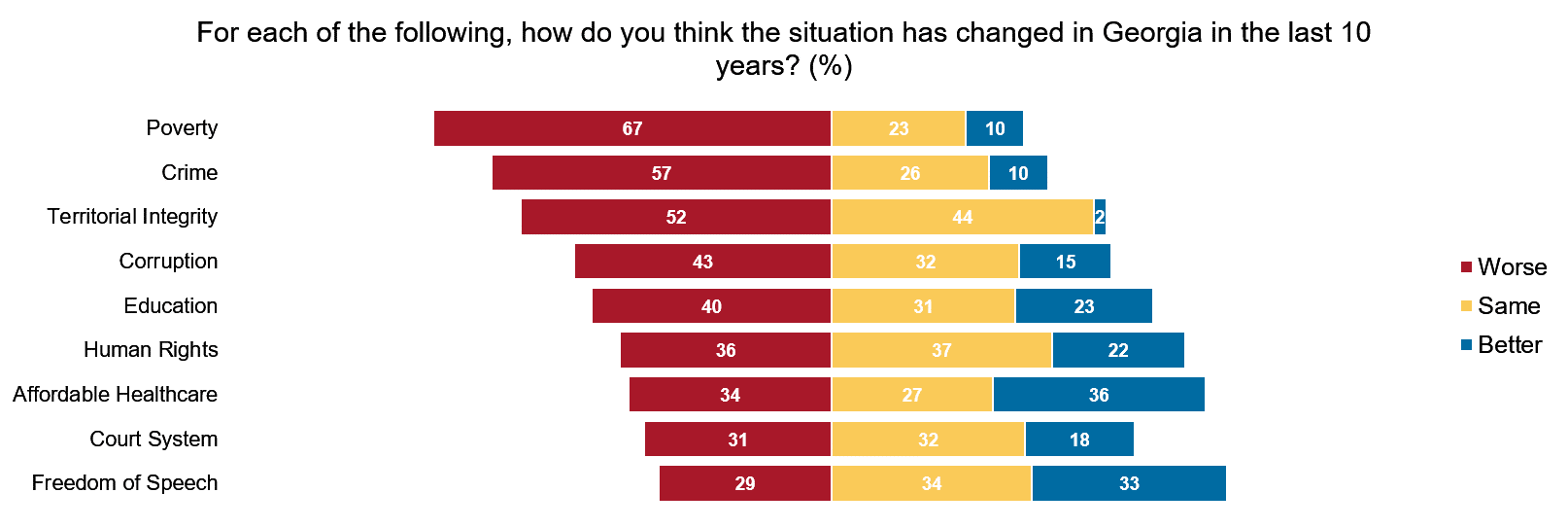
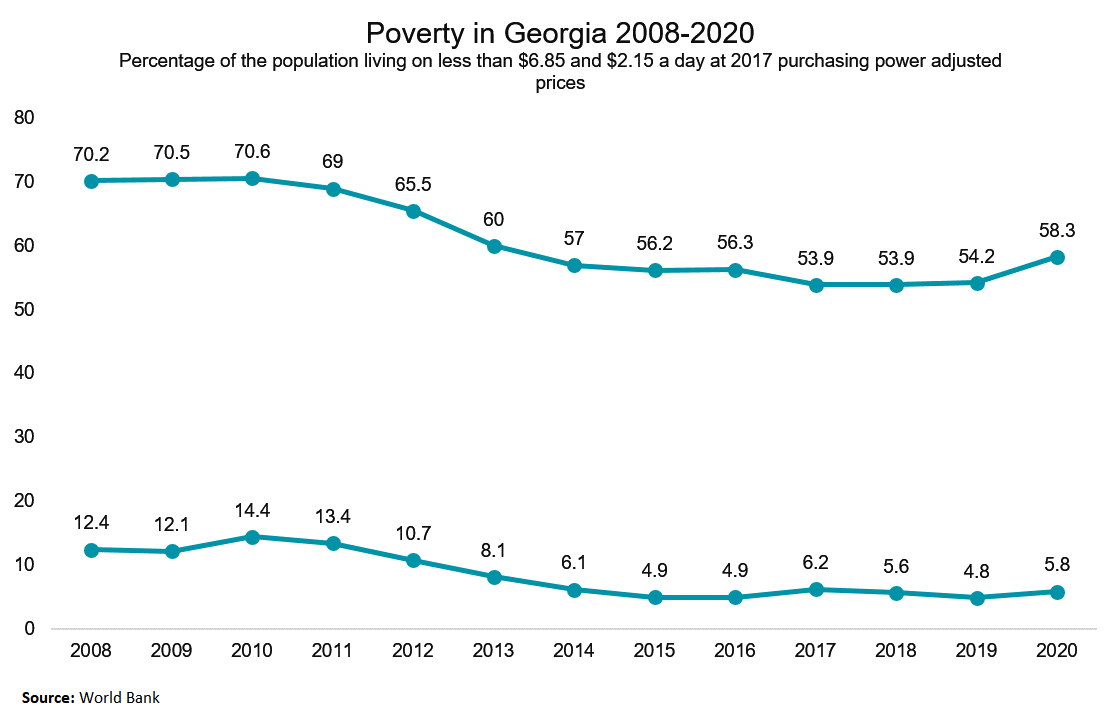
While two thirds of the public think that poverty has worsened, World Bank data suggests that poverty in Georgia has declined over the past decades. Although there are ups and downs in the data over the years, there has been a decline in the share of Georgians living on under $6.85 (converted into purchasing power parity) a day, from 66% in 2012 to 58% in 2020. The percentage of Georgians living in poverty did, however, increase in 2020, likely in response to the pandemic. A similar trend is present for the $2.15 poverty line (converted into purchasing power parity), with declines from 11% to 6%.
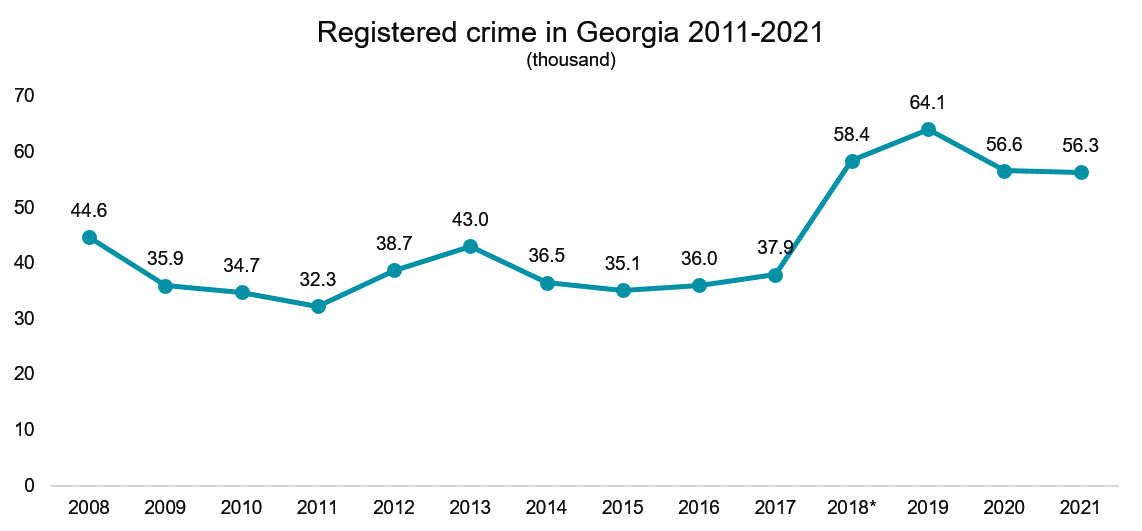
Roughly three in five Georgians (57%) believe that crime has worsened over the last decade. Official statistics seem to confirm people’s negative views, with Georgia registering 56,300 crimes in 2021, compared to less than 40,000 ten years prior. However, in 2018 the Ministry of Internal Affairs changed its crime recording methodology in a way that meant that a greater range of crimes were recorded. As a result, it is not possible to unequivocally claim that crime has substantially increased over the last 10 years.
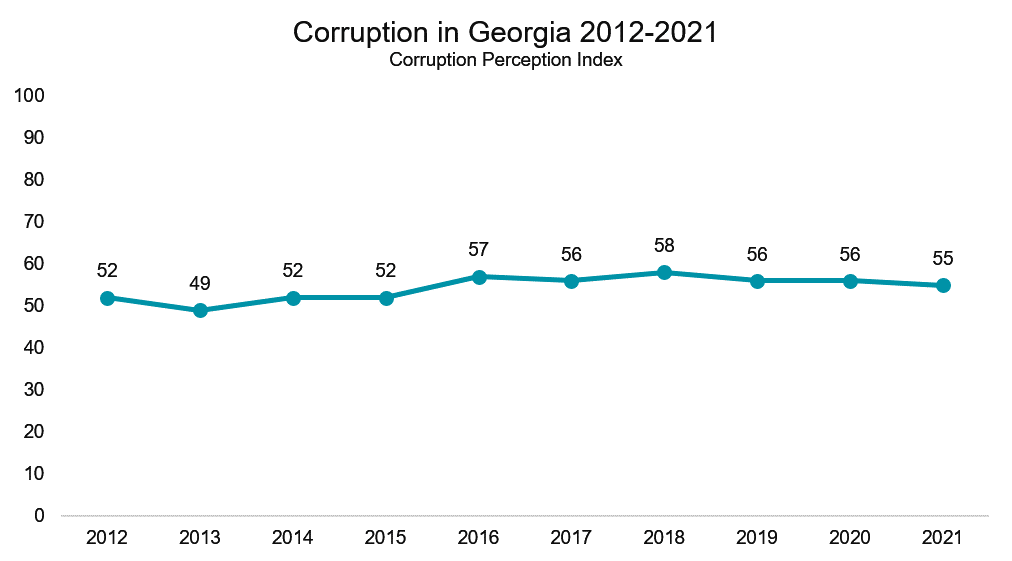
Two in five Georgians think that corruption (43%) has worsened in the last decade. However, the Corruption Perception Index (CPI) suggests that corruption has not varied much over the last decade, with a slight improvement from 2013-2018 and slight decline since.
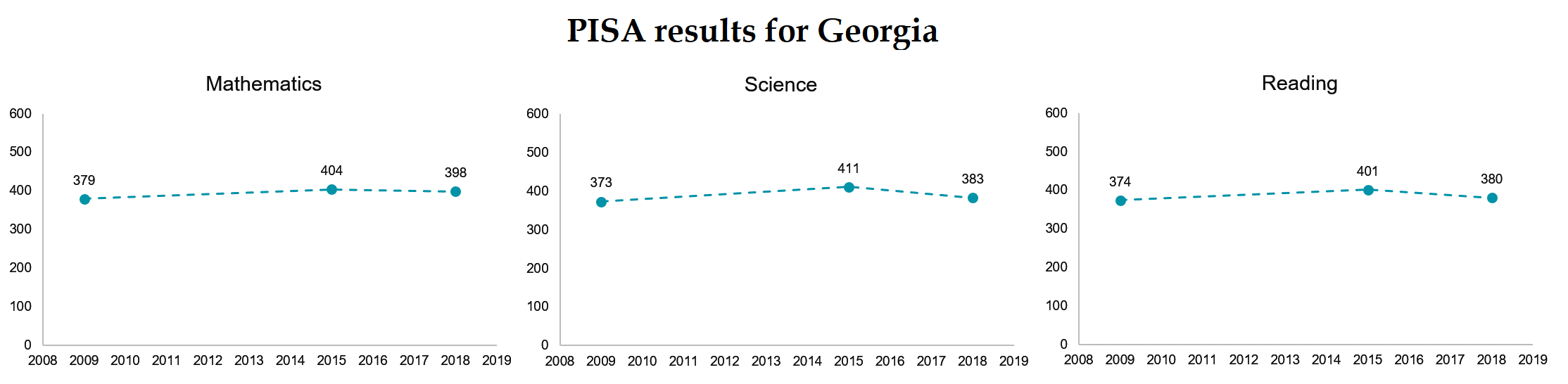
With regards to education, 40% of the public feel it has worsened. But data from the Programme for International Student Assessment (PISA), a study intended to evaluate national education systems, suggests that Georgia has slightly improved its scores in the last decade, albeit with a slight decline since 2015. 
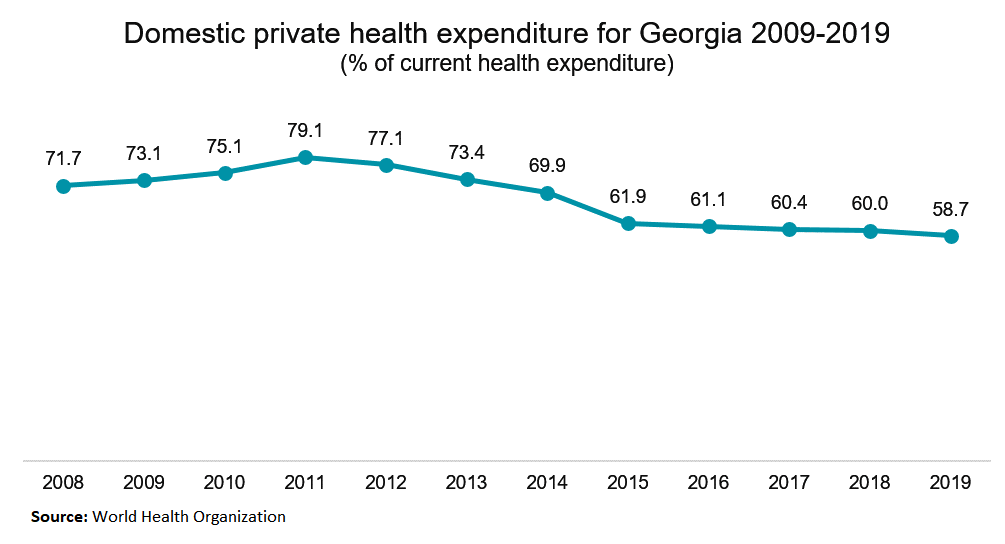
Some of the most positive public assessments were for affordable healthcare. About a third of the public (36%) believe that the situation around affordable healthcare has improved in the last decade. Data from the World Health Organisation appears to corroborate this, as it suggests that domestic private health expenditure in Georgia has declined as a share of total health expenditure from 77% to 59% of spending. However, it must also be noted that lesser private and greater public expenditure is no guarantee of better quality health care services. 
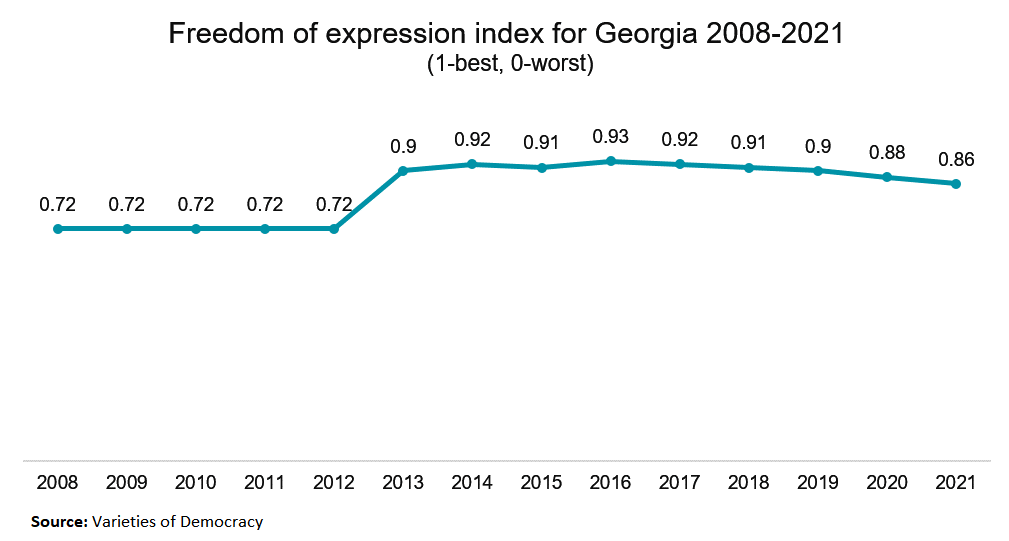
In terms of freedom of speech, a third of Georgians believe that it has improved over the last ten years. Data from the Varieties of Democracy project suggest that Georgia’s scores did improve in 2012-2013, but have declined since 2016. 
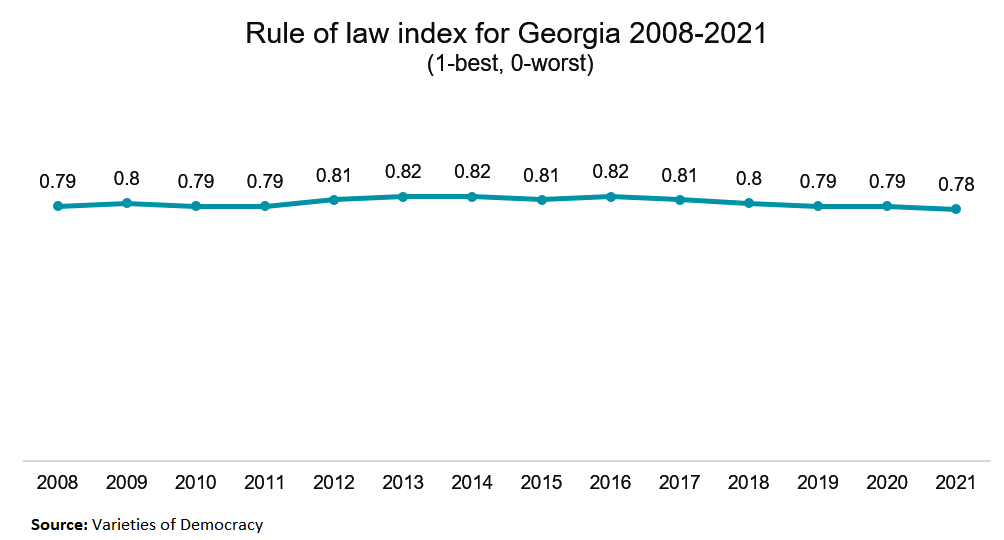
As for the court system, roughly one in three people (31%) think it has worsened over the last decade, but the Varieties of Democracy project suggests that Georgia’s score on the rule of law index has not changed since 2008. 
The public tends to think that the situation in Georgia in terms of poverty, crime, and territorial integrity has worsened over the last decade, while feeling most positive about freedom of speech and access to affordable healthcare. However, these sentiments are not reliably supported by publicly available data on the issues.

Tuesday, June 15, 2021

Who smokes in Georgia?

[Note: This article first appeared on the Caucasus Data Blog, a joint production of CRRC Georgia and OC Media. It was written by Dustin Gilbreath, the Deputy Research Director at CRRC Georgia. The views presented in the article do not represent the views of CRRC Georgia or any related entity.]

An estimated 11,400 people die in Georgia due to tobacco consumption annually. Data from Caucasus Barometer 2019 suggests that efforts to counter smoking should likely focus on men, people in Tbilisi, and poorer individuals.

No one questions whether tobacco consumption is a public health scourge: tobacco is estimated to cause eight million deaths a year worldwide. In Georgia, in 2016, 29% of the 15+ population was estimated to be a smoker, making Georgia 33rd in the world for smoking prevalence at the time among 146 countries for which data was available. 

Overall smoking prevalence in Georgia is relatively high. Almost one-third of the public (29%) reported smoking in 2019.  This compares with 30% in 2013 and 35% in 2008, suggesting a decline of six percentage points between 2008 and 2019.  

Data in the 2019 Caucasus Barometer suggests that men in particular are significantly more likely to be smokers than women. While women have a nine percentage point chance of smoking, controlling for other factors, men have a 55 percent chance of smoking. 

In reality, the gap is likely smaller than this data suggests when it comes to sex. A large majority of the public (80%) think it is never acceptable for a woman to smoke. In this regard, it is reasonable to believe women would not necessarily report that they smoke to an interviewer. 

A study by the National Centre for Disease Control (NCDC) suggests that this is in fact the case. In the study, respondents were administered a urine test to check whether they had actually been smoking. It found that 12% of women had traces of tobacco in their body as opposed to the 9% that reported smoking on the survey. While this suggests the gap is likely being smaller than the data suggests, there likely remains a large divide.

Aside from sex, people’s age, settlement type, and household economic situation predict whether or not they smoke. Younger people are less likely to report smoking than people in the 35–54 age range, as are older people. The smaller share of older smokers likely stems from tobacco-related mortality. People in Tbilisi are almost twice as likely to smoke as people in rural areas. Similarly, people are 1.5 times as likely in other urban areas, compared with rural areas, to smoke. The poorest households in Georgia are 3 times as likely to smoke as the best off. 


Aside from who smokes, the data also tells us how much smokers smoke. Again sex predicts how much people smoke, as does people’s level of education. Controlling for other factors, female smokers smoke 12 cigarettes a day less than male smokers. People with a higher education smoke 5 cigarettes less per day compared with those with only secondary education or lower.

Although the data from the Caucasus Barometer is promising in that it shows that smoking prevalence has declined over the years, there are still a relatively large number of smokers in Georgia. 

The data suggests that anti-smoking campaigns need to target men in particular. Similarly, smoking is most common among poorer households and in Tbilisi, suggesting a need for increased anti-smoking efforts among these populations.

Note: The above data analysis is based on logistic and ordinary least squares regression models which included the following variables: age group (18-35, 35-55, 55+), sex (male or female), education (secondary or lower/vocational/higher), settlement type (capital, urban, rural), wealth (an additive index of ownership of 9 different items, a proxy variable), and employment situation (working or not). 


Monday, April 27, 2020

Who trusts the healthcare system in Georgia?

[Note: This article was co-published with OC Media. It was written by Rati Shubladze, a policy analyst at CRRC Georgia. The views presented in this article do not represent the views of CRRC Georgia or any related entity.]

Trust in healthcare institutions is important, especially during a pandemic like the current COVID-19 outbreak. In the name of public health, numerous individual freedoms and economic activities are restricted.

Without trust in the messages of public health officials, measures aimed at preventing the spread of the virus are less likely to be complied with, exacerbating the spread of the virus.

The recent events surrounding attendance at religious ceremonies and healthcare highlights the importance of trust in health institutions. The tensions between the church and healthcare professionals, including a public verbal clash between a high ranking church official and the National Center for Disease Control and Public Health, show this.

Indeed, despite recommendations from healthcare specialists to stay home, the Orthodox Church in Georgia still held Easter liturgy with parishioners in attendance.

This situation leads to the questions: who is more or less likely to trust healthcare officials in Georgia and does this trust interact with religious belief?

The 2019 Caucasus Barometer Survey provides some answers to these questions. The data was collected in mid-autumn 2019, before the current crisis. This has both advantages and disadvantages.

On the one hand, attitudes could not have been influenced by the current crisis. Therefore, the responses allow an understanding of who would be more or less predisposed to trusting healthcare institutions before the crisis and therefore who would be more or less likely to comply with healthcare institution mandates.

On the other hand, the data do not enable an understanding of how trust has changed in response to the current crisis.

At the time of the 2019 Caucasus Barometer survey, the plurality (43%) of Georgians trusted the country’s healthcare system. This is a relatively high level of trust compared to other institutions.

Out of 15 social and political institutions, the healthcare system was the fourth most trusted institution.


Further analysis using demographic variables, including settlement type, age, gender, employment, internet usage, minority status, and education suggests that males, those living in rural areas, ethnic minorities, and those that do not use the internet have higher chances of trusting the healthcare system, controlling for other factors. Other demographic factors do not show statistically significant differences.


Note: The original healthcare trust questions was asked using a 5-point scale. For the purpose of analysis, the options ‘fully trust’ and ‘rather trust’ were coded as ‘trust’ and options ‘fully distrust’ and ‘rather distrust’ were coded as ‘distrust’. The variables about ethnicity and Internet usage were also recoded. The minority status variable codes the following ethnicities as non-Georgian: Armenian, Azerbaijani, Russian, Kurd or Yezidi, other Caucasian, and other ethnicities. In the internet usage variable, options ‘at least once a week’, ‘at least once a month’, and ‘less often’ were coded as ‘less often’; ‘never’ and ‘do not know what the internet is’ were coded as ‘never’. 

Importantly, three of the above characteristics are interconnected, as minorities mostly dwell in rural areas of Georgia, and internet usage is least common in rural areas and among ethnic minorities.

Indeed, the higher levels of trust among these groups could be because minorities and rural people are more likely to trust public institutions generally.

Given the situation surrounding public health officials and the church, it is important to understand whether there are interactions between trust in religious institutions and healthcare officials.

Indeed, the Caucasus Barometer data suggest trust toward religious institutions is associated with trust in the healthcare system. However, the observed relation tells us more about the phenomenon of general institutional trust. The results are similar when the relation between trust in the healthcare system and trust toward other institutions, like the army, police, banking system, or media are examined.

A second way of looking at it that does not suffer from trust being correlated with trust is through looking at the association between frequency of attending religious ceremonies and trust in healthcare institutions.

Caucasus Barometer 2019 data suggest no statistically significant association between trust in the healthcare system and how frequently people attend religious ceremonies, controlling for other demographic factors.

Based on this, the church-going population appears to have been no more or less likely to trust healthcare officials before the COVID-19 crisis.

Prior to the COVID-19 crisis, trust toward the healthcare system was associated with where people live, ethnicity, sex, and internet usage. Religiosity did not appear to be related to trust in the healthcare system before COVID-19. Whether these factors still hold true remains to be seen.

To explore the Caucasus Barometer 2019 survey findings for Georgia, visit CRRC’s Online Data Analysis portal. Replication code for the data analysis is available at CRRC’s GitHub repository here. 

Monday, December 16, 2019

Perceptions of healthcare quality in Georgia

Affordable healthcare remains one of the main national issues for people in Georgia: 18% of people considered it one of the most important issues in the July 2019 CRRC and NDI survey. The salience of this issue was at its highest in 2012 (35%), and has decreased over the years, particularly in light of the passage of the universal health insurance program. Nonetheless, affordable healthcare remains one of the most important issues for the public and particularly the cost of medicine, which is one of the three largest costs for over a third of families in Georgia. In this regard, it is unsurprising that over half of the population name the cost of medicine or the cost of care/doctor visits as the largest ones facing the healthcare system in Georgia. The second most common issue, which 24% of respondents named on the question about issues in the healthcare system, was a concern over the lack of professionalism of doctors and medical personnel, something associated with the quality of care.

At some level, people have contradictory attitudes towards the quality of care in Georgia. For instance, the majority of people in Georgia (71%) are satisfied with the quality of healthcare. Moreover, the majority of the population (79%) trusts the medical diagnoses that doctors give in Georgia.  At the same time, every other person reports that if they were in need of complicated surgery or treatment, they would prefer to have it done abroad instead of in Georgia.

Further analysis of the above questions suggests that assessments of the universal healthcare program, ethnicity, and age are related to people’s satisfaction with quality of care. People who assess the universal healthcare program positively are more likely to be satisfied with the quality of healthcare in Georgia. Similarly, ethnic minorities and people between the ages of 35 and 54 are more likely to be satisfied than ethnic Georgians and younger people (18-34). Aside from demographics, people who do not trust diagnoses are more likely to be dissatisfied with the quality of the healthcare as are people who report that they felt like doctors prescribed medicine for personal financial gain.


 As with the previous analyses, a number of factors predict whether or not someone wants to seek treatment abroad, including education level, wealth, ethnicity, and age. Wealthier people are more likely to prefer to have surgery done abroad than in Georgia. Ethnic Georgians, young people, and people who have higher than secondary education are also more likely to prefer having surgery done abroad. As in the previous analysis, attitudes like trust in diagnoses and satisfaction with healthcare quality are also associated with preferences for treatment/surgery abroad. People who distrust diagnoses that doctors give in Georgia and people who are not satisfied with the quality of healthcare in Georgia are more likely to report that they would prefer surgery to be done abroad. The same is true of people who felt that doctors prescribed medicine they did not need for personal financial gain.


The above analyses lead to a number of conclusions. First, people’s satisfaction with the quality of healthcare is associated with their attitudes towards other aspects of the healthcare system in Georgia. Second, ethnic Georgians, wealthy people, and young people perceive a lower quality of healthcare. Third, people’s views are contradictory. On the one hand, they express satisfaction with the quality of care, while related questions suggest there are issues with healthcare quality.

Note: The data in the above analysis and replication code for the above analysis is available here and here. The analysis uses a logistic regression, which includes the variables depicted in the graphs above.

Monday, February 13, 2017

One in four in Georgia report taking antidepressants or antibiotics without a prescription

On a 2016 CRRC survey conducted for Transparency International Georgia (TIG), one in four adults in Georgia reported taking either antidepressants or antibiotics without a doctor’s prescription during the 12 months before the survey. Self-medication with anti-depressants can cause serious problems. While anti-depressants may have side-effects even when taken under the supervision of a physician, the risks are higher without a doctor’s care. Self-medication with antibiotics is also problematic. If taken improperly, they can contribute to the creation of antibiotic-resistant bacteria, which is often thought to be one of the world’s most pressing health problems. Surely, when a quarter of the population reports taking these types of drugs without the supervision of a physician, it represents a public health concern, one of many in Georgia. Current regulations clearly fail to prevent such practices. This blog post looks at which groups in the population report more often taking antidepressants or antibiotics to self-medicate.

Women are significantly more likely to report taking antibiotics or antidepressants without a doctor’s prescription compared to men. While 21% of men reported self-medicating with these kinds of pharmaceuticals the year before the survey, 30% of women did so. A simple cross tabulation suggests the problem is largest in rural settlements. Men in different settlement types are equally likely to report taking these drugs without a prescription, while women in rural settlements are most likely to report doing so.

Note: Only the shares of those answering “Yes” are shown on the charts in this blog post. 

At first glance, the older population (56 and older) in general appears more likely to take anti-depressants and antibiotics without a doctor’s prescription. Similar to the finding with settlement types, men of different ages are equally likely to do so, while women who are 36 years old or older report to be doing so most often.

With the use of antibiotics and antidepressants, a doctor’s supervision is particularly important. Many in Georgia still take such drugs without it, and the practice is more common among women than men. In order to begin to deal with this issue, the government of Georgia, and, in particular, the Ministry of Labor, Health and Social Affairs, as well as civil society organizations should increase awareness of the problems associated with self-medication with anti-depressants and antibiotics, especially among women.

The data which this blog post reports on will soon be available at our Online Data Analysis tool, and is currently available for download here.

Monday, March 21, 2016

Body Mass Index in Georgia


Monday, October 27, 2014

Don’t worry, exercise, and be happy

It has become common knowledge that those who exercise regularly are healthier than those who do not, but are those who exercise also happier? According to research conducted by the University of Bristol, people who regularly exercise are happier, more productive at work, and less stressed than those who are not engaged in regular physical activities. Furthermore, extensive research has shown that physical exercise can combat depression and improve mood through neurogenesis and endorphin release during a workout. Using data from the 2013 CRRC Caucasus Barometer (CB) survey, this blog post looks at whether physically active people are happier and more satisfied with their lives than those who do not engage in regular physical activity. It also looks at which sex is more physically active in Georgia- men or women- and  whether residents of the capital, other urban settlements or rural areas are more likely to exercise.

Despite the benefits of physical exercise, the percentage of Georgians who exercise on a regular basis is low, as is the case in the US and the EU. According to CB, 16% of the Georgian population exercises on a regular basis for at least two hours per week, and men (22%) are twice as likely to engage in regular physical activity as women (10%).

Interestingly, 35% of those who exercise regularly for at least two hours per week consider themselves extremely happy and another 38%, happy. This is a slightly higher share compared with those who do not exercise. Only 5% of exercisers report being unhappy, while 15% of those who do not exercise report being unhappy.

 Note: A 10-point scale was used to record respondents’ answers to the question “Overall, how happy would you say you are?” For the chart above, the original scale was recoded to a 5-point scale, so that codes ‘1’ and ‘2’ were grouped into “Extremely unhappy”, codes ‘3’ and ‘4’ into category ‘2’, codes ‘5’ and ‘6’ into category ‘3’, codes ‘7’ and ‘8’ into category ‘4,’ and codes ‘9’ and ‘10’ into “Extremely happy.” Options “Do not know” and “Refuse to answer” were excluded from the analyses. 

Furthermore, people who are physically active appear to be slightly more satisfied with their lives than those who do not exercise. According to the graph below, out of those who exercise, 40% say they are satisfied with their lives, while this number decreases to 33% among Georgians who do not exercise on a regular basis. The difference is more distinct for those who report not being satisfied with their lives: 18% of those who exercise report not being satisfied compared with 31% of those who do not exercise.

 Note: A 10-point scale was used to record respondents’ answers to the question “All things considered, how satisfied are you with your life nowadays?” For the chart above, the original scale was recoded to a 5-point scale, so that codes ‘1’ and ‘2’ were grouped into “Not satisfied at all”, codes ‘3’ and ‘4’ into category ‘2’, codes ‘5’ and ‘6’ into category ‘3’, codes ‘7’ and ‘8’ into category ‘4,’ and codes ‘9’ and ‘10’ into “Completely satisfied”. Options “Do not know” and “Refuse to answer” were excluded from the analyses. 

According to the data, residents of the capital and other urban settlements are more physically active than those living in rural settlements; 22% of people living in Tbilisi and 20% of people living in other urban settlements exercise on a regular basis, while only 9% of the rural population reports exercising on a regular basis.


To summarize, the percentage of Georgians who engage in regular physical exercise is not much different from the populations of the US or EU countries. It appears that the level of happiness and life satisfaction are higher among Georgians who work out regularly. If you would like to explore issues related to physical activity and the level of happiness and life satisfaction in the South Caucasus further, please visit the CRRC website or look at the data using our Online Data Analysis tool.


Tuesday, May 13, 2014

Common Challenges Facing the Elderly in Georgia

According to the World Health Organization (WHO), “Multiple social, psychological, and biological factors determine the level of mental health of a person at any point in time. In addition to the typical life stressors common to all people, older people are more likely to experience events such as bereavement, a drop in socioeconomic status with retirement, or a disability.” According to the WHO, these factors, among others, can result in isolation, loss of independence, loneliness and psychological distress in older people. D. Srinivasan, psychiatrist, at Kovai Medical Center and Hospital in Tamil Nadu, India has highlighted some common social and psychological problems faced by the elderly including, loss of confidence and sensitivity to minor symptoms of illness, a chronic state of depression when losing financial independence or mobility, emptiness syndrome when children no longer live with parents, and a sense of worthlessness and hopelessness. This blog looks at whether these factors affect the elderly population’s health in Georgia. For this reason, the blog examines the extent to which elderly (56+) people in Georgia are influenced by a sense of emptiness and loneliness, as well as the types of economic conditions in which they live.

According to survey results from the Caucasus Barometer (CB) 2011, 20% of Georgians 56 and older experienced a general sense of emptiness. By comparison, the proportion of younger age groups (18-35 and 36-55) who reported experiencing emptiness was half of that (9% and 11%, respectively).


The following chart shows that 40% of Georgians, 56 and older felt that there were enough people to whom they felt close, and 49% who more or less thought that there were enough people close to them. Only 12% rejected the idea of having a sufficient amount of close people around. However, it is also worth mentioning that exactly the same percentage (12% for each) of individuals was present in the other two younger age groups (18-35 and 36-55) who also turned down the idea (‘there are enough people to whom I feel close’).


According to survey results, a sense of emptiness (20%) and loneliness (12%) among Georgia’s elderly population is not high. One of the explanations of this tendency could be that in Georgia it is common for elderly people to continue living with their children and grandchildren. This likely gives them the opportunity to stay actively engaged in family life through taking care of grandchildren, helping other family members with running the household, as well as being taken care of whenever necessary.

This way of living gives a smaller place to thoughts of being unwanted or useless, lonely or depressed and can be considered as an alternative to some common recommendations doctors give in scope of organizing manner of living for aged people according to Amutha Kannan.

If problems are not very visible for the aged population in Georgia (from a social perspective), their economic state gives a significantly different picture. According to the CB 2011 survey results, 40% of elderly people (56+) in Georgia reported living in poor economic conditions not having enough money for food in the household. Younger Georgians, by comparison, attested to living in similar poor economic conditions and not having enough money for food in the household (24% of the 36- 55 age group and 15% of the 18 – 35 age group).


This blog post reviewed factors that negatively affect the elderly’s mental health in Georgia. Hence, in comparison to social settings for older people in Georgia, their economic conditions can be considered a serious challenge to remain physically and mentally healthy. To further explore this subject and other issues influencing aging people’s health in Georgia, we recommend exploring our data using the ODA tool here.