Showing posts with label Gender. Show all posts

Friday, January 16, 2026

Georgian women encouraged to get an education but not to use it

This article was written by Zachary Fabos, a Researcher at CRRC Georgia. The views presented in the article are the author’s alone and do not necessarily represent the views of CRRC Georgia or any related entity.

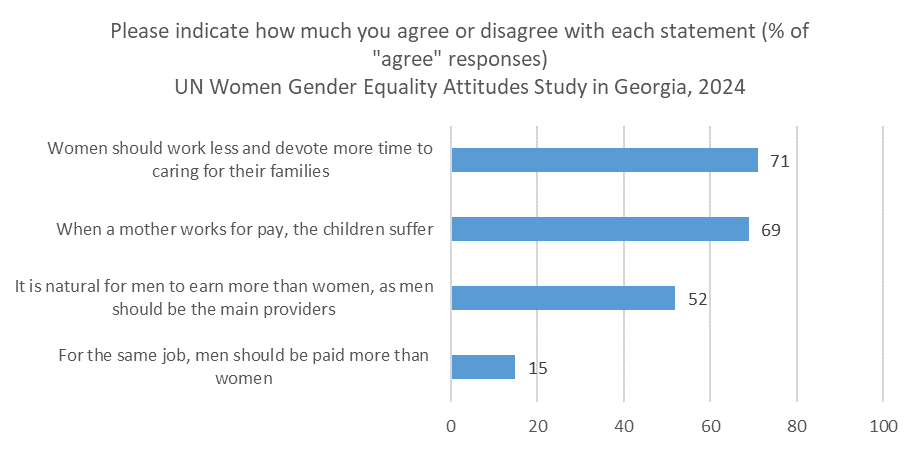
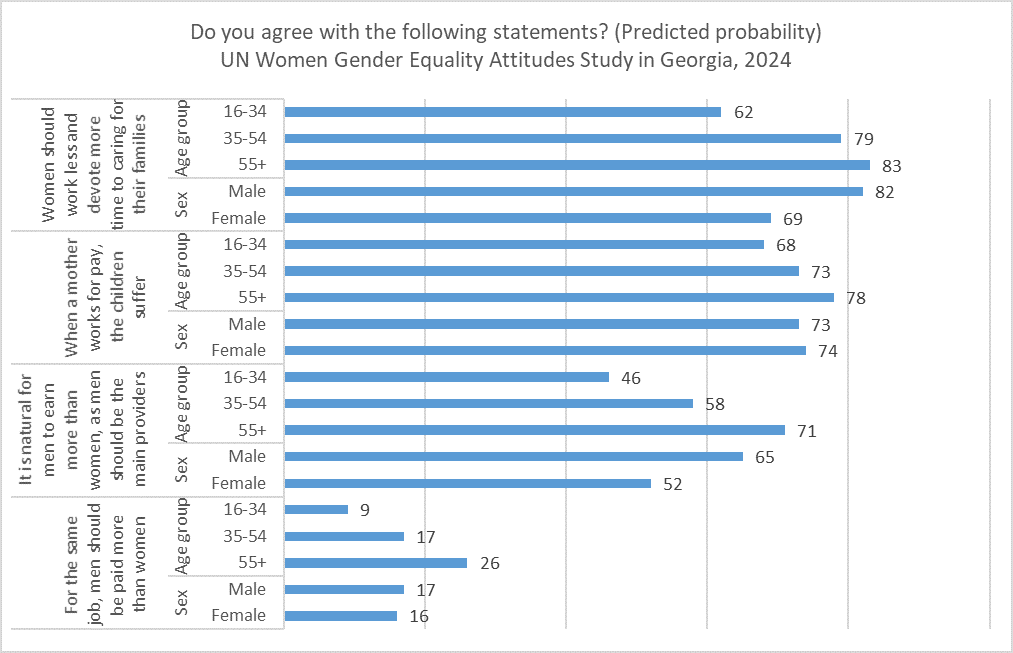
The UN Women 2024 survey shows that while Georgians strongly support equal access to higher education and equal pay for women and men, many still believe women should prioritize family care over pursuing a career. These attitudes are especially strong among older age groups and men, revealing a gap between support for women’s education and acceptance of their professional participation.

Notably, men and women are just as likely (73 and 74 points respectively) to agree that children suffer when their mother works. On the other hand, men (82 points) are 13 points more likely than women to agree that women should work less and devote more time to caring for their families. By over 13 points, men (65 points) are more likely than women to agree that men are naturally the primary providers for their families and thus should be paid more than women.

Settlement type, ethnicity, education level, and household income do not predict attitudes on these questions, once age and gender have been taken into account.

This analysis demonstrates that regardless of age and sex, Georgians are likely to agree that women should prioritize caring for their family and children rather than pursuing a career. Despite widespread agreement that boys and girls should have equal access to education and receive equal pay for the same job, this sentiment does not extend to women’s professional and career choices after completing said education.

Note: The analysis in this article makes use of binomial regression analysis. The analysis included gender (male, female), age group (16-34, 35-54, and 55+), settlement type (capital, urban, rural), ethnicity (Georgian, ethnic minority), education level (secondary or lower, vocational, and higher education) and reported household income (0-800 GEL, 801-1,600 GEL, 1,601-2,400 GEL, and 2,401+ GEL) as predictor variables.

Tuesday, April 22, 2025

Georgians overwhelming see gender equality as important to country’s future success

Note: This article first appeared on the Caucasus Data Blog, a joint effort of CRRC-Georgia and OC Media. This article was written by Nino Lobzhanidze, a Junior Researcher at CRRC Georgia. The views presented in this article are the author’s alone and do not necessarily reflect the views of CRRC Georgia, UN Women, or any related entity.

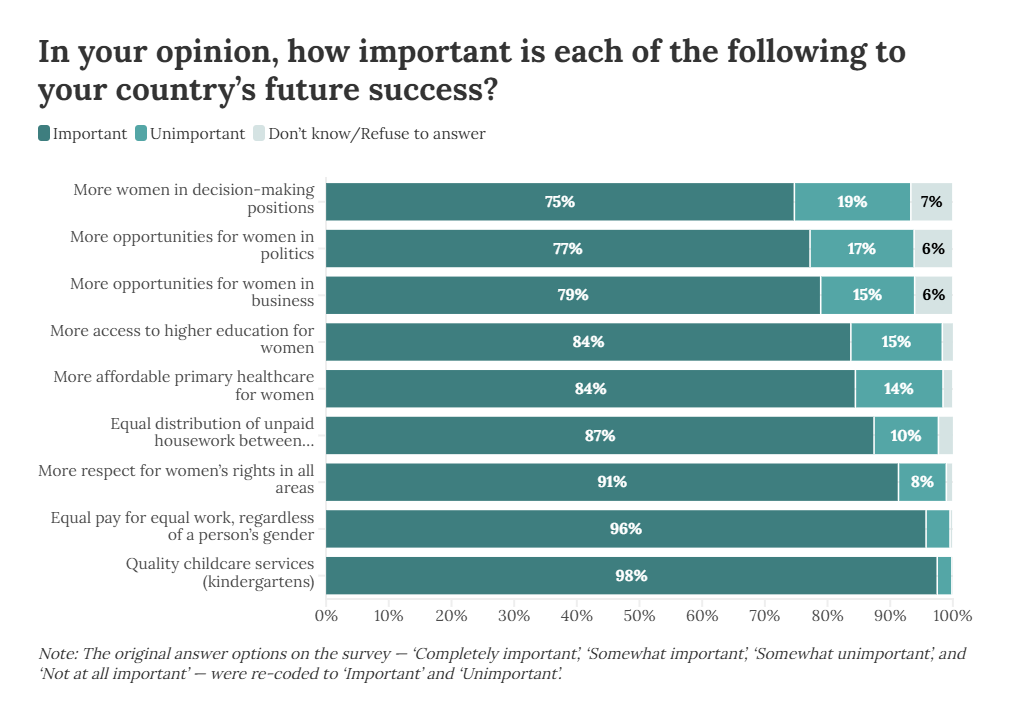
A recent UN Women and CRRC Georgia study has found that the vast majority of Georgians find it important to work towards a more equal society.

Overall, 65% of the public agreed with all nine of the above statements. A regression analysis suggests that gender was the only statistically significant predictor of whether a person agreed with all of the statements or not, with 73% of women agreeing with all nine statements compared to 56% of men, controlling for other factors. The data showed no significant differences on this account when it came to age, ethnicity, settlement type, education level, or employment status.

It is clear that a large majority of the public agrees that improving women’s rights is important for the country’s future, including the importance of equal pay and the fair distribution of household labour. Perhaps unsurprisingly, women were more likely to support all of these things than men, but still, a clear majority of both men and women believe these issues are important to Georgia’s future.

The regression analysis used in this article included the following variables:  age (16–24, 25–34, 35–44, 45–54, 55+); sex (male or female); settlement type (Tbilisi, other urban, rural); education level (secondary or lower; vocational; and completed or uncompleted higher education); ethnicity (ethnic Georgian or ethnic minority); and employment status (employed or not working).

Tuesday, April 15, 2025

Blog | Most Georgians believe personal freedoms do not extend to choices around sex

Note: This article first appeared on the Caucasus Data Blog, a joint effort of CRRC-Georgia and OC Media.  This article was written by Salome Dolidze and Zachary Fabos, researchers at CRRC Georgia. The views expressed in the article are the authors’ alone, and do not necessarily reflect the views of UN Women, CRRC Georgia, or any related entity.

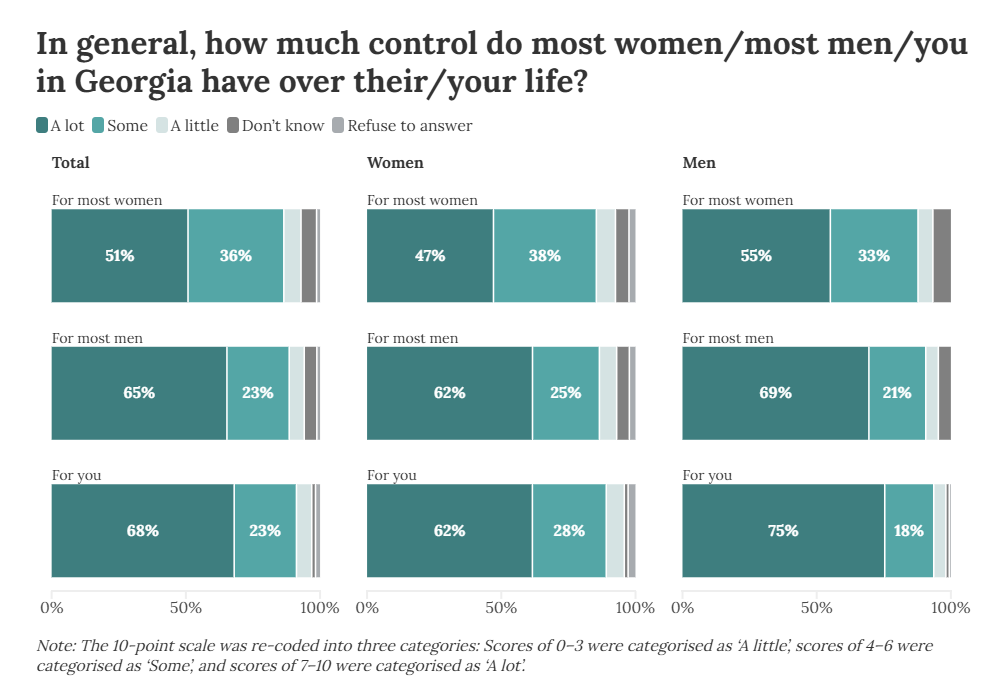
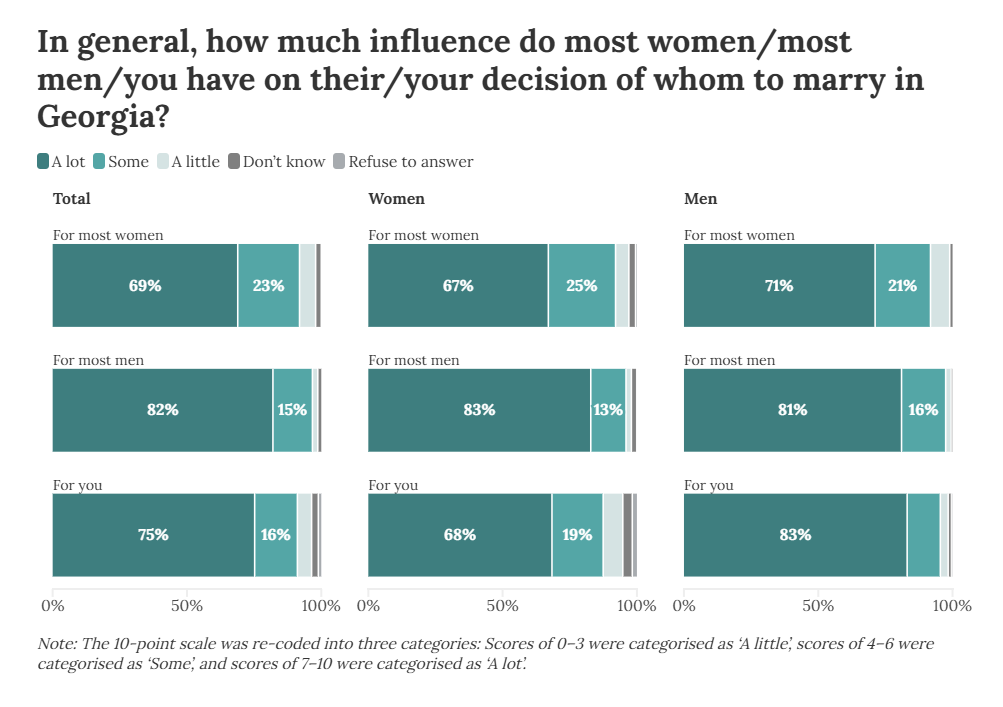
Georgians felt similarly when asked about the freedom to choose whom they marry — overall, 75% claimed to have a lot of influence in choosing whom they marry.

Again, Georgians agreed that most men have more influence in this choice than most women. However, a majority (69%) still believed most women have a lot of influence in deciding whom to marry.

Broken down by gender, 68% of women believed they have a lot of influence in deciding whom to marry, compared to 83% of men.

Opinion differed among Georgians when asked about choices regarding sex before marriage and having more than one sexual partner in one’s lifetime.

When asked if it was justifiable for people to have a sexual relationship before marriage and to have several sexual partners in one’s lifetime, Georgians generally stated that it was somewhat more justifiable for men to do so compared to women. A slight majority (51%) of Georgians believed it was justifiable for men to have a sexual relationship before marriage, compared to 30% believing the same for women. Although most Georgians believed it was unjustifiable for both men and women to have several sexual partners in their lifetime, it was perceived as more justifiable for men by 12 percentage points, compared to women.

In addition, individuals 35 and older, those living outside Tbilisi, and those who had higher education were more likely to say that it was not at all justifiable for women to have sexual relationships before marriage than younger people, residents of Tbilisi, and ethnic Georgians.

Likewise, people living outside Tbilisi and those aged 55 and over were more likely to say that it was not at all justifiable for women to have several sexual partners in their lifetime than people living in the capital and younger people.

Tuesday, February 06, 2024

Does Georgia’s public want gender-balanced politics?

Note: This article first appeared on the Caucasus Data Blog, a joint effort of CRRC-Georgia and OC Media. It was written by Elene Ergeshidze, a Researcher at CRRC-Georgia. The views presented in the article are the author’s alone and do not necessarily represent the views of CRRC-Georgia, Caucasian House, or any related entity.

CRRC Georgia surveyed the Georgian public on attitudes towards gender equality in politics and obstacles faced by women in politics in Georgia. 

Gender equality in politics is an important issue globally, and Georgian policy on the issue has been developing in recent years. Georgia introduced mandatory gender quotas for proportional party lists in 2020, extending this provision until 2032. The legislation stipulates that at least one out of four candidates submitted to the Central Election Commission, and provides financial support to parties that nominate more women. 

Despite these policy changes, much remains to be done to ensure gender equality in practice. In the 2020 parliamentary elections, only three political parties and one electoral bloc benefited from the financial incentive mechanism for nominating more female candidates than the mandatory gender quotas required. A study on mandatory gender quotas in Georgia found that in 2022, women still made up only 19% of Georgia’s parliament. 

Harassment directed at politicians is also a significant barrier. A CRRC study found that female politicians in Georgia more frequently faced online violence (abusive and harassing comments) related to their personal life than male candidates and politicians, in the two months before the 2020 parliamentary elections. 

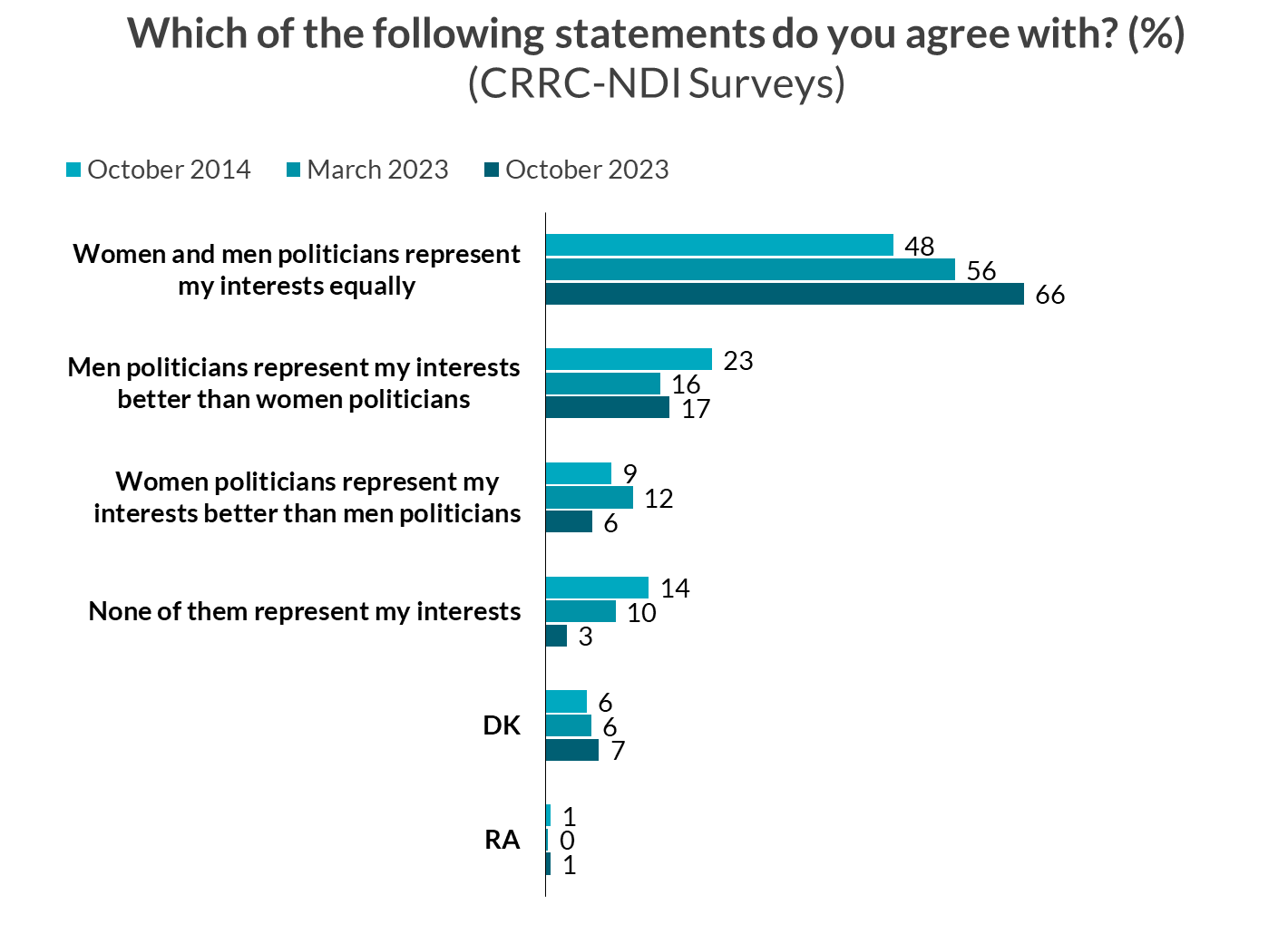
Despite those challenges, data from the NDI and CRRC October 2023 survey suggest that the public’s attitudes are becoming more approving of gender equality in politics.

Two thirds of those surveyed believed that female and male politicians represented their interests equally. This marked a 10 percentage point increase compared to March 2023, and an 18 point increase compared with October 2014, when CRRC first asked the survey question. 

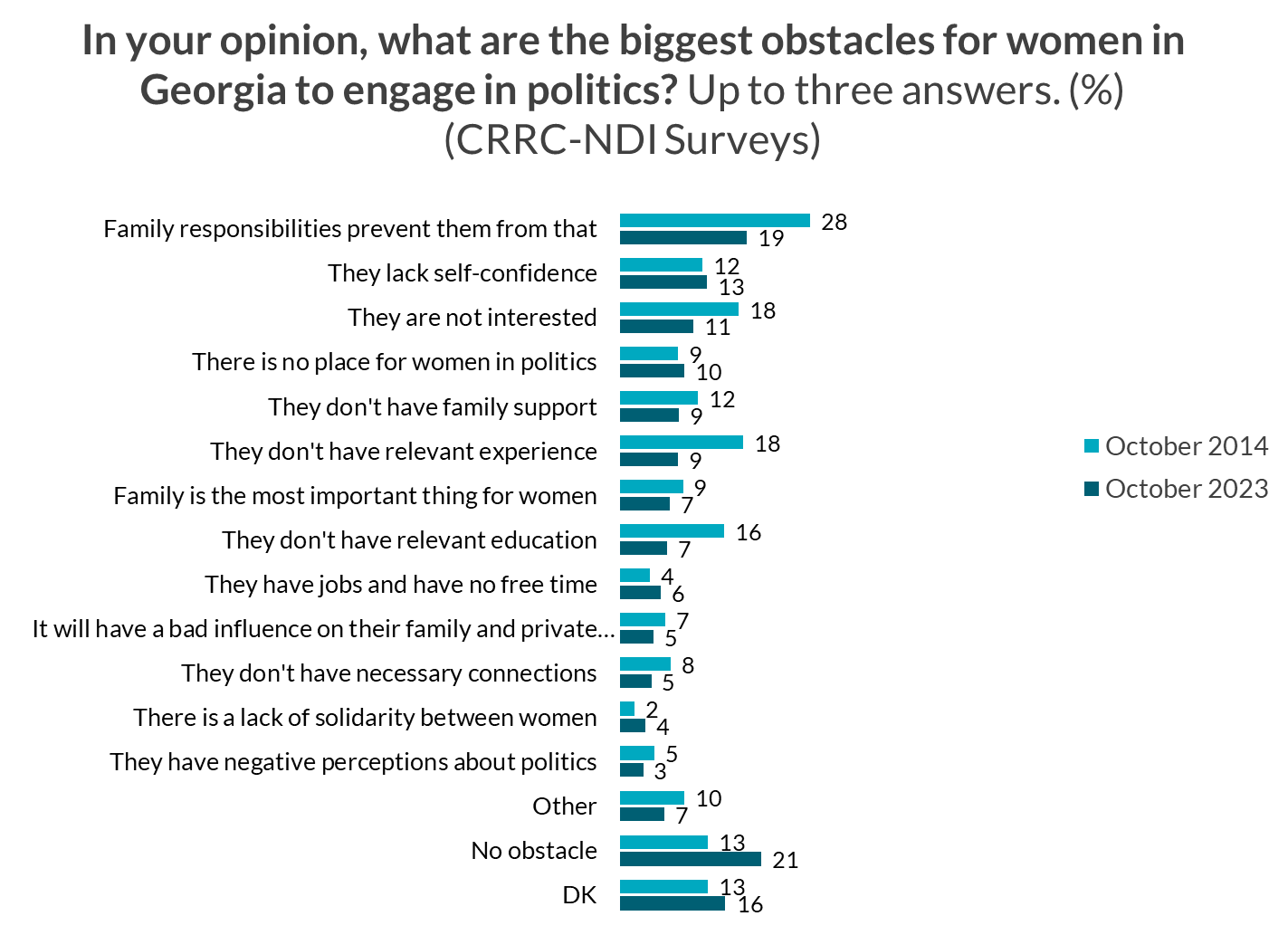
The survey also asked respondents what they believed were the largest obstacles preventing women in Georgia from engaging in politics. Respondents were allowed to name up to three issues. 

The most frequently named obstacles were family responsibilities (19%), a lack of self-confidence (13%), and women having no interest in politics (11%). One in ten (10%) reported the perception in the public that there was no place for women in politics was an obstacle, and 9% believed women were hindered by a lack of family support. 

However, these attitudes have also changed in the past decade. There was a nine percentage point drop in the share of those who named family responsibilities as an obstacle compared to 2014. The share reporting that women had a lack of interest in politics also decreased by seven percentage points. The percentage of respondents who named a lack of relevant experience and education halved, moving from 16% to 7% and 18% to 9%, respectively. 

However, there was also a seven percentage point increase in the share of respondents who stated that women face no barriers to engagement in politics since 2014. 

The above data shows substantial progress toward greater acceptance of gender equality in politics. 

Despite the belief that some issues, such as family responsibilities and a lack of self-confidence, remain barriers preventing women from entering politics, the decreasing percentage of respondents citing these as obstacles suggests a changing landscape in the country.  

Tuesday, December 07, 2021

Georgians are still conservative, but attitudes are slowly changing

Note: This article first appeared on the Caucasus Data Blog, a joint production of CRRC Georgia and OC Media. It was written by Kristina Vacharadze, Programs Director at CRRC Georgia, and Anano Kipiani, a Researcher at CRRC Georgia. The views presented in this article do not represent the views of CRRC Georgia, the Europe Foundation, or any related entity.

Newly released data from the Knowledge of and Attitudes towards the European Union in Georgia survey, which CRRC Georgia carried out for the Europe Foundation, suggests that the public’s attitudes are changing about women having pre-marital sex and children out of wedlock. 

While in 2015, 69% of Georgians thought that it was never justified for a woman to have pre-marital sex, 55% did in 2021, a 14 percentage point decline. During this same period, there was a 10 percentage point increase in the share of people reporting that it is sometimes or always justified. A large amount of these changes took place between 2019 and 2021, with an 11 percentage point decline in thinking pre-marital sex was never justified for women, while there was a six percentage point increase in thinking it is justified at least some of the time.

Similarly, attitudes towards women having children out of wedlock have changed. In 2015, 57% said it was never justified. In 2021, 42% did. The share reporting that it is sometimes or always justified increased from 37% to 47% in the same period. 

Young people aged 18-34 are generally more liberal than older people regarding women having sexual relationships before marriage and having children without being married.  Comparing the most recent wave to the 2019 data suggests that people under the age of 55 are becoming more liberal about women having children outside wedlock, while older people’s attitudes did not shift significantly. With regard to having pre-marital sex, the data suggest that younger people (18-34) and older people (55+) became more liberal, while the age group in between did not change their views. 


Generally speaking, people living in Tbilisi are less conservative than people living in other areas. While this remains true in the 2021 data, the changes described above stem from people in rural areas becoming more liberal on pre-marital sex and women having children outside of marriage.  In contrast, views in urban areas did not change significantly between 2019 and 2021.


The data shows that people with higher than secondary education are more tolerant about both issues than people with a lower level of education. The change in views observed between 2019 and 2021 primarily stems from changing views among those with tertiary education. 

Generally, ethnic Georgians are more tolerant towards women having sexual relations before marriage and having children outside of it. The gap between ethnic Georgians and ethnic minorities expanded in 2021, as compared with 2019. Ethnic minorities’ views have shifted little in recent years on either issue. 

Analyses by gender did not show any difference with regard to women having pre-marital sex. Although gender plays a role in attitudes towards women having a child without being married, women more often say that it is acceptable than men. Attitudes among men and women moved in a similar manner between 2019 and 2021.

People became less conservative towards pre-marital sex and women having children outside of wedlock in 2021. The data tends to suggest that rural people, young people, and those with higher education became more liberal during this period. 

The data presented in the above article is available here.

Tuesday, August 31, 2021

Georgian views on increased diversity in parliament

Note: This article first appeared on the Caucasus Data Blog, a joint production of OC Media and CRRC Georgia. It was written by Dustin Gilbreath, Deputy Research Director at CRRC Georgia. The views presented in the article do not represent the views of CRRC Georgia, the Carnegie Foundation, the Levan Mikeladze Foundation, the Government of Sweden, or any related entity.

Georgia is a diverse country, with numerous languages, religions, and ethnic groups. Yet, parliament underrepresents both women and ethnic minorities relative to their total shares in the population. Moreover, there are no known LGBTQ+ parliamentarians in Georgia’s history. Data from the September 2020 Future of Georgia survey suggests that people are most positive about more women in parliament, followed by ethnic minorities and LGBT people. 

The data suggests that people are roughly three times as likely to think that there are too few female members of parliament compared with too few minority members of parliament. Very few people (6%) think there are too many female members of parliament, while roughly three times as many (15%) think that there are too many minority members of parliament. 

Similarly, substantially more people think that having more women would have a positive impact than think having more ethnic minorities would. Perhaps unsurprisingly given the homophobic riot on 5 July a large majority of Georgians (69%) think that having more LGBTQ+ people in parliament would have a negative impact, and only 4% think it would have a positive impact.

Age, sex, and education predict people’s views on whether the number of female members of parliament are adequate. Younger people (18-34) are 11-12 percentage points more likely to think that there are too few women in parliament compared to older people. People with vocational education are 8 points less likely than those with tertiary education and 12 points less likely than those with only a secondary education to report there are too few women in parliament. Women are 13 percentage points more likely to report there are too few women in parliament.

When it comes to whether having more women in parliament would be positive or negative, the data suggests that attitudes vary by age, sex, settlement type, and education type. Women are 15 percentage points more likely to think it would have a positive impact. Young people are 10 percentage points more likely to think there would be a positive impact. People in rural areas are 10 percentage points more likely to report there would be a positive impact than people in Tbilisi. People with vocational education are 7 percentage points less likely to think having more women in parliament would have a positive impact.

When it comes to the number of ethnic minorities in parliament, ethnicity and education predict people’s attitudes. While ethnic minorities have a 55% chance of thinking that there were too few ethnic minorities in parliament, ethnic Georgians only had a 13% chance. People with vocational education are slightly more likely to think that there are too many ethnic minorities in parliament, controlling for other factors.

With regard to the impact of having more ethnic minorities in parliament, the data suggests that people with vocational education are more likely to think it would have a negative impact. Ethnic minorities are significantly more likely to think it would have a positive impact.

Although relatively few people had positive views of more LGBTQ+ people being in parliament, there is some variance in attitudes. Notably, ethnic minorities are by far the least negative, controlling for other factors. People with lower levels of education also had relatively less negative attitudes as did people in Tbilisi, people under the age of 55, and non-IDPs.

The above data shows a few patterns. Women are the group that people have the most positive attitudes about in terms of representation in parliament, followed by ethnic minorities and LGBTQ+ people. Women and ethnic minorities are significantly more positive about members of their own group being represented in parliament. Ethnic minorities are also the least negative group about increased LGBTQ+ representation in parliament.

Note: The data analysis in the above is based on ordered logistic regression models controlling for respondent age group (18-34, 35-54, 55+), education level (secondary or less, vocational education, or tertiary education), sex (female or male), settlement type (capital, other urban, or rural), wealth (a simple additive index of ownership of 10 durable goods), and IDP status (IDP or not). The data used in this article are available here.

Thursday, July 22, 2021

Mental health and the pandemic

[Note: This post first appeared on the Caucasus Data Blog, a joint production of CRRC Georgia and OC Media. It was written by Tsisana Khundadze and Mariam Kobaladze, Senior Researchers at CRRC Georgia. The views presented within this article are the authors’ alone, and do not reflect the views of UN Women, UNDP, CRRC Georgia, or any related entity.]

Nearly half of Georgians’ report negative impacts on their psychological health because of the pandemic, and women have been one of the worst affected groups. 

Although the pandemic has been primarily a physical health crisis, it has also had large effects on people’s mental health. The pandemic altered the way people study, work, and travel — as well as almost every other aspect of everyday life.

Research from other countries has shown the pandemic has led to a significant rise in symptoms of anxiety disorder and/or depressive disorder. 

The Rapid Gender Assessment survey CRRC-Georgia conducted for UN Women and UNDP in October 2020 asked the adult population of Georgia if their own or their children’s psychological health had been affected as a result of the Coronavirus. 

The results showed that women were significantly more likely to experience psychological health challenges as were people who experienced delayed access to services and significant changes to their everyday lives.

Unsurprisingly, given the uncertainty and stress involved in the pandemic, large shares of Georgians report they or their children experienced negative psychological outcomes from the pandemic. Data from the Rapid Gender Assessment survey shows that COVID-19 negatively affected around half of Georgians’ psychological health. In contrast, only 19% of Georgians who have children report that their children experienced psychological issues.

Although the majority of the population did not experience major issues in accessing basic services, around a third (31%) of Georgians reported some or major difficulties in accessing health services. Overall, 40% reported having at least some difficulty in accessing one of the services listed on the chart below. Aside from accessing services, 25% of working people also experienced a significant change in that they started working from home.

Plausibly, experiencing difficulty in accessing the important services listed above or significant changes in daily life would increase someone’s stress and anxiety levels. To explore whether this took place, a series of regression models testing for associations between these issues in addition to demographic factors are explored below.

The first regression analysis shows that women were 1.4 times more likely to report experiencing mental health issues than men. There were no significant differences between age groups, settlement types, education levels, employment statuses, or whether or not the household had children living in it.

Challenges with access to basic services are associated with mental health problems, but not the move to remote work. The more difficulty a person encountered in accessing basic services, the more likely they were to report that their mental health was affected. While a person with no difficulty accessing services had a 42 percent chance of experiencing mental health problems, a person who had difficulty accessing six services had an 87 percent chance of experiencing them. 

Note: This chart was generated from a regression model. The model includes sex (male, female), age group (18-34, 35-54, 55+), settlement type (capital, urban, rural), education (secondary or lower, secondary technical, higher than secondary), employment status before pandemic (employed, not employed), change in typical workplace (which shows if a person had to start working from home instead of the office. Change in typical workplace, no change in typical workplace), having children in the household (no children, household has children), and an index of difficulty in accessing various services.

A second regression analysis also shows a number of differences between those who reported their children experiencing mental health challenges during the pandemic. 

People living in the capital were 1.5 times more likely to say their children experienced issues with mental health compared with people in other urban and rural areas. There were no significant differences between genders, age groups, education levels, and employment statuses when controlling for other factors. Notably, there were gender-related differences when the regression only considered demographic factors, but the association was no longer significant after taking into account non-demographic variables.

People who experienced a change in their typical workplace were 1.9 times less likely to say their children experienced mental health issues than people who did not have any significant changes in the workplace. The more difficulty a person encountered in accessing basic services, the more likely they were to report their children’s mental health was affected. Additionally, people who reported that their own mental health was affected by COVID-19 were around six times more likely to say their children’s mental health was affected, compared to people, who did not say their own mental health was affected. 

Note: This chart was generated from a regression model. The model includes sex (male, female), age group (18-34, 35-54, 55+), settlement type (capital, urban, rural), education (secondary or lower, secondary technical, higher than secondary), employment status before pandemic (employed, not employed), change in typical workplace (which shows if a person had to start working from home instead of office. Change in typical workplace, no change in typical workplace), reporting COVID-19 affecting own mental health (not affected, affected), and index of difficulty in accessing various services.

About half of the public experienced mental health problems as a result of the pandemic, and women were particularly likely to admit they experienced issues around this. Above and beyond all other factors though, people who had trouble accessing basic services were most likely to be affected.

The data used in this article is available here.

Tuesday, January 26, 2021

Are Georgia's risk-loving men to blame for the spread of COVID-19?

Note: This article was published in partnership with OC Media on the Caucasus Data Blog.  This article was written by Dr. Koba Turmanidze, Director of CRRC Georgia. The views presented in the article are the author’s alone and do not represent the views of CRRC Georgia or any related entity.

Popular sayings often associate risk-taking with hefty payoffs. Perhaps the most widely used proverb about the subject in the region suggests that if you don’t take risks, you don’t get to drink champagne. 

While risky people may enjoy a glass of champagne someday, this article argues that a love of risk, especially among Georgian men, also threatens society’s fight against the COVID-19 pandemic.   

CRRC’s June 2020 COVID-19 Monitor survey shows that half the Georgian public are risk-tolerant (51%), 41% dislike taking risks, and 8% do not have an opinion. A regression analysis suggests that risk tolerance does not vary across several respondent characteristics such as age group, education level, type of settlement, or household economic conditions. However, risk tolerance is related to gender and employment status, controlling for the characteristics previously listed. Men are 18 percentage points more likely to be risk-tolerant than women. Moreover, employed and unemployed people are about 15 percentage points more likely to accept risk-taking than people who are not in the active labour force. 

When it comes to potentially risky behaviour in the pandemic, during the week prior to the survey, 52% reported they had spent time with people outside of their household, 33% said they socialized at someone’s house, and 19% appear to have used public transport. Respondents’ answers on these three questions are summarized in a variable measuring risky behaviour, which takes the value of one if the respondent reports any of the three actions and a zero if the respondent reports none. 

A regression analysis was conducted that relates risky behaviour to risk tolerance, controlling for respondents’ demographic characteristics. The analysis indicates a significant relation between risk tolerance and risky behaviour: risk-tolerant people are eight percentage points more likely to engage in at least one of the above noted risky actions. Gender and age are also relevant for risk-taking: men are nine percentage points more likely to engage in risky actions than women. Also, older people (55+) are 18 percentage points less likely to behave in a risky way compared to people belonging to the age group between 18 and 34.

Since gender is related to both risk tolerance and risky behaviour, further analysis looks at how risk tolerance predicts risky behaviour for women and men separately. 

The analysis suggests that risk tolerance and age predict men’s engagement in risky activities. Risk tolerant men are 15 percentage points more likely to engage in risky actions compared to risk-averse men. Likewise, younger men (18 to 34) are 11 percentage points more inclined to risky behaviour than men belonging to the 35 to 54 age group and 26 percentage points more likely than the group 55 and older. 

For women, risky behaviour is associated with employment status and settlement type. Importantly, risk tolerance is not associated with engaging in risky behaviour among women. Employed women are more likely to take risky actions than the unemployed (by 16 percentage points), and women outside of the active labour force (by 20 percentage points). Also, women in Tbilisi are 13 percentage points more likely to take risks than residents of other urban areas.


While popular culture valorizes risk tolerance, in the current pandemic, risk-loving men have higher levels of social contact and higher mobility, helping the virus spread.            

The data used in this blog article is available here.   

Tuesday, November 03, 2020

Conservative gender mores are changing in Georgia

Note: This article first appeared on the Caucasus Data Blog, a joint effort of CRRC Georgia and OC Media. The article was written by Otto Saladze, a junior researcher at CRRC Georgia. The views presented in the article do not represent the views of CRRC Georgia or any related entity.

Gendered norms prevail in Georgian society, which often translates into deprecation of women for smoking, drinking alcohol, having pre-marital sex, and even living with a boyfriend. However, attitudes appear to be shifting.

CRRC’s Caucasus Barometer survey asked people what they thought about several such activities. The data showed that the public are least accepting of women smoking, with 80% reporting it is never acceptable at any age. Sexual relations (63%) and cohabitating with a man before marriage were also commonly thought to be never acceptable for women (60%). 

Although there are still widespread prejudices about what is acceptable for women, some attitudes are changing. While in 2010, a slight majority (56%) said they were against women living separately from their parents before marriage at any age, this number had decreased by 18 percentage points by 2019 to 38%. 

In 2019, half of the respondents reported that women aged 18–25 should be able to live separately before marriage, compared to only 31% in 2010.  

In 2010, 80% said it was unacceptable for women to have sex before marriage at any age. In 2019, this number decreased by 17 percentage points, with 63% now against it. 

In 2019, 24% said it was acceptable for women aged 18–25 to have sex outside of marriage, 16 percentage points more than a decade ago (8%).  

However, people’s attitudes do not appear to have changed over the last decade towards women smoking and drinking strong alcohol.

Note: The original question text was: ‘Sometimes people are considered too young to do or experience certain things. Could you please tell me, from what age do you think it is acceptable for a woman to…’ Respondents were then asked about multiple activities. To ensure clear data visualisation, the answer options: ‘Under 18’, ‘18-25’, ‘26+’ and ‘Don’t know/Refuse to answer’, are not shown on the chart.  

There were only slight differences in the opinions of women and men on these issues, and attitudes have changed at similar paces among both sexes.

While 52% of men said it was never acceptable for women to drink strong alcohol, 59% of women reported the same in 2019. The numbers were almost the opposite a decade ago, with 59% of men saying it was never acceptable in 2010 and 55% of women. 

Both sexes’ attitudes changed regarding pre-marital sex and co-habitation at a similar rate. The share of men thinking pre-marital sex was unacceptable for women at any age decreased from 81% to 62% between 2019 and 2010, and among women the decline is similar (80% to 64%). In 2019, 58% of men and 61% of women were against cohabitation prior to marriage at any age compared with 71% of men and 73% of women in 2010. 

A similar pattern holds among people of different ages, with changes being quite similar in most age groups. One exception is attitudes towards pre-marital sex. While in 2010, 76% of 18-35-year-olds said this was never acceptable for a woman, in 2019 only 52% of young people reported the same, a 24 percentage point decline.  By comparison, the decline in disapproval among 35-54-year-olds was 17% and by 11% among those 55+.

People still judge women for a wide range of different behaviors in society, but attitudes are changing. Over the last decade, it appears that people have become more accepting of women’s choices regarding pre-marital sex and cohabiting out of wedlock. 


Monday, October 12, 2020

A Rapid Gender Assessment of the Covid-19 Situation in Georgia

Last month, UN Women released the results of a Rapid Gender Assessment of Covid-19. CRRC Georgia conducted the research, which was funded by the Norwegian Ministry of Foreign Affairs and the Joint SDG Fund. The project was part of a broader UN Women impact assessment initiative. The study that was conducted in mid to late May, looks at how the Covid-19 outbreak affected livelihoods, domestic and care work, and the mental and physical health of women and men in Georgia. The study also provides a glimpse of how women and girls with disabilities reflected on changes the Covid-19 pandemic instigated.

The study led to a number of findings, which are summarized below. The survey showed that:

  • While women were less likely to lose income, a plurality still reported receiving less money;
  • Ethnic minorities were hit harder by the pandemic, being more likely to report losing jobs than ethnic Georgians;
  • Women disproportionally suffered from increased unpaid domestic work. They reported spending more time on cleaning and cooking. Fewer women than men said that their partner was helping with domestic work;
  • Almost half of the respondents reported difficulties in accessing medical supplies for personal protection, with more women reporting difficulties.
  • The pandemic had a significant toll on mental health. Almost half of Georgians reported a decline in their mental health as a result of Covid-19 pandemic, women being disproportionally affected;

In-depth interviews with women with disabilities, female caregivers, and experts showed that:

  • Many women and girls with disabilities had to postpone routine tests and checkups, due to limited availability of services and travel restrictions;
  • While many service providers switched to telemedicine and online therapy, this was detrimental for children with disabilities in particular. This stems from the lack of basic infrastructure (internet access, computers, smartphones), and perceived inadequacy of services provided online compared to in-person care.
  • Women and girls with disabilities are worried about the high costs of medical treatment and transport, rising costs of medicine, and basic hygiene products;
  • As women and girls with disabilities are less likely to have their disability status registered, they have been deprived of state aid and services. This mainly stems from the stigmatization of disability in Georgia, especially when it comes to women and girls;
  • Measures to mitigate the spread of the virus, such as curfews and lockdowns, seem to have affected the psychological and emotional well-being of women and girls with disabilities;

The full report is available in English and Georgian. Questionnaires, data tables, and complete anonymized microdata can be accessed via CRRC Georgia’s Online Data Analysis tool.


Tuesday, July 21, 2020

Teachers can be encouraged to report domestic violence — but the authorities must respond

[Note: This article first appeared on OC Media, here. It was written by Dustin Gilbreath. Dustin is the Deputy Research Director at CRRC Georgia. The views presented in this article reflect the views of the authors alone and do not reflect the official positions of UN Women, the Danish Government, CRRC Georgia, or any related entity.]

Domestic violence was widely suspected to have increased during the COVID-19 crisis. 

A study CRRC Georgia conducted for UN Women prior to the crisis found a behavioural lever that could encourage teachers to report domestic violence they suspect among their students. Yet, the report suggests that until the government reforms the currently dysfunctional reporting infrastructure, encouraging teachers to report could do more harm than good. 

This suggests that efforts should focus on using behaviourally informed interventions that nudge the authorities to respond to the reports they receive before rolling out large-scale efforts aimed at bystanders. 

The Teacher Reporting of Violence against Children and Women study aimed to understand whether there were behavioural levers that could encourage teachers to report domestic violence. 

Teachers were the target group of interest as they work closely with children. In this regard, it is generally accepted that the signs of domestic violence against both children and their mothers show up in children’s behaviour. 

Moreover, legislation passed in 2016 requires teachers to report suspected domestic violence in Georgia. According to the legislation, there is also a school reporting officer, who is often either a school resource officer (known as a mandaturi — school security guards) or the principal if the school does not have a resource officer.

The problems the authorities need to fix

The study suggests teachers are generally aware of their responsibility to report. Yet, they were hesitant to do so, because they think that the authorities’ and particularly the police’s response will lead to more harm than good.  As one teacher stated: 

‘I think about this frequently — which one is better, to report or not to report. Considering the last case in Kachreti, reporting sometimes results in such a catastrophic consequence… Those who should solve a problem, on the contrary, make it worse… And I was thinking what is better, to speed up such a catastrophe or stay indifferent?’

This fear was also reflected in the responses teachers gave on the study’s survey. When asked what might make their colleagues hesitant to report domestic violence, a fear that institutions would respond ineffectively was among the top three reasons given.


Aside from being afraid of the consequences of a report for the victim’s personal safety (or even the perpetrator’s, as the Kachreti case demonstrates), teachers were often also afraid for their and their family’s safety as the chart above shows. 

As one teacher stated: ‘[If you report] they call you a backstabber, because you collaborate with police […] I want to protect myself since all the violence will be redirected to me, and they will tell my children that your father called the police.’ 

The lack of confidentiality also feeds the fear that teachers will face physical reprisals as a result of making a report. As one teacher stated: ‘guaranteed confidentiality is not in place here.’ 

Even in the absence of such fears or where they are overcome, people who report domestic violence encounter difficulties in getting the police to respond adequately to the situation. As one school resource officer stated: ‘When we call the police, they say, “What happened? Who hasn’t fought?” We even sometimes have to beg them to come to our school.’

One of the sources of the problem is that some police officers do not take domestic violence seriously or even think it should be brushed under the rug. A school resource officer, when discussing an instance where they reported a case of domestic violence, stated, ‘They [the police] advised her [a child who was beaten by her father] not to make the complaint harsh and if she would change her complaint and write it in a “more beautiful” way, her daddy would go home in the evening.’ 

On top of the above, teachers realise that even if the police act effectively, most victims end up worse off as a result of reports. Families lose one or the only breadwinner, and teachers know the economic situation of the abused will deteriorate. 

Economic consequences aside, the abused also face social pressure, shame, and fear of the perpetrator’s return as a result of the report. 

The lack of socio-economic and psychological services, which are quite scattered and fragmented in Georgia, cause or exacerbate these issues. For teachers, the legal responsibility to report violence is outweighed by the moral responsibility to protect the safety of victims and not to add economic problems to the abuse and other issues they already face.

How teachers can be encouraged to report
The above shows that along the full chain of teacher domestic violence reporting, a circle of distrust stemming from ineffective institutional responses to domestic violence discourages domestic violence reporting among teachers. 

If teachers are encouraged to report domestic violence, it seems like they will be met with an ineffective response, discouraging them from reporting suspected domestic violence in the future. 

It is easy to imagine this devolving into a cycle wherein following failed responses, teachers discourage others from reporting through a demonstration effect.

In this context, there should be a reasonable degree of doubt about how much people should be encouraging teachers to report domestic violence. However, if the situation does improve, the study also provides some evidence about messages that could encourage teachers to report.

To test whether different messages might encourage teachers to take concrete steps towards reporting, the study randomly assigned three different messages to teachers and then measured their willingness to take a number of different actions surrounding domestic violence. The three messages included a social norming message, the provision of legal information, and both the previously mentioned messages combined. 

The social norming message highlighted to teachers that most people in Georgia find domestic violence unacceptable. While this may seem like a longshot at making change, previous research has shown the effectiveness of highlighting social norms that people are unaware of in changing behaviour. 

The second message informed teachers of their legal responsibilities to report. It was provided based on the assumption that many might not be aware of this duty. 

The third treatment combined both of these messages, with the goal of seeing whether the sum would be greater than the component parts.

The treatments were measured against attitudes towards reporting domestic violence, whether people were willing to provide their contact information to receive training about domestic violence, and whether they would be willing to sign a pledge against domestic violence. 

Although not direct measures of intention or actual reporting, the logic behind these measures is that a) attitudes relate to action, and b) in Georgia many are unwilling to provide their contact information (as this study re-affirmed). Hence, if the messages could encourage people to change their attitudes or take an action many would be hesitant to, then the message is likely on the right track.

The results of the experiment found few significant results, with one exception. The study asked teachers if they would be interested in participating in training on domestic-violence-related issues, and if they were, to provide contact information. 

Among those that were interested, teachers were 10 percentage points more likely to provide information so that they could be contacted for training if they received the social norming message. 


Aside from this one message having the potential to increase reporting, the study found that the different messages worked for different groups, enabling the targeting of different messages to people likely to be receptive to them. 

For instance, the study found that the legal information messages were effective with men but not women. 

While the study provides extensive detail on what messages are likely to work and for who, the main finding of the study is that before engaging in large-scale encouragement of teachers to report domestic violence, the government needs to adequately respond to the reports they already get. To do so, the study’s findings could be informative. 

Although the social norming message appears to have the most potential, the legal message appears to work with men in particular. Since the police force is largely male, using legally based messages with police officers may be particularly effective at encouraging adequate responses to domestic violence.  However, to confirm this suggestion, further research is needed.

The study has numerous findings and can potentially inform efforts at encouraging the authorities to respond appropriately to reports of domestic violence. It also provides a detailed set of recommendations on how to encourage teachers to report domestic violence. 

However, until the time the problems described in this article are fixed, it is questionable whether encouraging bystanders to report domestic violence will help or hurt.